- Home
- Middle East
- Oil Jumps, Stocks Drop on Uncertainty Over U.S.-Iran Talks
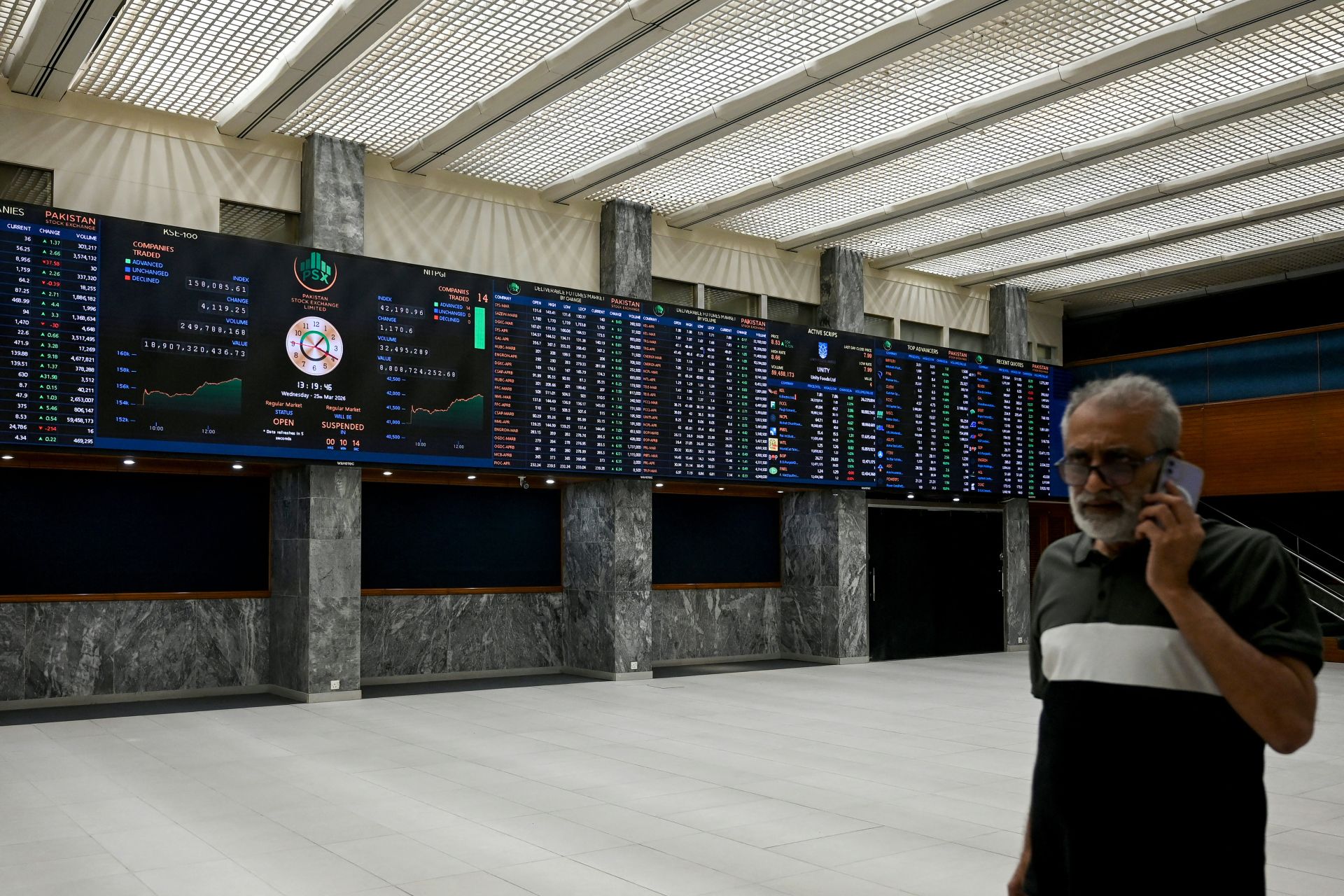
A stock broker walks past a digital board showing share prices at the Pakistan Stock Exchange (PSX) in Karachi on March 25, 2026. ©RIZWAN TABASSUM / AFP
Oil prices jumped and equities slid Thursday as hopes for a peace deal between the U.S. and Iran wavered after Tehran rejected Washington's bid to wind down the nearly four-week war.
Markets had been buoyed this week by U.S. President Donald Trump's announcement that strikes targeting Iran's energy infrastructure would be postponed, adding that the two sides were in peace talks.
But uncertainty over the talks and the virtual closure of the Strait of Hormuz, through which around 20 percent of oil and liquefied natural gas passes, have cast a shadow over market sentiment.
"The market rollercoaster continues," said Joshua Mahony, chief market analyst at Scope Markets.
Crude prices rallied more than three percent on Thursday, with Brent crude above $106 per barrel and WTI around $93.
The dollar rose against main rivals.
In Europe, stock markets in Frankfurt and London both shed more than one percent, while Paris was down 0.8 percent in midday deals.
These declines came after losses across Asia.
Conflicting messages from the U.S. and Iran are "raising questions about whether there is really an off-ramp to the conflict in the days ahead," said Deutsche Bank's Jim Reid.
Washington was said to have presented a 15-point plan to end the war, while Tehran's state-run TV reported officials had put forward their own five conditions for hostilities to end.
Trump on Wednesday threatened to "unleash hell" if Iran did not strike a deal, but Foreign Minister Abbas Araghchi said his country does not intend to negotiate with the administration in Washington.
Pakistan's Foreign Minister Ishaq Dar confirmed Thursday that indirect negotiations between the U.S. and Iran were being held, using Islamabad as an intermediary.
"The tone taken by Iran may simply be posturing, but... there is a high likeliness they continue this conflict until energy prices reach uncomfortable levels," Mahony said.
The OECD on Thursday cut its eurozone growth outlook and forecast higher inflation for 2026 as energy prices have skyrocked.
The conflict has also weighed on German consumer sentiment heading into April, a survey showed Thursday, adding to the woes facing Europe's top economy.
France, which holds the G7 presidency, will on Monday host a meeting bringing together the group's finance ministers, energy ministers, and central bank governors.
"Pressure on energy prices, shipping flows, and broader financial conditions remains one of the few meaningful sources of leverage (Iran) retains," said Saxo Markets' Charu Chanana.
"There is therefore little incentive to relinquish that leverage prematurely, particularly if market stress strengthens its negotiating position," she added.
The World Trade Organization chief Ngozi Okonjo-Iweala warned the global trading system is experiencing the "worst disruptions in the past 80 years."
AFP
Read more

Comments