- Home
- Middle East
- Israel Strikes Iran’s Caspian Supply Routes, Targeting Russian-Linked Arms Corridor
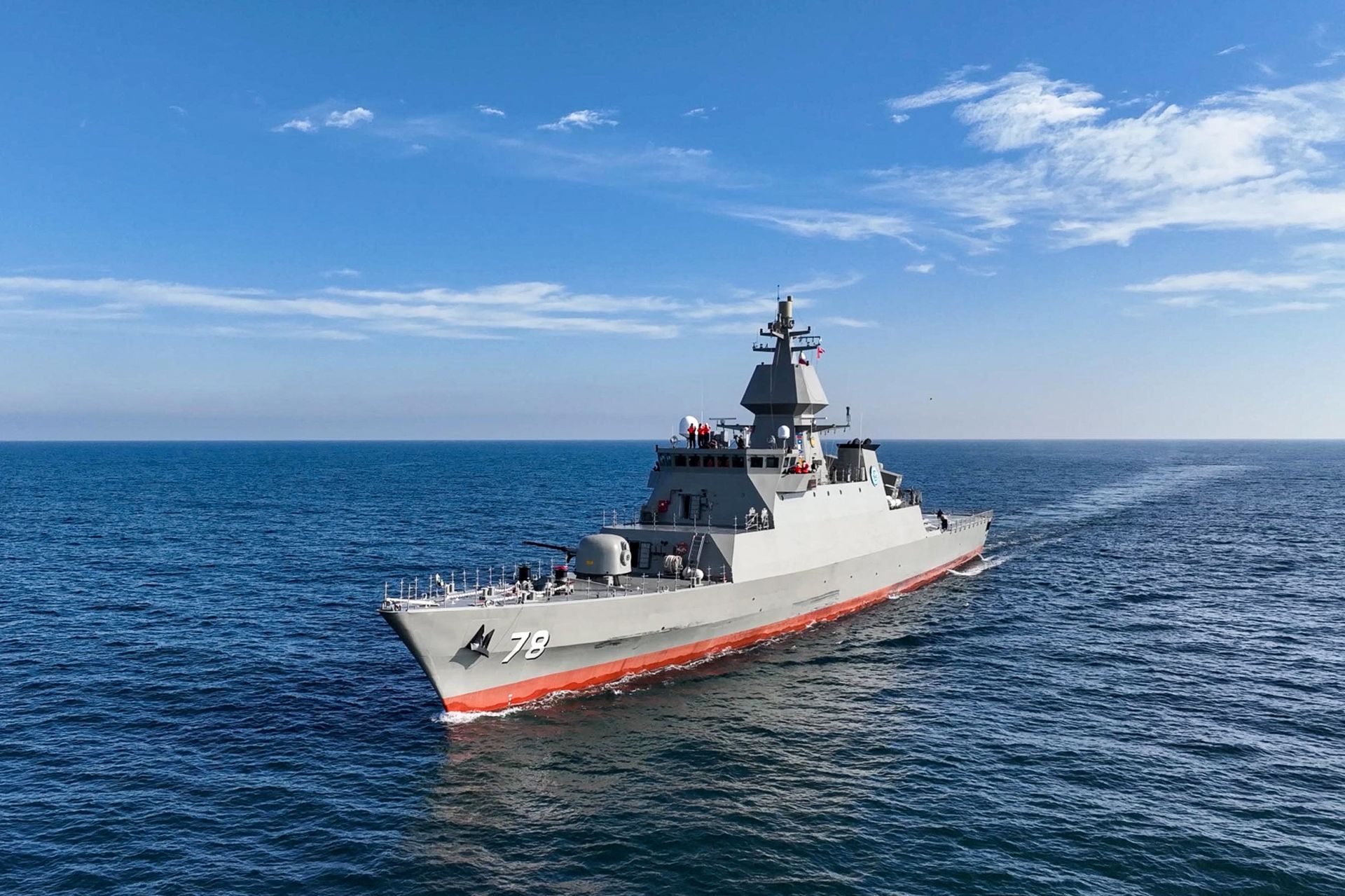
A handout photo made available by the Islamic Republic of Iran Army office on November 27, 2023 shows Iran's new warship 'Deylaman' during its inauguration ceremony at the port of Bandar Anzali on the Caspian sea. ©HANDOUT / IRANIAN ARMY OFFICE / AFP
Israel has expanded the geographic scope of its war against Iran, carrying out a rare strike in the Caspian Sea region targeting what officials describe as a critical maritime corridor used to transport Russian-supplied weapons to Tehran.
According to sources cited by The Wall Street Journal, the operation struck facilities at Iran’s Bandar Anzali port, marking the first known Israeli attack in the landlocked sea, a strategic zone long considered beyond the reach of direct confrontation in the current conflict.
The strike signals a significant shift: from targeting Iran’s domestic military infrastructure to disrupting the external supply chains that sustain its war capabilities.
A Strategic Corridor Beyond Western Reach
The Caspian Sea, linking Russian and Iranian ports across a roughly 600-mile route, has emerged as a key logistics channel for the transfer of weapons, including drones, ammunition, and military equipment.
Unlike Gulf shipping lanes, this corridor operates largely outside the reach of U.S. naval operations, making it a vital and relatively secure route for military cooperation between Moscow and Tehran.
In recent months, its importance has grown as both countries have intensified defense coordination, particularly around the production and deployment of Shahed drones, used by Russia in Ukraine and by Iran across the Middle East.
Targeting the Russia–Iran Military Nexus
Sources indicate that the Israeli strike aimed to disrupt this evolving military partnership, which has reportedly expanded to include satellite intelligence sharing and advanced drone technologies.
The Israeli military said the attack hit dozens of targets within Bandar Anzali, including naval vessels, port infrastructure, a command center, and ship repair facilities. Verified imagery shows damage to Iran’s naval command headquarters inside the port, though the full extent of the destruction remains unclear.
Former Israeli navy commander Eliezer Marom described the objective as twofold: limiting Russian arms transfers and exposing vulnerabilities in Iran’s naval defenses in the Caspian.
Expanding the Battlefield and the Risks
The strike reflects a broader Israeli strategy of widening the conflict’s scope, not only geographically but also economically.
By targeting a supply route intertwined with civilian trade, including shipments of wheat and oil, Israel is increasing pressure on Iran’s domestic stability, potentially affecting food and energy flows alongside military logistics.
At the same time, analysts warn that such operations risk further internationalizing the conflict, particularly given Russia’s direct stake in the corridor.
Moscow has already signaled concern over the expansion of hostilities into the Caspian region, raising the prospect of heightened geopolitical tensions beyond the immediate Middle Eastern theater.
The Caspian operation coincided with another Israeli strike targeting Iran’s South Pars gas field, one of the country’s most critical energy assets supporting electricity generation and fertilizer production.
Taken together, the strikes suggest a coordinated approach aimed at weakening both Iran’s military supply chains and its economic resilience, a dual pressure strategy designed to erode Tehran’s ability to sustain prolonged conflict.
Read more



Comments