- Home
- Middle East
- European Countries Seek Non-Involvement in Hormuz Strait as U.S. Pushes International Participation
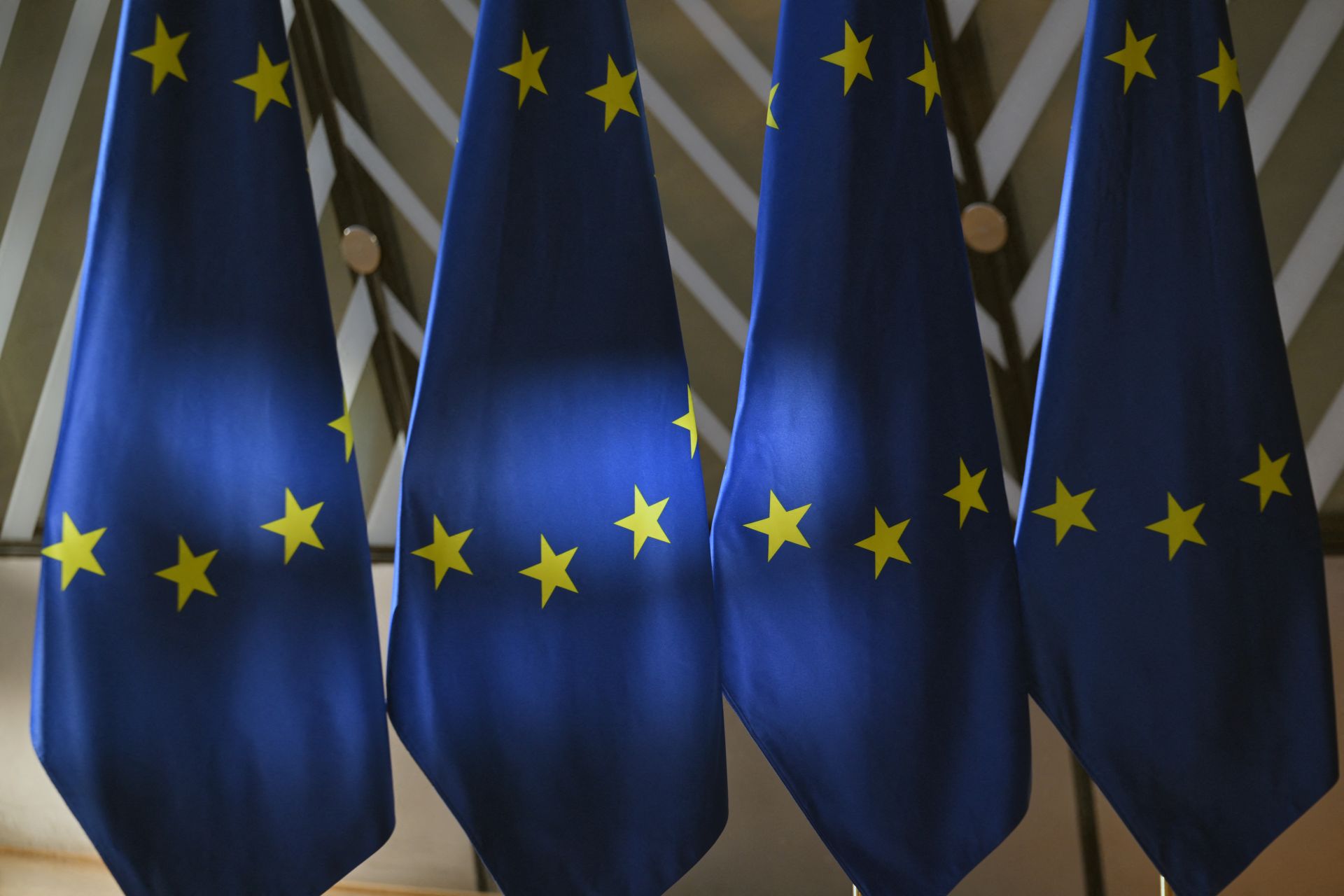
©Nicolas Tucat / AFP
The U.S. has encouraged its allies in Europe and the Gulf to increase their military participation in the Strait of Hormuz amid Iranian threats to close the waterway, prompting European countries to establish positions of non-involvement.
On Monday, U.S. White House press secretary Karoline Leavitt called on the Gulf and Europe to do more to help reopen the Strait of Hormuz as they “absolutely benefit” from U.S. strikes on nuclear and ballistic missile sites in Iran.
“These countries are absolutely benefitting from ensuring that Iran can never obtain a nuclear weapon,” she stated, adding that Iranian ballistic missiles pose a direct threat to European countries.
Europe States its Position
German Foreign Minister Johann Wadepuhl said that he “supports imposing sanctions on those responsible for closing the Strait of Hormuz.”
German Chancellor Friedrich Merz said that Germany will not participate in the Iran war and will not carry out military operations to keep the Strait of Hormuz open.
British Prime Minister Keir Starmer stated that the U.K. “will not be drawn into a wider war” and emphasized that an “agreement to limit Iran’s nuclear and ballistic missile programs” is needed after the war ends.
He added that “we are coordinating with the Europeans on a collective plan for the Strait of Hormuz,” and that efforts to keep the Strait of Hormuz open will not be a NATO mission.
French President Emmanuel Macron says that he told Iranian President Masoud Pezeshkian to end Iran’s attacks on the region and reinstate freedom of navigation through the Strait of Hormuz.
U.S. President Donald Trump claimed that France was going to provide military support to keep the Strait of Hormuz open, speaking to PBS. However, as of Thursday, France’s armed forces minister said the country has no plans to send vessels to the area.
The Greek government’s spokesperson, Pavlos Marinakis, said that Greece has no plans to conduct operations in the Strait of Hormuz.
Pressure in the Gulf Grows
Pressure between the U.S. and Iran in the Gulf has increased over the course of the war. On Saturday, the U.S. began strikes on Iran’s Kharg Island, a key node in the country’s energy infrastructure.
U.S. Central command said that over 90 Iranian targets including mines, missiles, and infrastructure have been hit. Speaking to PBS on Monday, President Trump claimed that Kharg Island is out of service except for its oil infrastructure.
According to AFP, the first non-Iranian tanker with an open transponder since the start of the war passed through the Strait of Hormuz on Monday. The Iranian Foreign Ministry says that ships from neutral countries had passed through the Strait of Hormuz with approval from the Iranian military.
However, Iran has also targeted energy infrastructure in the region, contributing to uncertainty in the prospects of Gulf shipping and exports. On Monday, Iran launched a drone attack on the Fujairah port in the UAE, resulting in a fire, and prompting the Abu Dhabi National Oil Company to suspend oil loading.
In light of U.S. calls for European and Gulf countries to carry out security operations, Iranian Foreign Minister Abbas Araghchi urged that other countries not currently involved in the conflict do not carry out action against Iran.
He stated to French Foreign Minister Jean-Noel Barrot that other countries should “refrain from any action that could lead to escalation and expansion of the conflict.”
Read more
Comments