- Home
- Middle East
- Iran Strikes Gulf Energy Infrastructure as Regional War Drives Oil Prices Higher
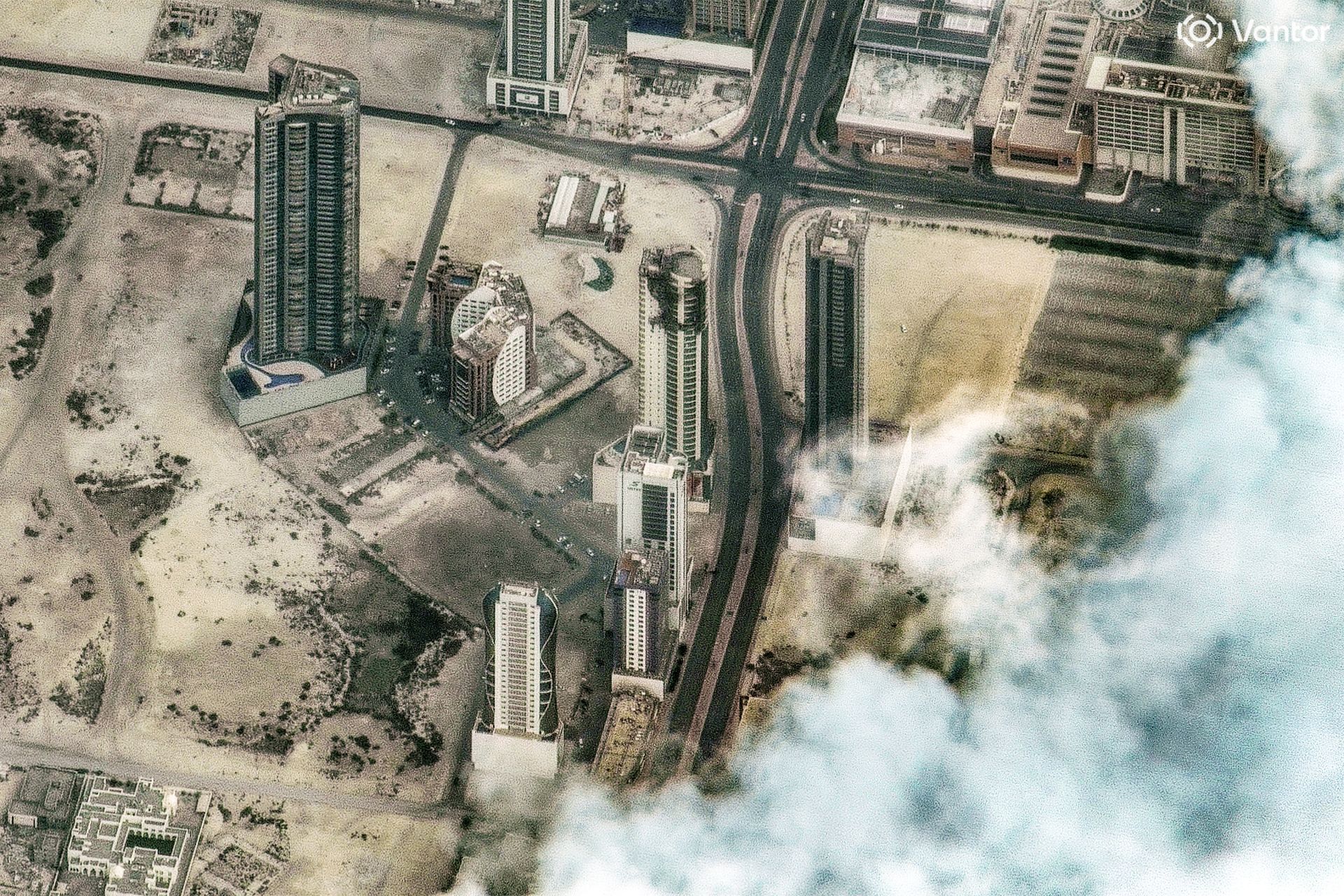
This handout satellite image courtesy of Vantor shows damage following a drone attack on a high-rise apartment building in Bahrain's capital Manama on March 2, 2026. ©SATELLITE IMAGE ©2026 VANTOR / AFP
Iran launched a new wave of strikes across the Gulf on Monday, targeting energy infrastructure and military-linked facilities in several countries as the regional conflict triggered by the U.S.–Israeli war on Iran continues to widen.
One of the most significant attacks struck Bahrain’s Al Ma’ameer oil facility, a major petroleum complex operated by the state-owned Bahrain Petroleum Company (Bapco), forcing the company to declare force majeure after the strike caused a fire and operational disruptions.
The escalation comes amid growing fears that the conflict could severely disrupt global energy supplies, sending oil prices soaring and financial markets tumbling.
Strike on Bahrain Refinery Triggers Force Majeure
Bapco confirmed that its refinery complex in Al Ma’ameer had been damaged during the attack and said the company was activating a force majeure clause across its operations due to the impact of the conflict.
The legal declaration allows energy producers to suspend contractual obligations when extraordinary circumstances prevent them from meeting supply commitments.
“The company hereby serves notice of force majeure on its group operations, which have been affected by the ongoing regional conflict in the Middle East and the recent attack on its refinery complex,” Bapco said in a statement.
Bahraini authorities said the strike caused a fire at the facility, though the blaze was later brought under control.
Energy producers in Qatar and Kuwait had already issued similar declarations earlier as regional energy infrastructure came under repeated attack.
Civilian Casualties in Bahrain Drone Strike
Bahrain also reported a separate Iranian drone attack overnight targeting the island of Sitra, which left 32 people injured, according to the country’s health ministry.
All of the wounded were Bahraini citizens, including four serious cases. Among the injured were a 17-year-old girl suffering severe head and eye injuries and a two-month-old baby, officials said.
The attack highlights the growing civilian toll from the widening conflict across the Gulf.
Gulf Capitals Targeted by Drones and Missiles
Iran continued its barrage of missiles and drones across several Gulf states on Monday, with multiple countries reporting air defense interceptions.
Explosions were heard in Doha, according to AFP journalists, as Qatari authorities confirmed that air defense systems intercepted an incoming missile.
Saudi Arabia said its defenses destroyed two waves of drones targeting the Shaybah oil field, a key energy installation in the kingdom’s southeast.
In the United Arab Emirates, authorities said air defense systems responded to a missile threat, while Kuwait reported a new missile and drone attack following a barrage the previous day that included seven missiles and five drones.
Diplomatic Tensions Rise as U.S. Orders Evacuations
The escalating attacks prompted Washington to order a partial evacuation of its diplomatic staff from Saudi Arabia.
The U.S. State Department said non-emergency personnel and family members of U.S. government employees had been ordered to leave the country due to security risks.
The decision followed a series of drone strikes in recent days targeting U.S. diplomatic facilities in the region, including attacks that damaged the U.S. embassy in Riyadh and diplomatic missions in Kuwait and the UAE.
Gulf States Bear the Brunt of Iran’s Retaliation
Much of Iran’s retaliation has focused on Gulf countries hosting U.S. military bases, which Tehran accuses of enabling the American-Israeli military campaign launched against Iran on February 28.
Since the start of the attacks, 21 people have been killed across the Gulf, including 10 civilians and seven U.S. service members, according to regional authorities.
Iranian President Masoud Pezeshkian warned that Tehran would continue responding to neighboring countries if their territory is used for operations against Iran.
“The Islamic Republic will be forced to respond if attacks on Iran originate from the territory of neighboring states,” Pezeshkian said in remarks carried by Iranian media.
The continued targeting of energy infrastructure and military sites across the Gulf raises the risk of a wider regional war that could draw additional states directly into the conflict.
Read more


Comments