- Home
- Middle East
- Iranian Strikes on Arab Countries Continue Into Seventh Day of Regional War
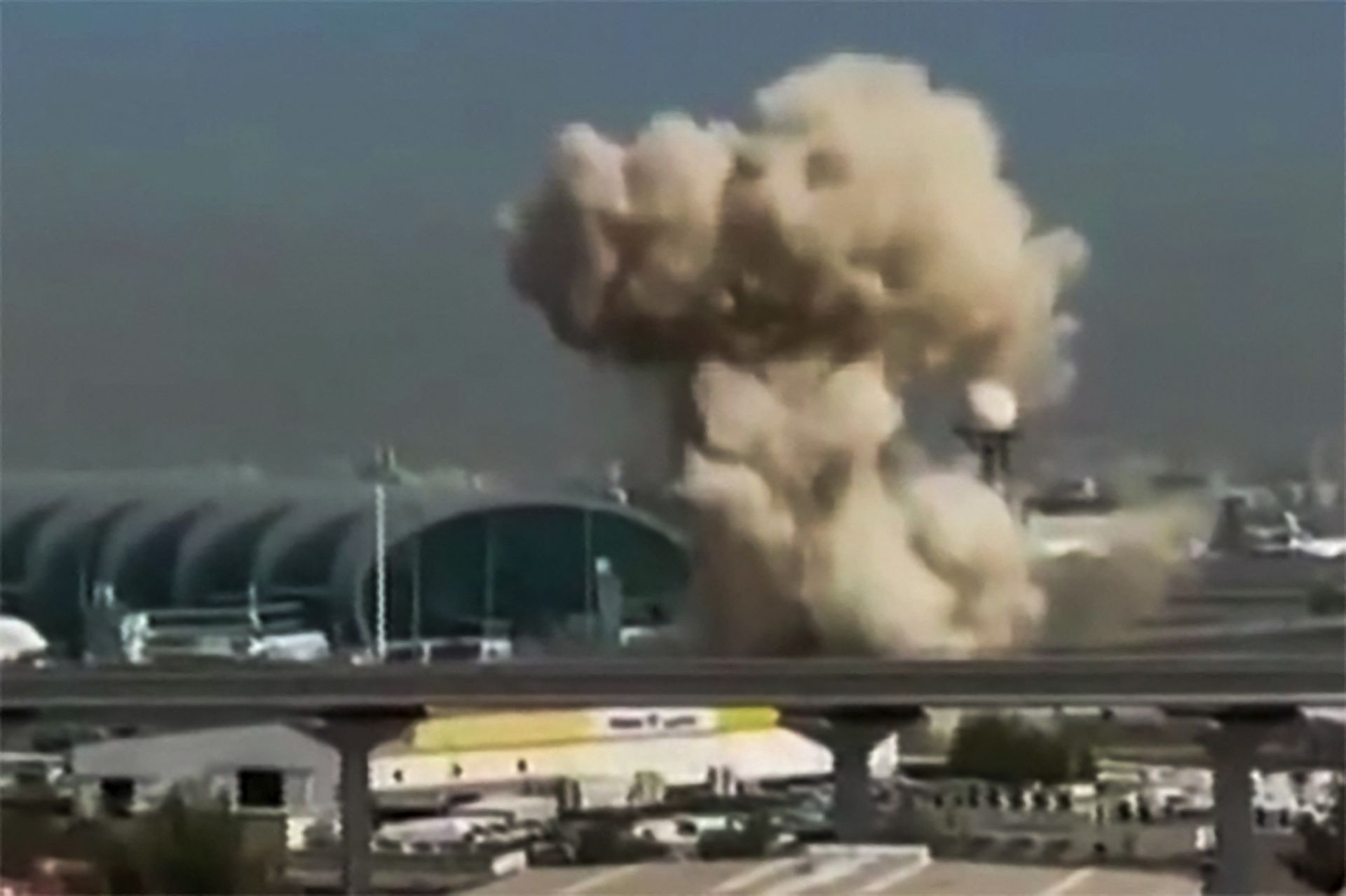
This video grab taken from UGC images posted on social media on March 7, 2026 shows smoke rising from the Dubai International Airport. ©VARIOUS SOURCES / AFP
The war between Iran and the U.S.-Israeli alliance continues to spill across the Middle East, with several Arab countries reporting missile and drone attacks as Tehran expands its retaliatory campaign across the region.
Jordan, the United Arab Emirates, and Saudi Arabia all reported interceptions of Iranian projectiles on Saturday, while disruptions to aviation, maritime shipping, and energy infrastructure highlight the widening regional impact of the conflict.
Iranian President Masoud Pezeshkian apologized on Saturday to neighboring countries affected by the attacks but said Iran would only refrain from further strikes if attacks against Iranian territory cease.
Jordan Says Iran Directly Targeted Sites Inside the Kingdom
Jordan accused Iran on Saturday of directly targeting key installations inside the kingdom.
Jordanian military spokesman Brigadier General Mustafa al-Hayari said 119 Iranian missiles and drones had been launched toward Jordanian territory during the past week, adding that 108 of them were intercepted by the country’s air-defense systems.
“These missiles and drones were targeting vital installations inside Jordan and were not merely passing through our airspace,” Hayari said during a press briefing.
UAE Intercepts Missiles and Drone Swarms
The United Arab Emirates also reported large-scale interceptions on Saturday. According to the UAE Ministry of Defense, air defense systems detected 16 ballistic missiles, of which 15 were intercepted and destroyed, while one missile fell into the sea.
The ministry added that 121 drones were detected, with 119 intercepted and two falling inside Emirati territory.
Iran has said its attacks are aimed at countries hosting U.S. military forces, which Tehran considers legitimate targets following the American-Israeli strikes on Iranian territory.
Explosions Reported in Dubai and Bahrain
Explosions were also reported in Dubai and Bahrain’s capital, Manama, according to AFP journalists, highlighting the growing reach of the conflict across the Gulf.
In Bahrain, warning sirens sounded across the capital, prompting the Interior Ministry to urge residents in a post on X to “head to the nearest safe place.”
The incidents come amid repeated Iranian missile and drone launches targeting locations around the Gulf since the conflict began.
Saudi Arabia Warns Iran Against Escalation
Saudi Arabia also reported attempted attacks. The kingdom’s Defense Ministry said it had intercepted missiles and drones targeting an air base hosting U.S. forces and a major oil field.
Saudi Defense Minister Prince Khalid bin Salman warned Tehran against further escalation, urging Iran to “avoid miscalculation.”
Any successful strike on Saudi energy infrastructure could have significant consequences for global oil markets.
Sirens Sound in Jerusalem
Inside Israel, Iranian missile attacks continued Saturday. Air raid sirens sounded across several areas, including Jerusalem, where AFP journalists reported hearing multiple explosions as Israeli air-defense systems engaged incoming missiles.
At least six air-raid alerts were issued across Israel within a 24-hour period, according to Israeli authorities.
Dubai Airport Operations Disrupted
The conflict has also begun disrupting civilian infrastructure. Dubai International Airport, the world’s busiest airport for international passengers, temporarily suspended operations earlier Saturday following an air-defense interception near the city.
Airport authorities later announced that operations had partially resumed, with flights operating from both Dubai International (DXB) and Al-Maktoum International Airport (DWC).
Strait of Hormuz Traffic Plunges
Meanwhile, the conflict has severely disrupted maritime traffic through the Strait of Hormuz, one of the world’s most critical energy chokepoints.
According to MarineTraffic data analyzed by AFP, only nine commercial vessels — including oil tankers, cargo ships and container ships — have passed through the strait since Monday.
Under normal conditions, the narrow waterway handles nearly 20 percent of global crude oil shipments and roughly 20 percent of liquefied natural gas (LNG) exports.
The sharp drop in traffic suggests that the escalating war has effectively paralyzed one of the most important routes in global energy trade, raising concerns about further disruptions to oil markets.
Read more



Comments