- Home
- Middle East
- Buffer Zone in Southern Lebanon: Israel’s Advance Raises Questions About Lasting Presence
- 03
- Mar
- 2026
AnalysisBuffer Zone in Southern Lebanon: Israel’s Advance Raises Questions About Lasting Presence
Read : 4 minute(s) A A A
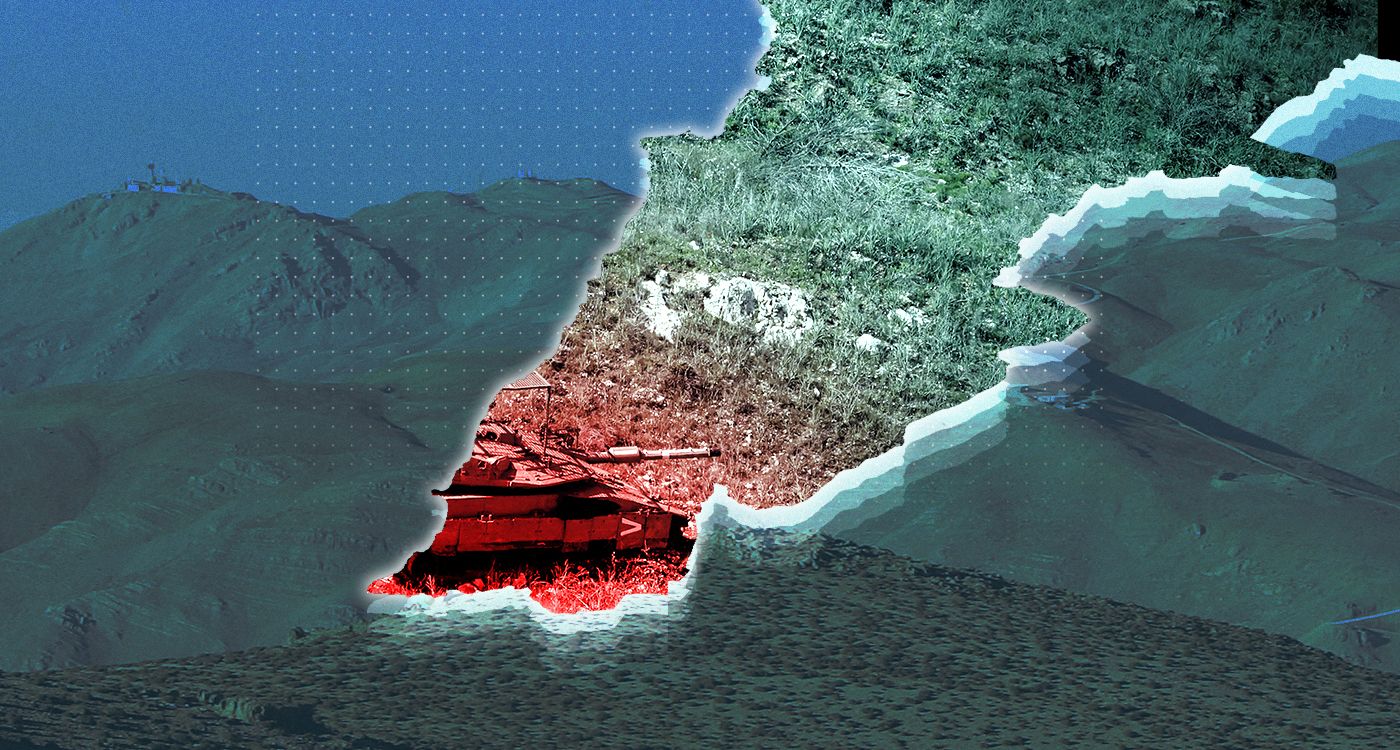
As Israel ramps up its military campaign against Hezbollah, Israeli troops advanced into southern Lebanon on Tuesday morning and established a buffer zone described by Tel Aviv as a limited defensive maneuver aimed at protecting northern Israeli communities.
However, security sources interviewed by This is Beirut said that the maneuver could be part of a broader operational objective that includes establishing a line of control deeper from the border, potentially extending as far as the Litani River, a strategic dividing line with historical significance.
“The Northern Command has advanced, taken control of the high ground and is now creating a buffer zone, as we promised, between our population and any threat,” Israel Defense Forces (IDF) spokesperson Brigadier General Effie Defrin announced Tuesday.
Israeli Defense Minister Israel Katz, for his part, said that he authorized the Israeli military to “take control of additional strategic positions in Lebanon” in order to neutralize Hezbollah’s capabilities to target border communities.
A Lebanese military source noted that IDF statements on the advance used terms such as “control, hold and secure,” suggesting the military intends at least temporary, if not prolonged, forward deployment in southern Lebanon.
As of publication, the Israeli military has advanced several hundred meters into Lebanese territory, including areas around the towns of Kfar Kila, Khiam, and Qouzeh. The military source told This is Beirut that the advance appears to be more than a temporary incursion.
“What we are observing corresponds to a progression toward an identifiable line,” a Lebanese Armed Forces (LAF) general, speaking on condition of anonymity, told This is Beirut.
The Litani River is a longstanding strategic marker. An Israeli deployment south of the river would create sufficient tactical depth to push back Hezbollah’s direct fire capabilities and secure dominant high ground.
In response to the Israeli advance, the Lebanese Armed Forces (LAF) withdrew from several forward positions, including in Majidieh, Bastara and Kfar Chouba, redeploying further north in Kfar Hamam.
The LAF general interviewed by This is Beirut said the Lebanese military’s withdrawal reflected a pragmatic military calculation. “The redeployment aims to avoid immediate escalation, especially since this is a war Lebanon did not choose to enter,” he said.
The officer added that an LAF confrontation of the IDF advance, without political cover from Lebanese authorities, would unnecessarily expose personnel.
“Keeping soldiers in place against a mechanized advance would have meant a direct confrontation without tactical advantage,” the LAF officer added.
While the LAF has withdrawn from its border position, civilian residents of several border towns are reportedly refusing to leave their homes, according to security sources.
Militarily, the IDF’s advance reflects Israeli contingency planning for an escalation with Hezbollah that includes a limited ground push designed to secure dominant terrain, neutralize launch corridors, and establish a de facto buffer zone.
Politically, Israel’s public acknowledgment that its troops entered Lebanon marked a significant threshold, shifting the conflict’s dynamics. Each new position the IDF consolidates in Lebanon makes a return to the previous status quo increasingly difficult.
The central question now is how long the Israeli advance will continue and how far it will penetrate. A maneuver initially framed as defensive can quickly evolve into a lasting presence if military conditions allow.
In Lebanon, already strained by domestic crises and regional tensions, the Israeli advance ushers in a new phase of uncertainty. On the ground, the lines are shifting — and with them, the risk of a broader confrontation whose outcome no one can predict.
Read more



Comments