- Home
- Middle East
- Iran Reshuffles Command Structure as Nuclear Talks with U.S. Set for Thursday
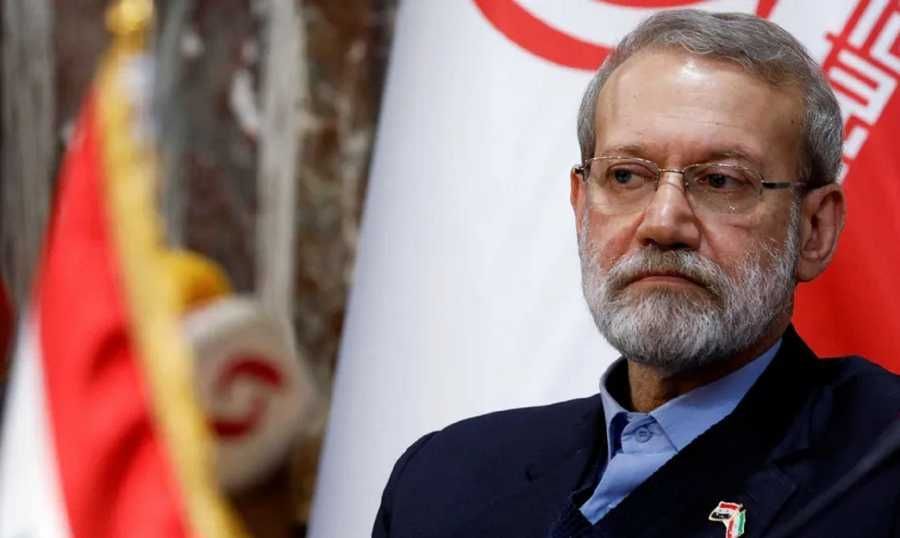
Ali Larijani, senior advisor to Iran's Supreme Leader Ayatollah Ali Khamenae ©Al-Markazia
The next round of talks between the United States and Iran will be Thursday in Geneva, Oman’s foreign minister said Sunday.
Omani Foreign Minister Badr al-Busaidi said on social media that he was pleased to confirm the development “with a positive push to go the extra mile towards finalizing the deal.”
Iranian Foreign Minister Abbas Araghchi said in an interview with CBS, aired Sunday, that there remains a “good chance” of reaching a diplomatic solution on the nuclear issue, emphasizing that it is the only topic currently under discussion in talks with U.S. envoy Steve Witkoff. He added that Iran was still working on the draft proposal and that Iran has the right to enrich uranium.
Shortly after Oman’s confirmation of talks, Iranian President Masoud Pezeshkian said on social media that “recent negotiations involved the exchange of practical proposals and yielded encouraging signals. However, we continue to closely monitor U.S. actions and have made all necessary preparations for any potential scenario.”
Shift in Iran’s command structure amid rising tensions
In parallel to the recent escalation, Iran’s Supreme Leader Ayatollah Ali Khamenei put in place detailed plans for his succession and emergency chains of command should he, or other top leaders, be killed in potential U.S. or Israeli strikes.
According to the New York Times report, amid rising U.S. threats of military action, Khamenei tapped Larijani, a former Revolutionary Guards commander and veteran politician, to a central governing role. This places him at the head of state affairs and undermines the powers of President Masoud Pezeshkian.
Larijani has overseen the recent brutal crackdown on protests, managed sensitive nuclear diplomacy with Washington, and coordinated with allies and neighbors including Russia, Qatar and Oman.
Iran is operating on the assumption that U.S. strikes are “inevitable and imminent,” and Iranian forces are on the highest level of alert, according to the report.
If hostilities were to erupt, special police units, intelligence operatives, and battalions of the plainclothes Basij militia, a paramilitary force affiliated with the Revolutionary Guards, would be deployed across major cities, the report explained. Their mission would include setting up checkpoints to deter protests and potentially identify individuals suspected of working with foreign agencies.
Trump seeks further concessions from Iran
The Trump administration has been pushing for concessions from Iran and has built up the largest U.S. military presence in the Middle East in decades. President Trump warned on Friday that limited strikes against Iran are possible, even as Araghchi at the time said that Tehran expected to have a proposed deal ready in the next few days.
Although Iran maintains that its nuclear program is solely for peaceful purposes, the U.S., Israel, and other countries contend that it aims to develop nuclear weapons. Iran has enriched uranium to levels widely viewed as having no civilian application, expanded a substantial ballistic missile arsenal, and, according to Israel, was advancing toward weaponization prior to last June’s 12-day Israel-Iran war.
Read more

Comments