- Home
- Middle East
- Trump Launches ‘Board of Peace’ as Gaza Plan Faces Scrutiny
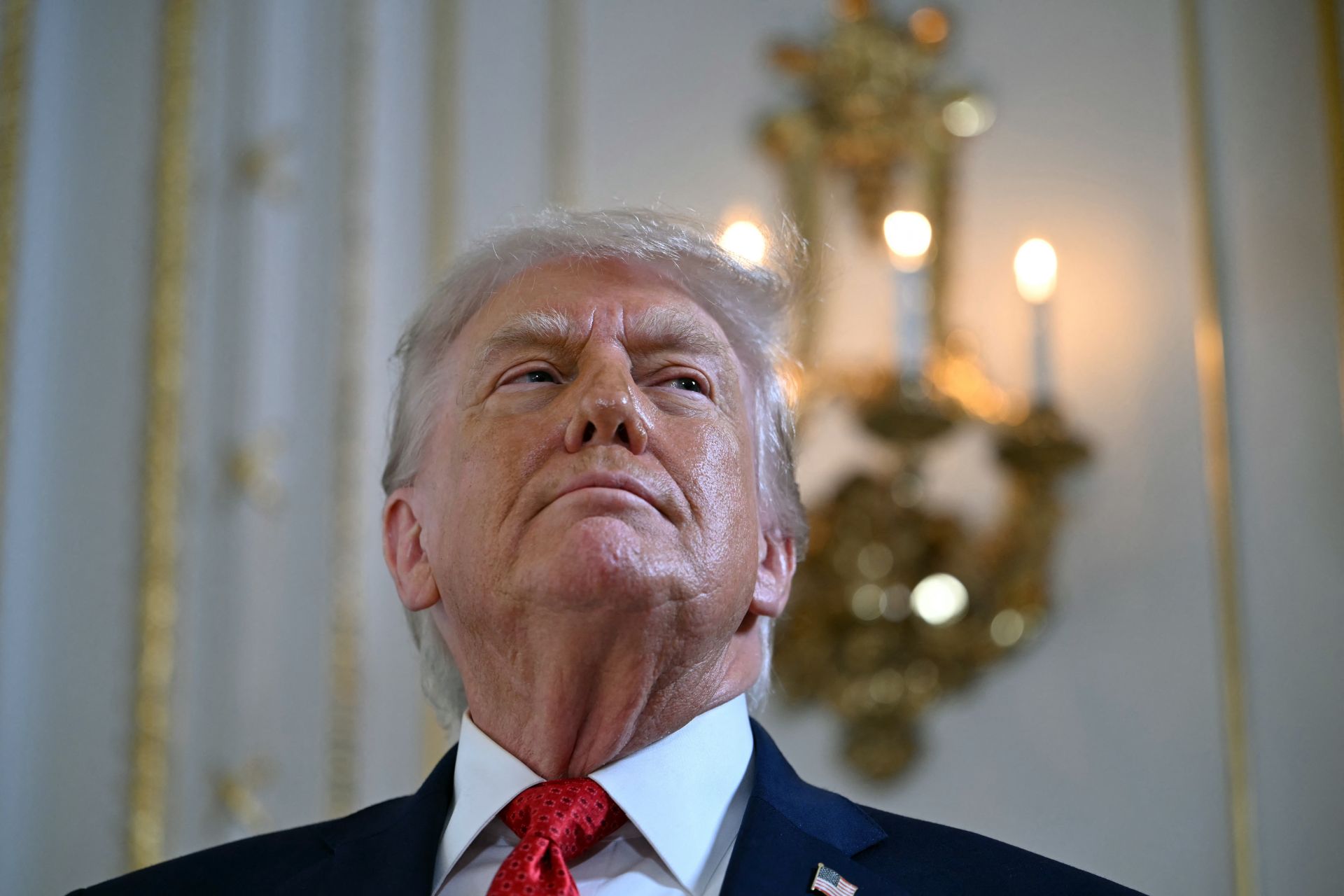
©Andrew Caballero-Reynolds / AFP
U.S. President Donald Trump is set to preside Thursday over the inaugural meeting of his newly created “Board of Peace,” his new institution focused on progress on Gaza but whose ambitions reach much further.
The head of the Palestinian technocratic committee formed to handle day-to-day governance of Gaza, Ali Shaath, was in Washington Thursday to attend the inaugural "Board of Peace" meeting, two Palestinian officials told AFP.
"Shaath is scheduled to deliver a speech outlining the general framework of his plan for the first 100 days. He is accompanied by the committee's official in charge of the finance portfolio," the source added.
Delegations from more than 45 countries and the European Union are expected to attend the gathering in Washington, according to U.S. officials cited by Reuters. Trump is expected to announce that participating states have pledged around $5 billion toward an initial Gaza reconstruction fund, with American officials saying the United Arab Emirates and Kuwait are each contributing approximately $1.2 billion.
The funding is being presented as a first installment of what is likely to become a much larger financial effort.
U.S. officials also expect Trump to disclose that several countries are preparing to deploy thousands of troops as part of a proposed international stabilization force tasked with maintaining security in Gaza, a central pillar of Washington’s post-war framework for the enclave.
Indonesia, the world’s largest Muslim-majority country, has indicated readiness to send up to 8,000 soldiers should the force be formally approved.
The Board follows an October ceasefire brokered by the United States alongside Qatar and Egypt, which halted nearly two years of fighting in Gaza. Washington says the process has now entered a second phase aimed at disarming Hamas and establishing new administrative structures in the territory.
But even before today’s meeting begins, officials involved in the planning privately acknowledge that fundamental questions remain unresolved, from security enforcement to governance and humanitarian access.
Disarmament and governance remain unsettled
Israeli leaders have stressed that any stabilization effort hinges on Hamas being stripped of its weapons.
Prime Minister Benjamin Netanyahu recently argued that even light arms must be confiscated, describing the AK-47 as “the main weapon” that must be removed. Israel is being represented at today’s meeting by its foreign minister.
Jeremy Issacharoff, a strategic affairs expert at Reichman University, said Israel’s support for the initiative will depend on whether there is a credible path to dismantling Hamas’ military infrastructure, a task he described as far from simple.
A technocratic committee headed by engineer and former official Ali Shaath was formed last month to oversee Gaza’s day-to-day administration. Still, a member of the Board told Reuters that Gaza’s police forces are not yet adequately trained or equipped, making security the primary obstacle to progress.
The same official described the humanitarian situation as “catastrophic,” warning that even a surge in aid would leave unresolved who is responsible for distributing it safely.
Hamas has rejected the framework, with spokesman Hazem Qassem saying the Board should instead compel Israel to lift its blockade and halt what he called violations in Gaza.
According to Gaza’s health ministry, at least 601 people have been killed by Israeli forces since the ceasefire took effect.
A new institution, and a controversial structure
The Board of Peace is being launched at the former U.S. Institute of Peace building, which was renamed after Trump and whose staff were dismissed earlier this year.
Under White House guidelines, Trump will retain veto power over the body and remain its chair even after leaving office. Countries seeking permanent membership beyond an initial two-year term would be required to pay $1 billion, a provision that has drawn sharp criticism.
Brazilian President Luiz Inácio Lula da Silva declined an invitation, saying any Gaza-focused mechanism should include Palestinian representation and describing Trump’s board as “a new UN where only he is the owner.”
Several traditional U.S. allies, including France and Canada, are not participating. Japan has opted to send a Gaza envoy rather than formally join.
Those expected to attend include Hungarian Prime Minister Viktor Orban and Argentine President Javier Milei, alongside leaders from countries seeking closer ties with Washington, such as Pakistan.
Gaza as a test case
While U.S. officials insist today’s meeting is primarily about Gaza, the White House has also described the Board as a platform for addressing broader global crises, as Trump continues to distance Washington from United Nations institutions.
For now, Gaza remains the proving ground.
Despite the financial pledges and diplomatic momentum, U.S. officials concede that the plan faces steep political and operational barriers, including Hamas disarmament, security deployment, governance authority, and humanitarian coordination.
As one Board member told Reuters, without a workable security framework, progress in every other area is likely to stall.
Read more
Comments