- Home
- Middle East
- Trump Has Discussed Timeline for Iran Strikes, but No Decision Yet
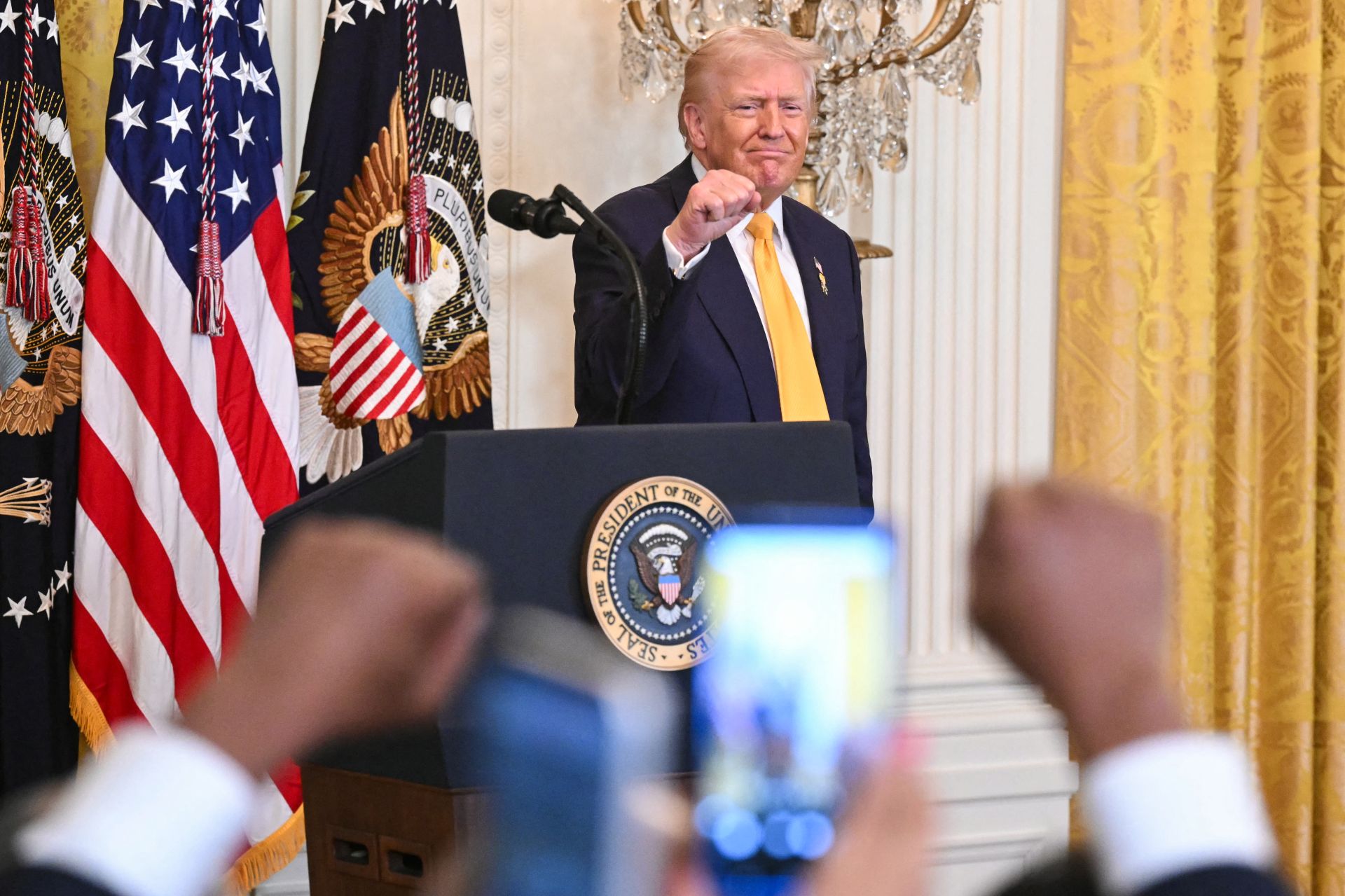
U.S. President Donald Trump gestures to the audience as he departs after speaking during a Black History Month event in the East Room of the White House in Washington, DC, on February 18, 2026. ©SAUL LOEB / AFP
Senior U.S. national security officials have told President Donald Trump that the military could be ready to launch strikes against Iran as soon as Saturday, according to CBS News, as Washington intensifies pressure on Tehran amid faltering nuclear talks and mounting regional tensions.
While Trump has not yet authorized any action, U.S. officials cautioned that the decision timeline is likely to extend beyond this weekend. The Pentagon has begun repositioning personnel in the Middle East in anticipation of possible Iranian retaliation, even as additional U.S. forces continue flowing into the region.
White House Press Secretary Karoline Leavitt said Wednesday that Iran would be “very wise” to reach a deal with Washington, adding that “there are many reasons and arguments one could make for a strike against Iran.” She acknowledged only “a little bit of progress” in the latest negotiations, stressing that the two sides remain “very far apart on some issues.”
Talks falter as pressure builds
Indirect U.S.-Iran talks, mediated by Oman, resumed this month following a deadly Iranian crackdown on anti-government protests and renewed tensions over Tehran’s nuclear program. The latest round in Geneva ended with sharply differing assessments.
Iranian Foreign Minister Abbas Araghchi described the discussions as positive and said Tehran was drafting a framework for future talks. U.S. officials were far less optimistic, with one American source characterizing the meeting as a “nothing burger.”
Leavitt said Iran is expected to return with more detailed proposals in the coming weeks but emphasized that President Trump is prepared to conclude diplomacy has “reached its natural end” if meaningful progress is not achieved.
A senior U.S. official told Reuters that Tehran is expected to submit a written proposal outlining how it plans to defuse the standoff. Meanwhile, Trump’s top national security advisers have been briefed that all U.S. forces deployed to the region should be fully in place by mid-March. In recent weeks, Washington has moved two aircraft carriers, dozens of warships, fighter jets, and air-defense systems into the Middle East.
Trump himself again hinted at military action in a post on Truth Social, linking the strategic importance of Diego Garcia, a key airbase in the Indian Ocean, to the possibility of confronting Iran if diplomacy collapses.
Israel prepares for escalation
Israeli officials, speaking to Axios and Channel 12, said Israel is preparing for a potential war with Iran “within days” should negotiations fail, describing the current moment as a narrowing window for diplomacy.
According to those officials, any U.S.-led operation would likely be a joint U.S.-Israeli campaign far broader than last June’s 12-day conflict, potentially lasting weeks and targeting Iran’s nuclear infrastructure, missile capabilities, and elements of the regime itself.
“Timetables are growing shorter,” a senior Israeli official told Channel 12. “In the end, there is one man who will decide.”
In parallel, Israeli emergency services and the military’s Home Front Command have been instructed to prepare for a possible escalation. On Israel’s northern front, the army has gone on heightened alert amid concerns that Hezbollah could be drawn into a wider conflict.
Israeli military spokesperson Avichay Adraee said the Israel Defense Forces carried out overnight strikes on Hezbollah infrastructure in southern Lebanon, including weapons depots, rocket launch platforms, and military sites. Israel warned that any intervention by Hezbollah would be met with a severe response.
Israeli media also reported that Iran has been urging Hezbollah to join any future war if hostilities erupt, while Israel has prepared contingency plans to “significantly strike” the group if it enters the conflict.
Washington weighs war as Tehran braces
Iran's atomic energy chief Mohammad Eslami said no country can deprive the Islamic republic of its right to nuclear enrichment. "The basis of the nuclear industry is enrichment. Whatever you want to do in the nuclear process, you need nuclear fuel," said Eslami, according to a video published by Etemad daily on Thursday.
"Iran's nuclear programme is proceeding according to the rules of the International Atomic Energy Agency, and no country can deprive Iran of the right to peacefully benefit from this technology,” he said.
Araghchi held a call with Rafael Grossi, head of the International Atomic Energy Agency, stressing Tehran’s focus on drafting a framework for continued negotiations. But an Iranian official told The Wall Street Journal that the leadership fears the gaps with Washington may be unbridgeable.
“Iran is facing its worst military threat since 1988,” said Farzan Sabet of the Geneva Graduate Institute, noting that Tehran has placed its security and political leadership on high alert to protect key figures and nuclear facilities.
Iran continues to deny seeking nuclear weapons but has enriched uranium to levels with no clear civilian use, restricted international inspections, and expanded its ballistic missile program, developments that Israel says amount to steps toward weaponization.
The U.S. administration is pursuing a dual-track strategy: diplomacy paired with overwhelming military pressure. More than 150 U.S. military cargo flights have reportedly delivered weapons and ammunition to the region, while additional fighter jets are en route.
Despite public statements favoring a deal, Trump has made clear he is prepared to act.
“I think they want to make a deal,” he told reporters. “I don’t think they want the consequences of not making a deal.”
Read more


Comments