Policy experts told the U.S. Congress that dismantling Hezbollah’s malign influence in Lebanon will require leveraging Washington’s support for Beirut to secure measurable progress on the militant group’s disarmament, as well as political and financial reforms, thereby strengthening state sovereignty.
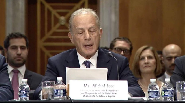
On Tuesday, the House Foreign Affairs Subcommittee on the Middle East and North Africa heard testimony exclusively from experts at the Washington Institute for Near East Policy on U.S. policy toward Hezbollah, who warned that the window for U.S. action may be closing.
The witnesses said shifting regional dynamics present a rare opportunity to curb Hezbollah’s influence, but stressed that the moment requires swift action. They agreed that reducing Hezbollah’s power demands a multi-tiered strategy targeting the group’s financing, support networks, and political and economic institutions.
Rep. Mike Lawler, a member of the House Foreign Affairs Committee, warned that “Hezbollah is working to aggressively re-arm and re-constitute,” as the committee sought guidance on how U.S. policy could address the systemic challenges enabling the group’s recovery.
Hanin Ghaddar, a Washington Institute senior fellow specializing in Shia politics in the Levant, argued that Hezbollah’s strength extends beyond its arsenal. “Hezbollah is not sustained only by weapons,” she said, indicating the organization's entrenchment in political and economic structures.
“Disrupting its financial networks is critical to meaningful disarmament,” she added.
Ghaddar highlighted Lebanon’s porous ports and its border with Syria as a point of concern, as well as cash and cryptocurrency transfers, as key lifelines sustaining Hezbollah’s operations.
David Schenker, a former U.S. diplomat and Washington Institute senior fellow focused on Arab politics, said disarmament remains Washington’s top priority but cautioned against overlooking efforts to reform.
“Reform should not be an afterthought,” he said.
Dana Stroul, director of research at The Washington Institute and former U.S. deputy assistant secretary of defense for the Middle East, said Washington’s policy has focused heavily on Hezbollah’s weapons over the past year.
While important, she argued, that approach is “only a partial strategy” without dismantling the political and economic systems that enable the group’s influence.
The hearing examined the political, security, and institutional challenges to the Lebanese state’s effort to dismantle Hezbollah’s arsenal nationwide. On January 8, the Lebanese Armed Forces (LAF) announced it had completed border disarmament, with operations north of the Litani now awaiting cabinet approval.
Schenker urged that U.S. assistance be tied to concrete benchmarks in the LAF’s performance, and suggested targeted sanctions against Lebanese officials undermining reform and disarmament as a form of “tough love” to promote accountability.
Rep. Brad Sherman, the committee’s ranking member, criticized what he described as a lack of urgency within the Trump administration to support anti-Hezbollah actors in Lebanon, reflecting broader concerns about sustaining momentum ahead of parliamentary elections.
The expert witnesses pointed out that the U.S. must expand its efforts to address other governments seeking to influence Lebanese politics.
“There are reasons for optimism,” Rep. Brad Schneider said, “but the moment could be fleeting.”
Watch the testimony here: https://thisisbeirut.com.lb/articles/1332519/u.s.-policy-toward-lebanon-obstacles-to-dismantling-hezbollahs-grip-on-power

Comments