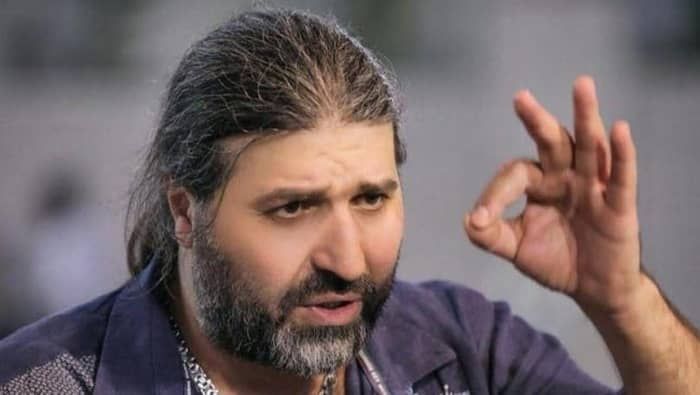
Lebanon’s Permanent Military Court on Tuesday issued its first batch of rulings in the sprawling judicial case of Nouh Zeaiter, convicting him in four security-related cases and sentencing him to one month in prison for each, while acquitting him in three files and dropping prosecution in 33 others due to the statute of limitations.
The court also ordered the confiscation of military-grade weapons, ammunition, and communication equipment seized from Zeaiter. Two additional misdemeanor cases were postponed to May, alongside pending felony files related to murder, attempted murder, and large-scale drug trafficking.
Judicial sources stressed that the rulings cover only a fraction of Zeaiter’s legal exposure. Beyond the military court, he reportedly faces thousands of files before civilian courts, meaning the verdicts do not signal the end of his prosecution or an imminent release.
Who Is Nouh Zeaiter?
Zeaiter, from the Baalbek district in Lebanon’s northern Bekaa, has long been one of the country’s most notorious wanted drug barons. For decades, his name has been linked to drug trafficking networks, arms possession, and repeated armed confrontations with security forces. His case has often been cited as emblematic of the state’s difficulty in enforcing the law in parts of the Bekaa, where arrest warrants accumulated for years without execution.
His arrest was therefore presented by authorities as a significant security achievement. However, the limited scope of the initial convictions has revived public debate over accountability and judicial effectiveness.
Renewed Scrutiny of the Military Judiciary
The Zeaiter rulings have once again drawn attention to Lebanon’s military court, an institution long criticized by legal experts and rights organizations for its lack of independence and its jurisdiction over civilians.
The military judiciary operates under the authority of the executive branch, with judges appointed by decree and many drawn from military ranks. Critics argue this structure leaves the court vulnerable to political pressure, particularly in sensitive security cases.
While there is no formal evidence that the military court is controlled by any political party, analysts note that Lebanon’s broader power balance, in which Hezbollah wields significant influence, has contributed to selective enforcement and prolonged delays that allow cases to lapse. The frequent reliance on statutes of limitation, rather than substantive rulings, has become a recurring feature in high-profile files.
In Zeaiter’s case, the gap between the scale of allegations and the narrow scope of effective convictions has reinforced doubts over whether the military court serves as a forum for justice or a mechanism for managing politically and security-sensitive cases.
As further hearings loom, Zeaiter’s case remains a test not only of the state’s ability to prosecute organized crime but also of the credibility of Lebanon’s military judiciary itself.


Comments