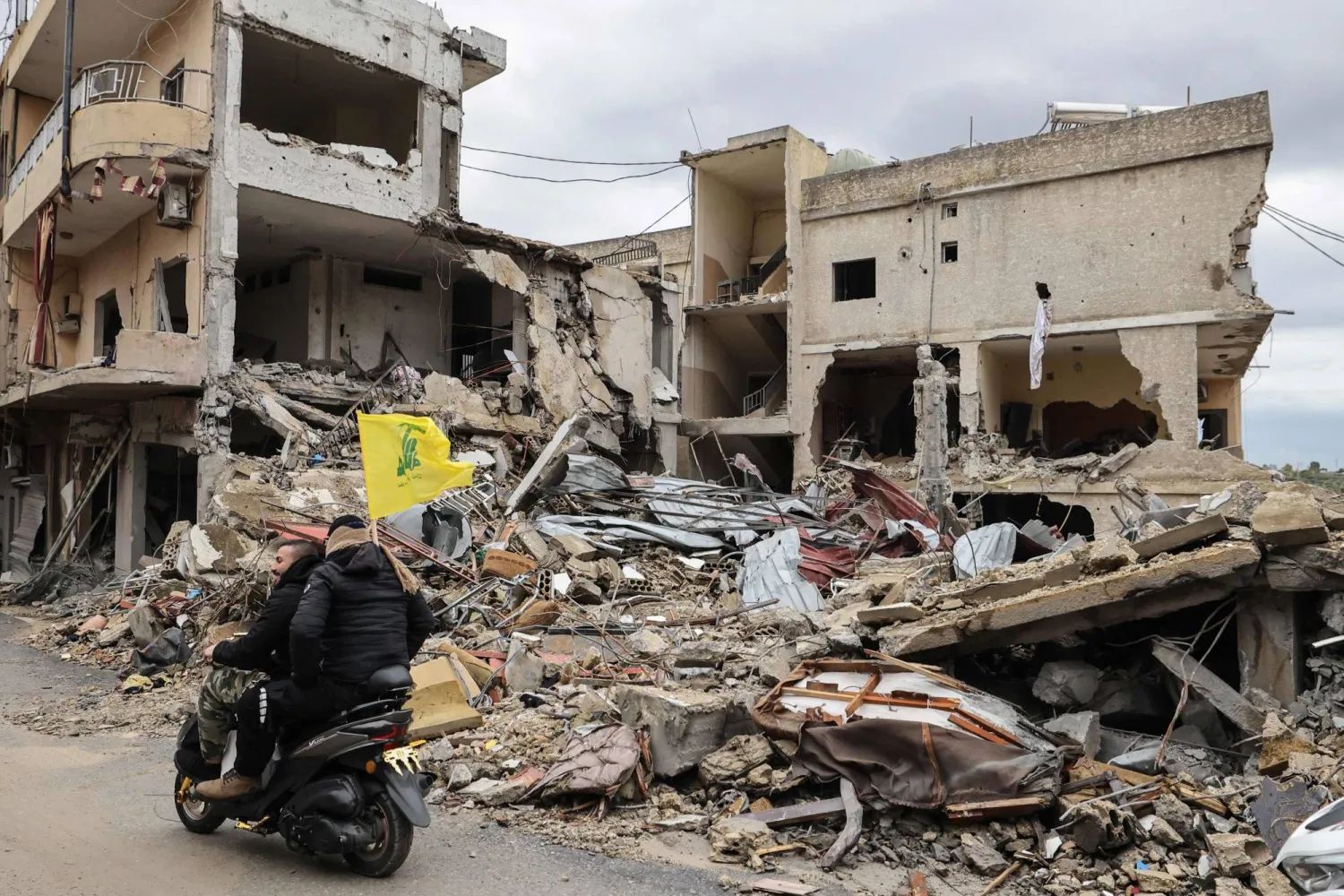
January 2026 marked a sharp escalation in Israeli military activity in Lebanon, with the Israel Defense Forces (IDF) conducting 87 airstrikes, more than double the number recorded in December 2025. It was the most active month since the ceasefire of November 27, 2024, underscoring a shift in operational tempo even as Israel maintains that its underlying strike policy has not changed.
At an average of nearly three strikes per day, the pace alone signals a sustained campaign rather than isolated responses. The data suggests a deliberate effort to apply continuous pressure on Hezbollah’s military capabilities while avoiding a full-scale confrontation.
A Geographic Message: North of the Litani Comes Into Focus
Nearly half of all strikes in January, 49.4 percent, were carried out north of the Litani River, an area that has increasingly emerged as Hezbollah’s operational center of gravity. The overwhelming majority of these strikes targeted infrastructure rather than individuals, indicating a strategic emphasis on degrading long-term capabilities rather than provoking escalation through high-profile assassinations.
This represents a notable evolution. While Israeli operations have historically concentrated south of the Litani, the steady rise in strikes further north since November 2025, peaking in January, suggests an expansion of Israel’s operational envelope, particularly against command, logistics, and training assets once considered relatively insulated.
South of the Litani: Persistent Operatives, Targeted Eliminations
In contrast, south of the Litani, strikes were more evenly split between infrastructure damage and targeted eliminations. This balance points to continued Hezbollah operational presence in the south, despite the ceasefire framework and international commitments tied to the area.
Notably, most eliminations of Hezbollah operatives in January occurred in the southern sector, including attempted strikes that wounded but did not kill their targets. The pattern suggests that Israel views the south as the primary zone where immediate operational threats still materialize and where deterrence must remain visible and personal.
The Beqaa: Hitting the Rear
Although accounting for a smaller share of strikes (14.9 percent), all operations in the Beqaa Valley targeted infrastructure, reinforcing its role as Hezbollah’s logistical and operational rear. Strikes there focused on weapons depots, tunnel shafts, training camps, and smuggling routes, including four illegal crossings with Syria used to move arms.
The targeting of engineering equipment, such as bulldozers used to rebuild military assets under civilian cover, further indicates an Israeli effort to disrupt Hezbollah’s ability to regenerate its infrastructure rather than merely destroy it.
Attrition Without Escalation
In total, 21 operatives were killed in January, including 20 Hezbollah members and one Hamas operative, bringing the total number of Hezbollah operatives eliminated since the ceasefire to 252. While significant, the relatively low number of eliminations compared to the volume of strikes points to a calibrated approach: attrition without decapitation.
This balance appears intentional. By prioritizing infrastructure over leadership targets, Israel limits the risk of triggering a broader retaliation while steadily eroding Hezbollah’s military depth.


Comments