- Home
- Middle East
- Can a New Round of U.S.–Iran Talks Avert Escalation?
- 03
- Feb.
- 2026

©This is Beirut
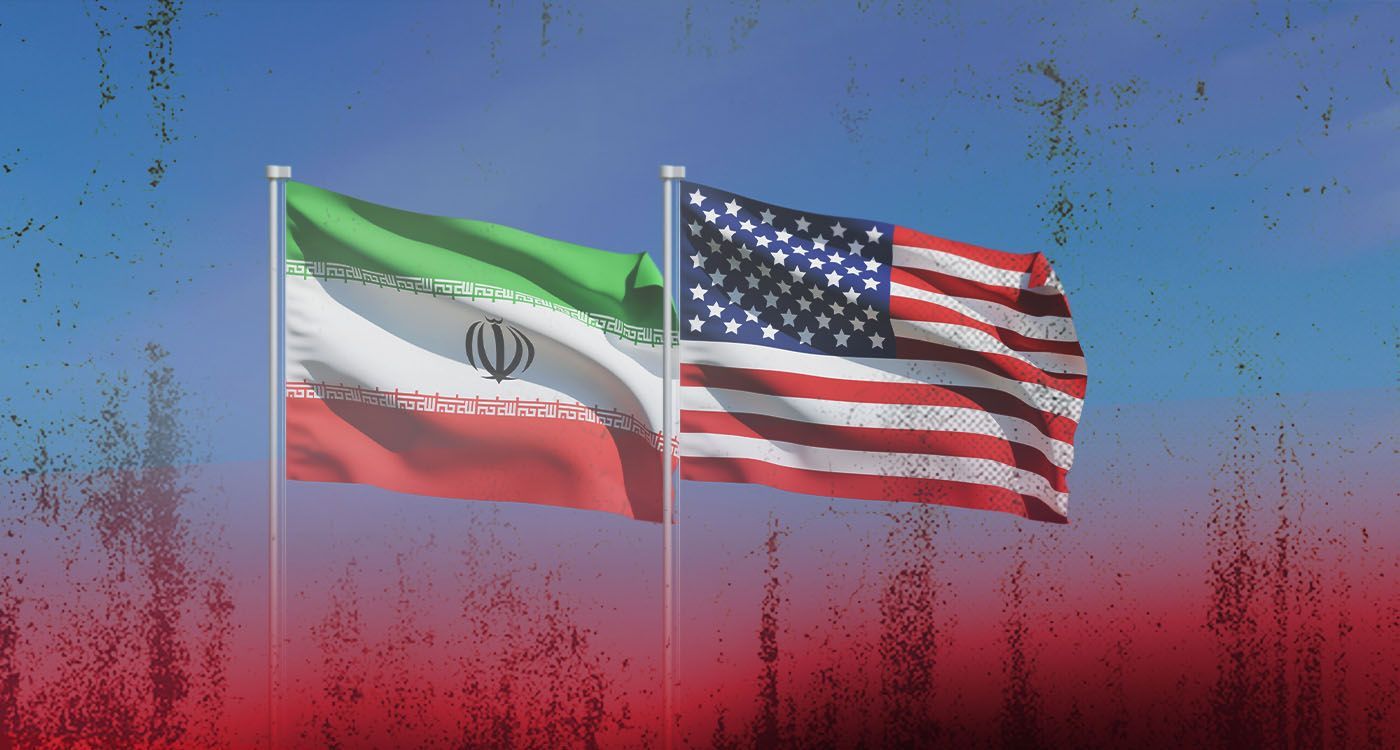
Amid elevated military tensions, the U.S. and Iran are now cautiously opening diplomatic channels, indicating an interest in averting a major conflict with potentially uncontrollable consequences for the region.
In recent days, a series of mixed signals—from hawkish statements and regional warnings to indirect exchanges via intermediaries—suggest that both capitals are engaged in a discreet but high-stakes effort at political dialogue.
On Monday morning, Iranian President Massoud Pezeshkian called for nuclear talks with Washington, days after Ali Larijani, a close ally of the Supreme Leader, said progress had been made toward establishing a framework for discussions.
In the same vein, the Iranian president stressed that a war would serve neither Iranian nor U.S. interests, while emphasizing that his country remains ready to defend itself. On Sunday, U.S.
President Donald Trump confirmed that exchanges were taking place, while pointing to the continued presence of significant U.S. military forces in the region.
These moves, however, do not yet constitute the start of formal negotiations. The political framework for potential dialogue remains unclear, while indirect channels remain the main route for communication at present.
The recent flurry of moves for negotiations comes after a long history of failed attempts at diplomacy, with Iran’s nuclear issue at the center of tensions between Tehran and the international community for more than two decades.
U.S. Goals
While preventing Tehran from acquiring a nuclear weapon remains Washington’s top priority, U.S. goals now encompass a broader set of perceived Iranian threats, including its ballistic missile program and regional proxy network.
According to multiple reports, the Trump administration has sent Iran, through unofficial channels, a series of strict demands that go well beyond the parameters of the Joint Comprehensive Plan of Action (JCPOA) signed in Vienna in 2015.
These reportedly call for Iran to hand over enriched uranium stockpiled in recent years, halting all sensitive nuclear activities, dismantling its missile program, and ending all military and financial support for Tehran’s allies in Lebanon, Iraq, and Yemen.
This hardline approach reflects a strategic vision shared by the U.S. and Israel to address Iran’s regional influence and military capabilities in tandem with its nuclear program, but one that makes the outcome of diplomatic efforts highly uncertain.
Israel has played a crucial role in U.S. policy considerations, delegating security officials to hold a series of strategic consultations in Washington. From Jerusalem’s perspective, concessions to Iran risk strengthening Tehran and undermining regional stability.
As such, Israel is pushing for a policy of maximum pressure, arguing Iran is facing unprecedented strategic vulnerability.
Faced with these demands, Iran’s position remains rooted in its long-standing doctrine, even as signs of tactical flexibility appear behind the scenes. Tehran insists that its uranium enrichment program is a sovereign right, recognized under international frameworks, which cannot be relinquished under international pressure.
Iranian authorities emphasize that any negotiated agreement must include solid guarantees that the U.S. will honor its commitments and not unilaterally withdraw, as it did from the JCPOA in May 2018.
In public, Tehran also categorically rejects discussing its conventional military capabilities, particularly its ballistic missile program, seeing any compromise on the issue as a challenge to its national security.
This outward rigidity, however, does not rule out potential policy debates on the issue. The combination of external pressures, crippling economic sanctions, and domestic upheaval might be fueling disagreements within the regime over what concessions it might make.
Some circles in Iran argue that the Islamic Republic’s survival requires a strategic adjustment, even if it means accepting temporary or indirect arrangements on the nuclear program. Others, particularly within the security apparatus, see any such retreat as tantamount to surrender with potentially irreversible consequences.
Why Past Talks Have Fallen Short
Current efforts at diplomacy seek to succeed where previous initiatives have failed amid regional turbulence. On June 22, 2025, the U.S. bombed Iranian nuclear sites following five rounds of talks that had begun two months earlier. The strikes severely damaged relations, narrowed the space for future negotiations, and reinforced a confrontational dynamic.
By the end of 2025, several rounds of indirect talks were held under Omani mediation or with the support of other Gulf states, notably Qatar. These discussions explored temporary measures—such as limiting enrichment in exchange for partial sanctions relief or the release of frozen funds—but did not produce a formal agreement.
Regional actors—including Qatar, Oman, Turkey, and Egypt—are playing a central mediating role, facilitating dialogue without direct contact between the parties. This shadow diplomacy reflects a shared interest among these states in avoiding a wider regional conflagration. Russia, an ally of Iran, has also voiced support for dialogue.
The current deadlock fits a recurring pattern. The 2015 JCPOA was a breakthrough at the time, offering strict oversight of Iran’s program in exchange for sanctions relief. Its implementation fell apart in 2018 when the U.S. withdrew unilaterally, building mistrust in Tehran and complicating prospects for a future deal.
Since then, attempts to build a deal have faced obstacles. Successive U.S. administrations have pursued differing approaches to Iran, leaving any potential agreement fragile and hard to sustain.
Beyond this, Tehran harbors deep-seated institutional mistrust of Washington. Iran’s ruling apparatus, particularly its most conservative security bodies, often sees diplomacy as surrender rather than a pragmatic solution.
Furthermore, the fate of Iran’s program is hard to disentangle from broader regional and international interests, including those of Israel, the Gulf states, Russia, and China, which link the nuclear question to broader concerns regarding security and strategic influence.
Structural Challenges to a Lasting Agreement
Initiatives for a new deal would need to overcome several structural challenges. Since the U.S. withdrawal from the JCPOA, Iran has continued developing advanced centrifuges and stockpiling enriched uranium, making meaningful reductions harder to monitor and verify.
Even if a framework were put in place in the coming days, any absence of credible verification and enforcement mechanisms—exacerbated by past breaches—leaves a persistent risk that commitments could unravel.
Another major challenge is oil. For Tehran, lifting sanctions on its petroleum exports is essential both for the regime’s economic survival and domestic stability. Iranian Supreme Leader Ali Khamenei has accused the U.S. of trying to “strangle” the country with its sanctions, making oil a strategic lever as sensitive as the nuclear issue in ongoing negotiations.
The combination of rising internal pressures and ongoing social unrest heightens Tehran’s urgent need for economic relief. Yet the Islamic Republic’s rejection of structural political reforms and its continued repression of protest movements undermine any attempt to present itself as a credible and reliable diplomatic partner.
Between U.S. demands and Iran’s red lines, every step toward diplomacy will be unsteady. Iran’s nuclear and ballistic programs, its regional proxy network, and its dependence on oil revenue can all serve as levers of tension, making a quick, final agreement unlikely. In the meantime, even a small miscalculation could quickly push the parties toward military conflict.
Read more

Comments