- Home
- Middle East
- What Are the U.S. Demands for Iran?
©Ici Beyrouth
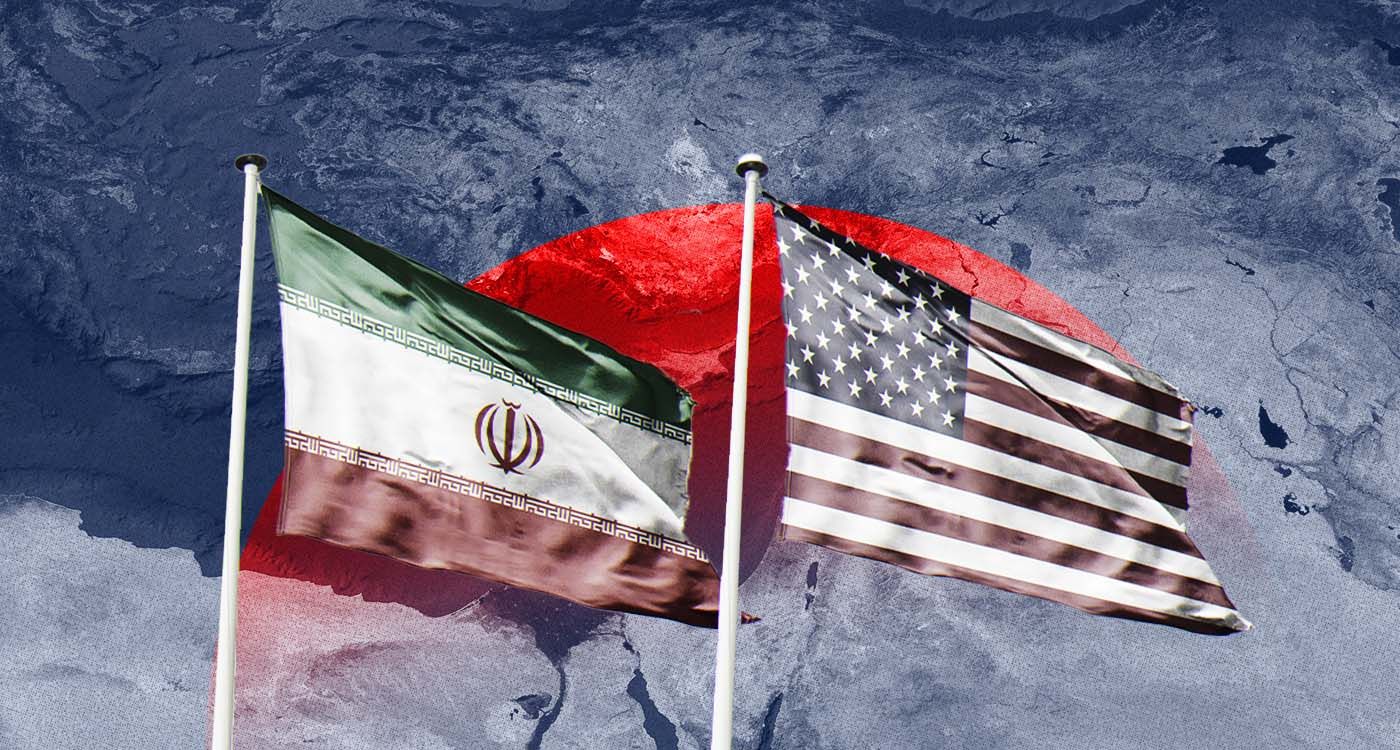
As a U.S. aircraft carrier strike group “armada” approaches the Gulf and rhetoric intensifies between the Trump administration and Iranian officials, U.S. and European officials outline three demands to Iran, according to a New York Times report on Wednesday.
The Nuclear Issue
One demand is to reach an agreement on the nuclear issue; President Trump expressed that U.S. military assets are prepared to strike Iran if the two countries are not able to agree on a path forward.
Trump stated that the U.S. is “ready, willing, and able to rapidly fulfill its mission, with speed and violence, if necessary. Hopefully Iran will quickly ‘come to the Table’ and negotiate a fair and equitable deal - No Nuclear Weapons - one that is good for all parties” on Wednesday in a post on Truth Social.
U.S. and European officials demand a permanent end to uranium enrichment, including both weapons-grade and fuel-grade uranium.
Iran’s nuclear program has been a sticking point in U.S.-Iran relations since the 2000s, with ebbs and flows in negotiations. Notable moments included the Obama-era Joint Comprehensive Plan of Action (JCPOA) from which Trump later withdrew, and multiple rounds of talks in Oman in 2025 which were halted by Israel’s strikes on Iran and the subsequent 12-Day War.
In the culmination of the June 2025 12-Day War, the U.S. engaged in direct military action in Iran for the first time, striking nuclear sites in Natanz, Fordow, and Isfahan during Operation Midnight Hammer.
While setting back Iran’s nuclear program, these developments did not resolve the disagreement, and it is still possible for Iran to continue enriching uranium at a reduced capacity in more concealed sites. As a result, the resolution of the nuclear issue remains a crucial policy objective for U.S. and European officials.
Ballistic Missiles
Reeling in Iran’s ballistic missile program is another core demand, limiting both the quantity and the reach of Iranian missiles. The ballistic missile arsenal has been a point of concern for the U.S. and countries in the Middle East alike, particularly as Iran has utilized it as a deterrent within the region.
In the 12-Day War, Iran launched barrages of ballistic missiles towards Israel in their exchanges of fire. Iran also utilized short- and medium-range ballistic missiles in its strikes on the al-Udeid air base in Qatar, the headquarters of the U.S. CENTCOM unified combatant command.
In Wednesday’s provocative exchanges on social media between U.S. and Iranian officials, secretary of Iran’s Supreme National Security Council Ali Shamkhani threatened to target “the heart of Tel Aviv” if the U.S. strikes Iran, in a post on X.
In the event of a conflict between the U.S. and Iran, officials warn that the ballistic missile threat risks expanding bilateral hostility into a regional war.
Proxy Network
Iran’s network of proxies in the region has been a primary security concern for U.S. and European officials and their partners in the Middle East. Thus, included in the list of demands is that Iran cut support for its proxies.
In addition to its ballistic missile arsenal, Iran has utilized proxies to project power beyond its borders and threaten its opponents through a strategy of “forward defense.”
In the Levant, Iran has supported Hamas and Hezbollah as part of its deterrence strategy against Israel, launching attacks beginning on October 7 and October 8, 2023 respectively drawing Gaza and Lebanon into a state of prolonged conflict with Israel.
Iranian support for Hezbollah also allowed the organization to work outside the framework of the Lebanese state and undermine its sovereignty.
In Syria, Iran supported the Bashar al-Assad regime through the Syrian civil war until his ousting in December 2024. In Yemen, the Iranian-backed Houthis have targeted trade routes in the Red Sea against Western ships.
While Iran’s economy is in a weak position and its proxies’ capabilities have been reduced through Israeli and U.S. intervention, the network still exists and may attempt to regroup with continued support from Iran. Therefore, cutting support to proxies remains a core demand outlined by U.S. and European officials.
What’s Absent?
Not present in the list of demands is any explicit condition related to the protection of Iranian demonstrators, despite widespread reports of lethal crackdowns by Iranian authorities which have resulted in a death count possibly as high as 30,000 according to Time Magazine.
Trump’s previous threats of military involvement were issued in support of protesters earlier this month, notably his January 13 Truth Social post announcing that “help is on its way.” Trump also warned the U.S. would strike Iran following reports that the Iranian regime would carry out a mass-execution of 800 protesters, which it denied.
Despite both U.S. and Iranian officials communicating openness to resolving the issue diplomatically, no formal negotiations have been initiated. Iran has not engaged in recent direct contact with the U.S. envoy Steve Witkoff, nor has it requested talks. Several unnamed countries are attempting to establish indirect mediation efforts between the U.S. and Iran.
Iranian Foreign Minister Seyed Abbas Araghchi has rejected the demands as “excessive and unrealistic” and stated that there is no diplomatic path under imminent military threat.
Read more

Comments