- Home
- Middle East
- U.S. Intelligence Assesses Iran’s Leadership at Its Weakest Point Since 1979
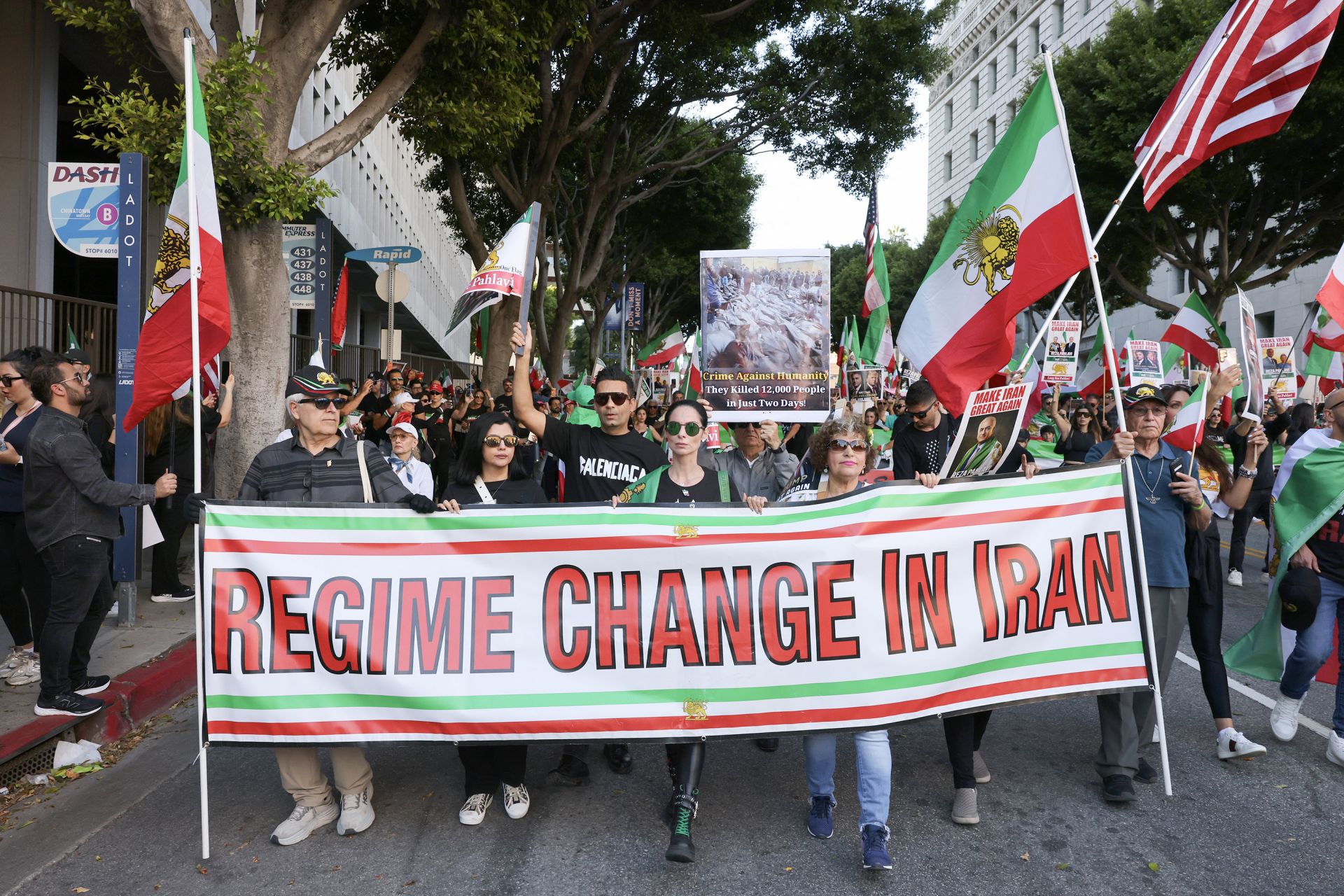
People march in an anti-Iranian regime rally in Los Angeles, California on January 18, 2026. ©JONATHAN ALCORN / AFP
U.S. intelligence agencies assess that Iran’s ruling establishment is facing its most fragile moment in decades, as President Donald Trump receives multiple intelligence briefings indicating that the government’s grip on power has reached its weakest point since the 1979 Islamic Revolution, according to reports cited by the New York Times.
The intelligence assessment comes amid continued unrest inside Iran, following months of protests that erupted late last year over economic hardship and escalated into nationwide demonstrations against the Islamic Republic. While the protests have subsided in intensity, U.S. officials believe the political and economic shockwaves continue to strain the regime.
According to people familiar with the briefings, U.S. intelligence agencies judge that the Iranian leadership has been deeply shaken by the scope of the unrest, particularly as demonstrations spread into areas long considered strongholds of Supreme Leader Ayatollah Ali Khamenei’s support.
Warnings to Iraqi Militias as U.S. Steps Up Regional Messaging
As Washington weighs its options, U.S. officials have delivered a direct warning to Iran-aligned militias in Iraq, cautioning them against intervening in any escalation between the United States and Tehran.
During a recent regional tour that included Syria, Iraq, and Israel, the commander of U.S. Central Command, Admiral Brad Cooper, conveyed a firm message to Iraqi officials: any attack by Shiite militias on U.S. forces or bases, in the event of heightened tensions with Iran, would trigger a direct American response.
The warning underscores U.S. concerns that Tehran could seek to retaliate indirectly through allied armed groups across the region, particularly in Iraq, where U.S. troops remain deployed.
Military Buildup Continues as Trump Weighs Options
Despite uncertainty over the White House’s next steps, the U.S. military has continued to reinforce its presence in the region. The aircraft carrier Abraham Lincoln, accompanied by three warships equipped with Tomahawk missiles, has entered the U.S. Central Command’s area of responsibility in the western Indian Ocean, according to military officials.
Pentagon officials have also confirmed the deployment of additional F-15E fighter jets, along with Patriot and THAAD air defense systems, aimed at protecting U.S. personnel from potential Iranian ballistic missile retaliation. Military sources say the carrier strike group could be operational within one to two days if ordered to act.
White House Press Secretary Karoline Leavitt said President Trump is receiving continuous intelligence briefings and is “closely monitoring” developments related to Iran.
Trump has publicly warned that the United States could strike Iran if executions of protesters resume, though senior officials say the president recently stepped back from the idea of an immediate strike after Tehran reportedly halted at least one planned execution. Advisers remain divided over whether limited, symbolic strikes would achieve strategic objectives.
Economic Pressure and Internal Strain
U.S. intelligence assessments also point to Iran’s worsening economic situation as a key driver of instability. A struggling currency, high inflation, and limited government capacity to ease living costs helped spark the initial protests in December, officials say, leaving Tehran with few options to stabilize public sentiment.
While some advisers around Trump favor a broader campaign aimed at toppling Iran’s leadership, others caution that military action could carry significant regional risks, particularly if Iran mobilizes allied militias or escalates attacks on U.S. assets.
Republican Senator Lindsey Graham, a close ally of the president, has publicly argued that the current moment presents an opportunity to support Iranian protesters. “The goal is to end the regime,” Graham told the New York Times, adding that halting repression temporarily would not change the nature of the leadership in Tehran.
A Moment of High Stakes
For now, U.S. officials describe a posture of heightened readiness rather than imminent action. Trump continues to signal that all options remain on the table, frequently referencing the naval buildup in the region and past U.S. strikes on Iranian nuclear-related facilities.
As Washington balances deterrence with restraint, intelligence officials warn that Iran’s internal weakness could either open the door to change or push the regime toward more aggressive external behavior as it seeks to reassert control at home.
Read more
Comments