- Home
- Middle East
- 2026 NDS: America First Ushers in a New Era of Selective Engagement in the Middle East
- 24
- Jan.
- 2026
Analysis2026 NDS: America First Ushers in a New Era of Selective Engagement in the Middle East
Read : 7 minute(s) A A A
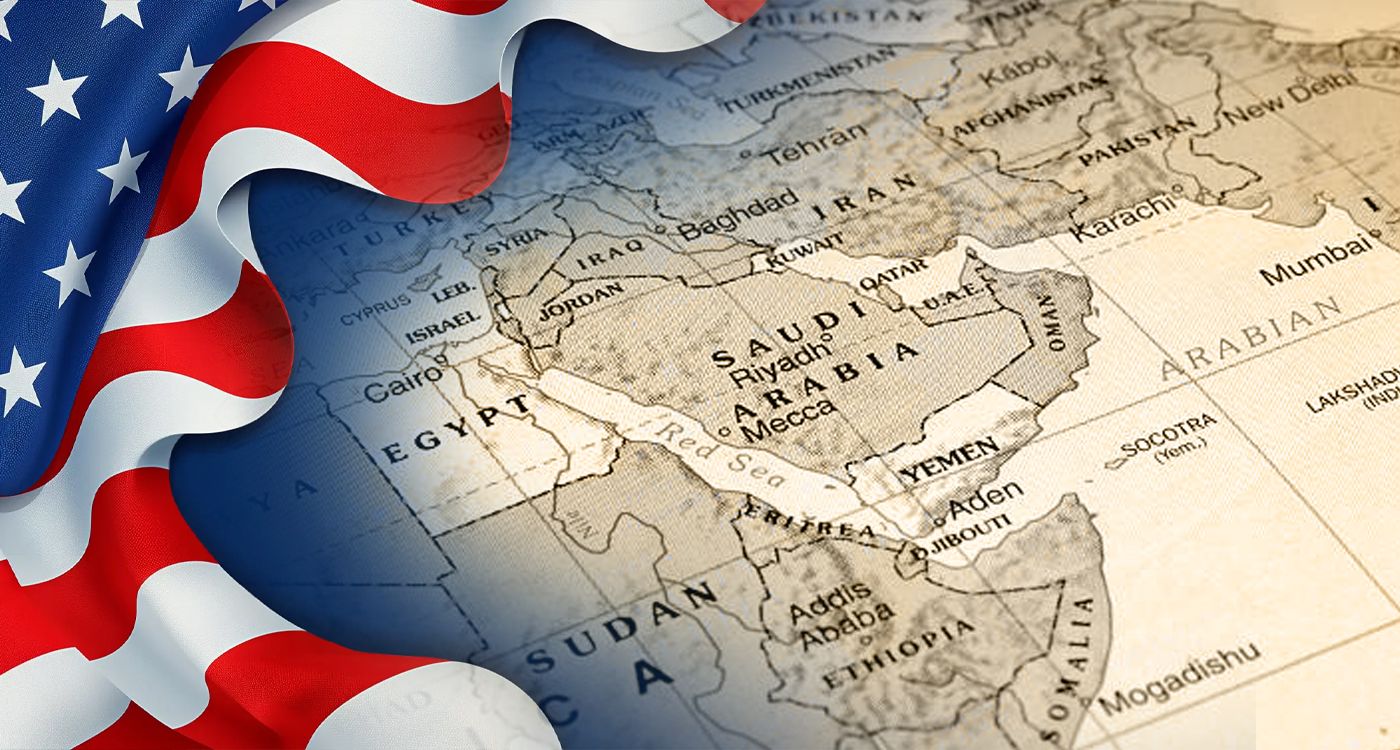
©Ici Beyrouth
The newly released 2026 National Defense Strategy (NDS) marks a dramatic pivot in American foreign policy, embracing what officials call “pragmatic realism” while fundamentally redefining U.S. engagement in the Middle East. Under an “America First” framework, the strategy moves away from large-scale military interventions in favor of empowering regional allies, while preserving U.S. capacity for limited, high-impact strikes.
At the heart of this transformation lies a stark reassessment of two decades of American military engagement. The strategy explicitly rejects what it characterizes as costly nation-building exercises that drained resources without serving direct U.S. interests, proposing instead a selective approach focused on concrete threats to American security and prosperity.
The Allied Empowerment Model
The cornerstone of the new Middle East approach involves transferring primary security responsibilities to regional partners while the United States provides critical but limited support. This marks a departure from the forward-deployed U.S. military posture that has characterized the region since the 1990s.
“We will no longer bear the burden of endless wars that do not directly serve American interests,” the strategy states, while insisting this does not constitute isolationism but rather “strategic selectivity backed by overwhelming capability.”
Israel emerges as the primary example of this model of allied empowerment. The strategy points to Israeli operations during what it terms the “12-Day War” following the October 7th attacks as proof that properly equipped and unconstrained allies can defend themselves against existential threats. The document criticizes previous policies for allegedly restricting Israeli operational freedom and pledges to remove such limitations, viewing Israeli military capability as essential to broader regional stability.
Beyond Israel, the strategy emphasizes deepening security cooperation with Arabian Gulf partners and fostering integration between Israel and Arab states, building on the Abraham Accords framework. The vision is a regional security architecture where American allies increasingly manage their own defense while Washington retains the ability to intervene decisively when core interests are threatened.
Hezbollah: Degraded but Not Destroyed
Hezbollah is identified as a key Iranian proxy that has been significantly degraded by recent Israeli operations supported by U.S. intelligence and logistics. The strategy credits these campaigns with significantly reducing Hezbollah’s infrastructure and operational capabilities, diminishing its capacity to threaten Israeli security and regional stability.
The operational approach to Hezbollah exemplifies the broader allied empowerment model. The United States provides targeted assistance—advanced weaponry, intelligence, and operational coordination—while Israel assumes primary responsibility for conducting operations. This division of labor is presented as both strategically sound and resource-efficient, allowing Washington to support allied objectives without committing large-scale ground forces.
“Our partners are capable of defending themselves when properly equipped and supported,” the strategy asserts. “Our role is to enable their success, not to fight their battles for them.”
However, the document acknowledges that Hezbollah retains significant capabilities and may attempt to rebuild its strength. Operational plans include ongoing intelligence-sharing, surveillance of southern Lebanon and the Bekaa Valley, and readiness to support further Israeli or allied operations if Hezbollah attempts to reconstitute its forces or launch attacks.
The strategy also discusses Operation Rough Rider, described as a decisive campaign that degraded Houthi strike capabilities in Yemen, ultimately compelling them to cease attacks on commercial shipping and U.S. vessels. This operation provides further evidence that focused, limited military campaigns can effectively achieve strategic objectives without prolonged commitments.
Iran: The Nuclear Red Line
Iran receives the most extensive attention in the strategy, which identifies it as a persistent threat requiring sustained pressure and vigilance. The document takes an uncompromising stance on Iranian nuclear ambitions, declaring categorically that Iran will not be permitted to acquire nuclear weapons under any circumstances.
As evidence of American resolve, the strategy references Operation Midnight Hammer, described as a large-scale military operation that destroyed Iran’s nuclear program. The operation reportedly involved rapid, high-impact strikes launched directly from the American homeland that targeted Iranian nuclear infrastructure with precision and devastating effect.
“The Joint Force executed this complex operation flawlessly, demonstrating both our capability and our willingness to act decisively when diplomacy fails,” the document states. The operation is presented as a model of modern military effectiveness—achieving strategic objectives through focused strikes rather than prolonged campaigns or occupation.
However, the strategy acknowledges that despite these setbacks, Iran remains determined to reconstitute its military capabilities and may attempt to revive its nuclear program. The regime’s refusal to engage in meaningful negotiations and its continued support for proxy forces throughout the region are identified as ongoing challenges.
“Iran’s leadership must understand that any attempt to rebuild nuclear capabilities will be met with the same decisive response,” the strategy warns, committing to maintaining operational readiness for follow-up strikes if necessary.
Beyond nuclear concerns, the document addresses Iran’s extensive network of proxy organizations—including Hezbollah in Lebanon, the Houthis in Yemen, and various militia groups in Iraq and Syria. The approach involves monitoring and, if necessary, preventing Iran from rebuilding conventional capabilities, targeting proxy infrastructure to degrade operational capacity, and empowering regional allies to counter Iranian influence in their respective areas.
The Three Strategic Pillars
These operational approaches to Iran and Hezbollah are embedded within three broader strategic lines of effort that structure the entire defense strategy.
First, defending the U.S. homeland is identified as the paramount priority, including border security, counter-narcoterrorism efforts, and defense against direct military threats. This homeland-focused orientation represents a significant shift from strategies that emphasized forward presence as the primary security guarantor.
Second, increasing burden-sharing with allies and partners forms the foundation of the new approach. Regional actors are incentivized and enabled to take primary responsibility for their own defense, with the United States providing critical but limited support. This involves not just military assistance but also diplomatic efforts to foster regional integration and cooperation.
Third, revitalizing the U.S. defense industrial base is identified as essential to sustaining both American military capabilities and allied empowerment. The strategy calls for dramatically increasing American defense manufacturing to ensure rapid production and supply of arms and equipment for both U.S. forces and partner nations.
Peace Through Strength
Throughout the document, a consistent philosophical framework emerges that officials characterize as “peace through strength.” This approach rejects what it terms “utopian idealism” in favor of “hardnosed realism,” insisting that sustainable peace requires adversaries to respect U.S. interests and capabilities.
“Peace is the highest good, but it must not come at the expense of American security, freedoms, or prosperity,” the strategy states. “The Department of War stands ready to offer the olive branch, but we are equally prepared to fight and win if peaceful approaches are rejected.”
This philosophy shapes the operational approach to both Iran and Hezbollah. Rather than seeking comprehensive regional settlements or attempting to transform adversarial regimes through engagement, the strategy emphasizes deterrence, military superiority, and the willingness to use force decisively when necessary.
The strategy’s success depends on several untested assumptions. Critics may argue that reducing American presence creates power vacuums that adversaries will exploit, while supporters contend that decades of deep engagement failed to produce lasting stability and drained American resources without commensurate benefits.
What remains clear is that the 2026 National Defense Strategy represents not merely a policy adjustment but a fundamental reimagining of America’s role in the world—one that prioritizes American interests, empowers allies, and reserves military force for decisive action against the most critical threats. Whether this approach proves more effective than its predecessors will depend on implementation, regional dynamics, and how adversaries adapt to this new strategic reality.
Read more


Comments