- Home
- Middle East
- Netanyahu Joins Gaza Board of Peace Despite Misgivings
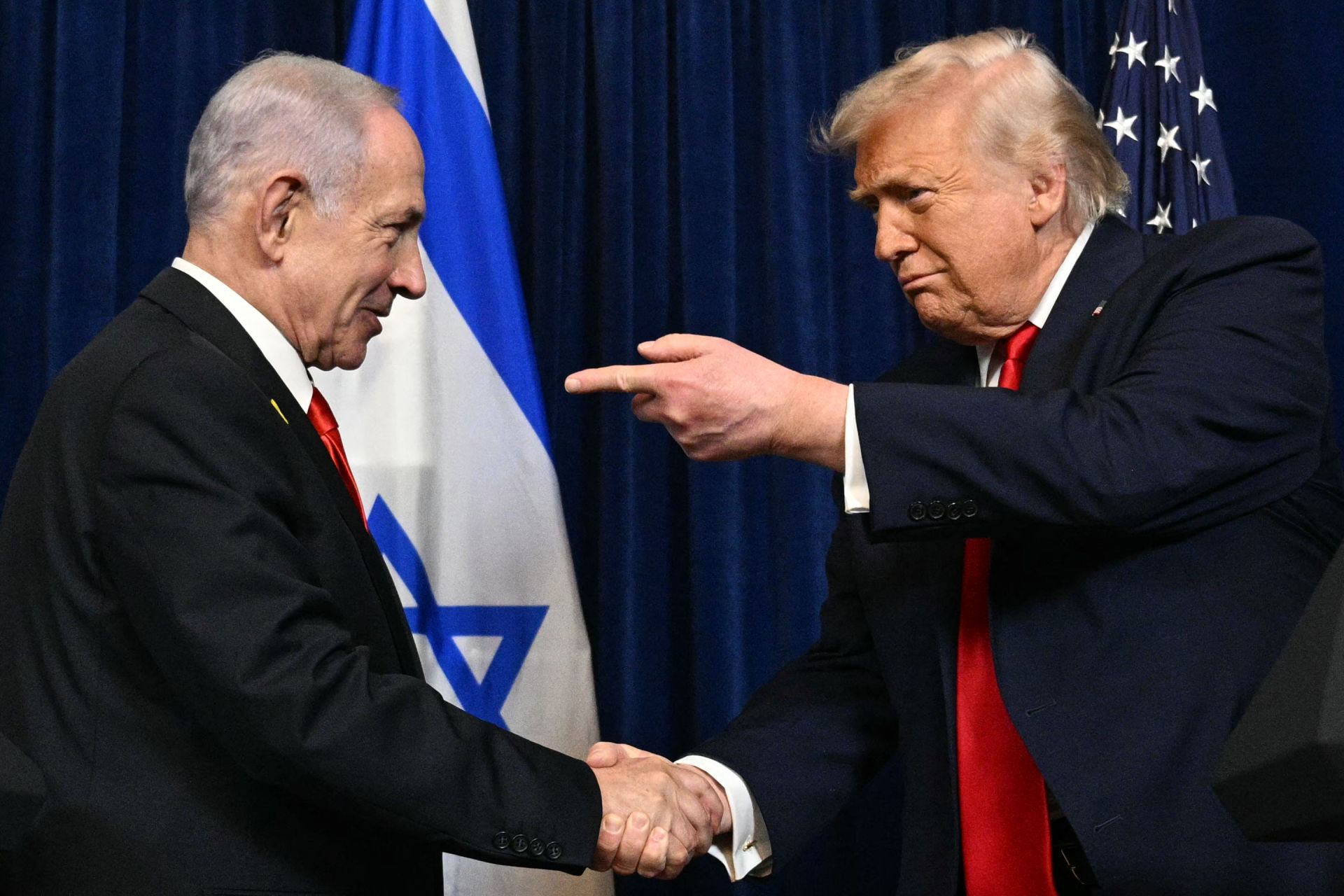
US President Donald Trump (R) and Israeli Prime Minister Benjamin Netanyahu shake hands as they arrive to speak to reporters during a joint press conference at Trump’s Mar-a-Lago residence in Palm Beach, Florida, on December 29, 2025. ©Jim Watson / AFP
Prime Minister Benjamin Netanyahu has agreed to take part in the U.S.-led Board of Peace overseeing postwar Gaza, despite mounting unease within Israel’s leadership over the structure and membership of the body, an Israeli official told The Times of Israel on Thursday.
The decision, the official said, reflects the reality of Israel’s deep reliance on Washington at a moment when the United States is shaping the framework for Gaza’s future, leaving Jerusalem with limited room to refuse American initiatives even when they raise strategic concerns.
Backing the Idea, Questioning the Mechanism
Israeli officials stress that Jerusalem does not oppose the concept of a U.S.-led international framework in principle. On the contrary, the Board of Peace is seen by some in Israel as preferable to United Nations-led mechanisms, which successive Israeli governments have accused of institutional bias.
However, serious objections have been raised over the Gaza Executive Board, the operational arm of the initiative expected to wield real influence over governance and reconstruction in the Strip. Unlike the broader leadership council, which is largely symbolic, the executive board is designed to play a hands-on role in shaping postwar realities.
Israel has taken particular issue with Washington’s decision to include senior representatives from Turkey and Qatar, both of which Jerusalem views as problematic actors given their past engagement with Hamas.
A Narrow Margin for Dissent
According to the official, Israel’s ability to challenge those appointments was constrained by broader strategic considerations. At a time when many countries are diversifying alliances, Israel has moved in the opposite direction, reinforcing its dependence on the United States across diplomatic, military, and political fronts.
That alignment has translated into an unusually close relationship between Netanyahu and U.S. President Donald Trump, marked by frequent meetings and direct coordination. But it has also made it harder for Israel’s leadership to draw clear red lines when Washington presses ahead with initiatives tied to Gaza.
In recent months, U.S. pressure has shaped outcomes ranging from ceasefire arrangements to diplomatic disputes involving regional actors, episodes that Israeli officials privately acknowledge underscore an imbalance in leverage.
Gaza Decisions Shift Beyond Jerusalem
The Board of Peace has been granted a two-year mandate to oversee Gaza’s postwar administration, placing it at the center of decisions traditionally viewed by Israel as matters of sovereignty.
One immediate example is the Rafah border crossing. While Israeli officials say the security cabinet is still discussing its reopening, figures involved in the board’s planning indicate that full operations are set to resume regardless of Israel’s conditions regarding Hamas’ disarmament and the return of remaining hostages.
Netanyahu has publicly acknowledged differences with Washington over the board’s makeup but has sought to minimize their significance, emphasizing the strength of ties with the White House and framing disagreements as manageable.
Power Dynamics in Postwar Gaza
The establishment of the Board of Peace comes as Gaza enters a transitional phase following more than two years of war that devastated infrastructure and dismantled governing institutions. The United States has moved to place itself at the center of reconstruction and oversight, while regional and international actors jockey for influence.
For Israel, participation in the board reflects a strategic calculation rather than enthusiastic endorsement, balancing the need to remain aligned with Washington against concerns that key decisions about Gaza’s future may increasingly be shaped outside Israeli control.
Read more

Comments