- Home
- Middle East
- Erbil Set to Host New Syria-Kurdish Talks as Ceasefire Strains in the North
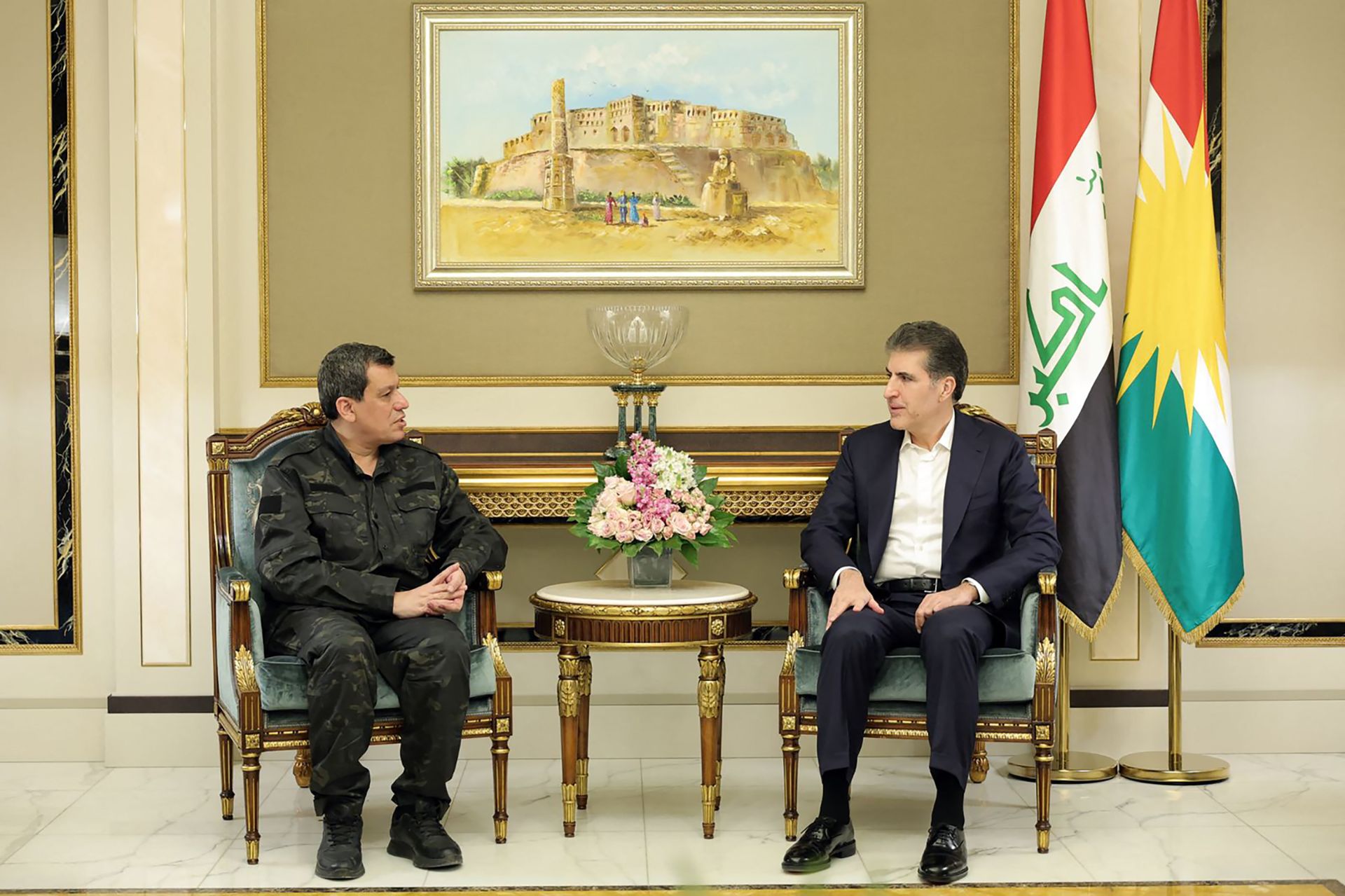
A handout image made available by the Iraqi Kurdistan Presidency on January 22, 2026, shows Nechirvan Barzani (R), the president of Iraqi Kurdistan, meeting with Mazloum Abdi, the head of the Kurdish-led Syrian Democratic Forces (SDF), in Erbil. ©- / IRAQI KURDISTAN PRESIDENCY / AFP
A new round of negotiations between the Syrian government and the Kurdish-led Syrian Democratic Forces (SDF) is set to take place in Erbil, Iraqi Kurdistan, according to Kurdish sources cited by Al Arabiya, as efforts intensify to salvage a ceasefire and revive talks over the future of northeastern Syria.
The planned meetings come just days after Damascus announced a preliminary understanding with the SDF on issues related to the future of Hasakeh province, following an agreement reached on January 18. Since then, both sides have accused one another of violating the truce declared three days ago, underscoring the fragility of the current calm.
Erbil Steps In as Mediator
Kurdish sources say the talks will be hosted by Erbil, the capital of Iraq’s Kurdistan Region, with direct mediation by Kurdish leader Masoud Barzani, head of the Kurdistan Democratic Party and former president of the region.
Iraq’s role as host reflects growing concern among regional actors that renewed fighting between Damascus and the SDF could destabilize border areas and derail broader efforts to stabilize northern Syria.
U.S. Envoy to Attend Talks
According to the sources, the U.S. special envoy to Syria, Thomas Barrack, is expected to attend the meetings, signaling continued American involvement in shaping a negotiated outcome between the two sides.
The talks are expected to focus on the January 18 agreement and the subsequent understandings announced by the Syrian presidency, particularly mechanisms for security coordination and the future governance of Hasakeh province.
Damascus will be represented by Foreign Minister Asaad al-Shaibani, while the SDF delegation will be led by its commander Mazloum Abdi, accompanied by Rohlat Afrin, a senior figure in the Women’s Protection Units affiliated with the SDF.
From Aleppo Clashes to Regional Diplomacy
Erbil’s mediation effort follows a series of high-level contacts triggered by clashes earlier this month between Kurdish fighters and Syrian army units in Aleppo province. Syrian President Ahmed al-Sharaa held multiple phone calls with Barzani during the escalation, urging political dialogue over military solutions.
Barzani, in turn, stressed the need to avoid further confrontation and to resolve disputes through negotiations, a message echoed in subsequent calls between al-Sharaa and Iraqi Prime Minister Mohammed Shia al-Sudani, who later spoke directly with Abdi about the situation in Syria.
The Kurdistan region’s role is further shaped by its close ties with Ankara, which remains deeply invested in the outcome of talks involving the SDF.
Damascus Pushes Integration Timeline
The renewed talks follow the collapse of earlier negotiations in Damascus, after Abdi rejected conditions laid out by the Syrian leadership. In response, the Syrian presidency granted the SDF four days to conduct internal consultations and present a detailed plan for integrating its forces into the Syrian army.
Damascus has said that, should an agreement be reached, Syrian troops would not enter the centers of Hasakeh and Qamishli, remaining instead on their outskirts while timelines and technical details for integration are negotiated. The government also pledged that Syrian military forces would not enter Kurdish villages, with local security to be handled by forces drawn from the area’s residents.
A Narrow Path Forward
The Erbil talks come at a critical juncture for northeastern Syria, where competing security interests, regional rivalries, and unresolved questions of autonomy continue to shape the landscape. For Damascus, the priority remains reasserting state authority through negotiated integration rather than prolonged confrontation. For the SDF, the challenge lies in safeguarding Kurdish political and security gains amid mounting pressure.
With regional mediation, U.S. involvement, and Turkish sensitivities converging, the Erbil negotiations may represent one of the last opportunities to prevent a return to open conflict, and to define the future balance of power in Syria’s northeast.
Read more
Comments