- Home
- Middle East
- Amid U.S. Military Build-Up, What Comes Next for Iran and the Region?
©This is Beirut
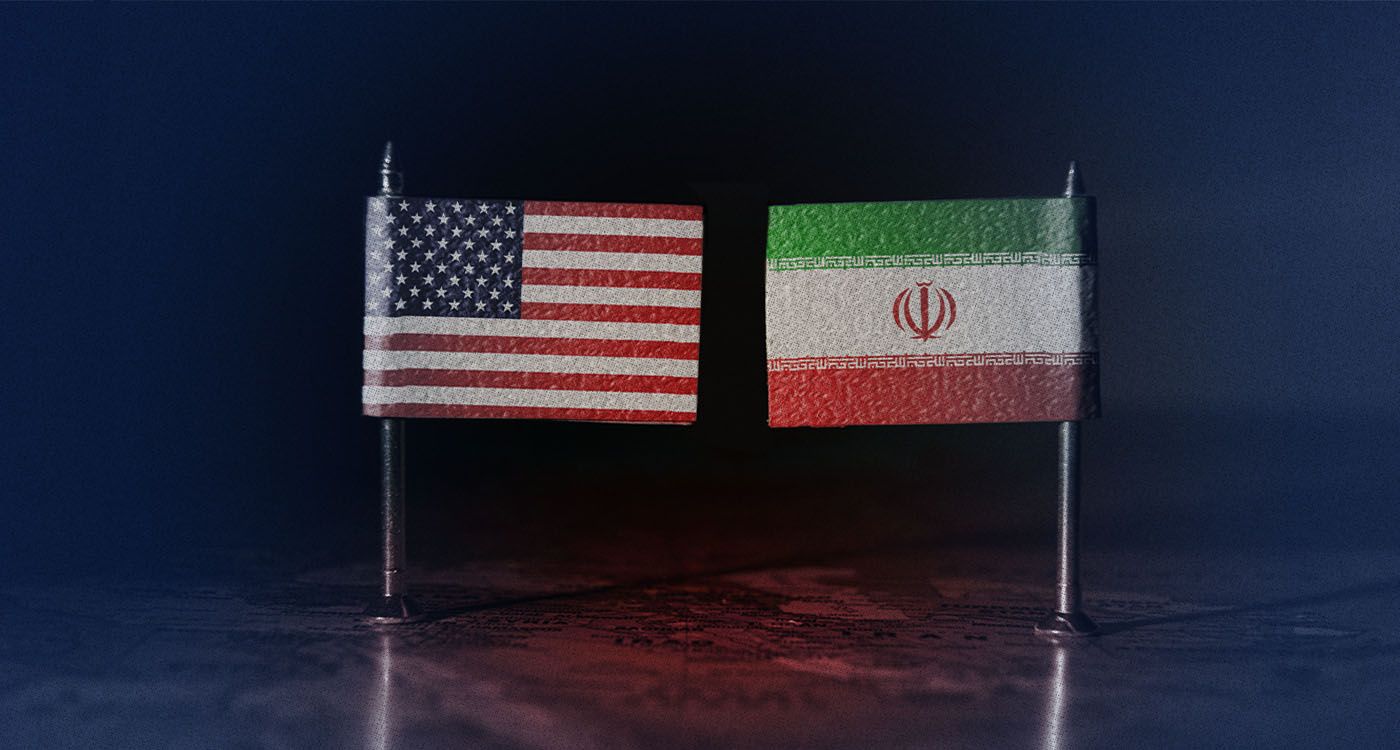
Washington is signaling it may take action against Iran amid its increasingly deadly crackdown on nationwide protests that began on December 28. This is Beirut spoke with analysts about the dramatic events unfolding in Iran and their ripple effects on the region, after reports show a significant U.S. military buildup is underway in the Middle East.
On Monday, the U.S. Central Command publicized an image of a U.S. Air Force F-15E Strike Eagle landing at an undisclosed base in the Middle East, saying that its “presence enhances combat readiness and promotes regional security and stability.”
Earlier in the day, aviation trackers spotted a U.S. P-8A reconnaissance aircraft operating over the Strait of Hormuz. Meanwhile, the USS Abraham Lincoln aircraft carrier is sailing toward the Middle East alongside U.S. Navy destroyers and missile vessels.
Since January 2, U.S. President Donald Trump has warned Iran’s rulers against violently killing demonstrators, while telling protesters that help was on its way. The Iranian Security forces have killed at least 16,500 protesters and injured 330,000 more, according to a report based on information from doctors in Iran. The total toll is likely higher, but Tehran’s suppression of internet access is making it difficult to accurately measure dynamics on the ground.
Trump said he held off on a potential military action against Iran which was reportedly planned for January 15, but he has since called openly for new leadership to replace the theocratic regime currently in power. These comments amidst the deployment of U.S. military assets to the Middle East shows he may be once again poised to strike.
The Iranian parliament’s national security commission on Monday warned that any attack on Iranian Supreme Leader Ayatollah Ali Khamenei would be met with “a response from the soldiers of Islam across the globe.”
As tensions escalate, analysts spoke last Wednesday about U.S. policy options and what might be in store for the region at an event hosted by opposition media organization Iran International, which was broadcast to thousands inside Iran who have been without internet since January 8.
Washington Institute executive director Robert Satloff told This is Beirut that the major U.S. military buildup in the Caribbean and its January 3 capture of Venezuelan President Nicolás Maduro might have absorbed much of Washington’s political will for foreign action, leaving little appetite for direct intervention in Iran.
The protests in Iran erupted against the backdrop of the U.S. military operation that took Maduro into custody, a move widely seen as a strategic blow to Iran, its proxy Hezbollah, and its allies in the Western Hemisphere. The U.S. action against Maduro constrained Iranian and Hezbollah influence, and might have played a part in emboldening thousands of protesters inside Iran who viewed the regime as weakened.
Satloff argued that any action inside Iran should not follow the “Venezuela model.” Maduro’s capture was a “narrow removal of a leader, not a substantial change in regime.”
At the very least, Washington could target Iran’s communication systems, and military barracks and facilities to embolden the protest movement in the country, he said. “We can do what we can,” Satloff said, “but this is an Iranian effort.”
Though the protests have yet to topple the regime, they represent one of the most significant challenges to Iran’s leadership in years. Iran is still reeling from its June 2025 war with Israel, while its proxies have suffered significant blows. Iran’s weak military standing, lack of an ability or will to care and provide for its citizens, and shortage of necessary services like electricity and water, mean some in Washington view Iran as a failed state.
“They’ve ceased to function as a normal state in every way except for the organization of violence against their own people,” Rayburn said in an interview with Times News.
Speaking at the Iran International event, Hudson Institute Senior Fellow for Defense and Security Joel Rayburn contended that he does not think Iran’s regional proxy network “is strong enough to operate in a way that props up his regime.”
In terms of regional geopolitics, Rayburn said that Gulf states have come to believe that they cannot tolerate forever the current Iranian regime. The former US Department of the State official said that Iran was an “equal opportunity aggressor” which had attacked Saudi Arabia and the United Arab Emirates in the past.
However, the Gulf countries are not going to use force against Iran, or even publicly pressure it, like the U.S. might, he added. On January 15, reports emerged that Saudi Arabia, Qatar, and Oman had lobbied the U.S. not to strike Iran.
Washington is recalibrating its expectations, shifting focus from a potential Iranian regime collapse to how it should take advantage of Tehran’s crisis. At the top of the list of Washington’s considerations is how Iran’s instability might impact its regional proxy network.
“The Houthis are the most independent of all of these proxies,” Satloff said. “If Iran goes down, they will still be their irascible selves no matter what’s going on.”
“Those are the two poles really,” Satloff said. “Hezbollah on one side, and the Houthis on the other.”
Hezbollah, by contrast, is far more deeply tethered to Iranian political, financial, and military support, he said. In Satloff’s assessment, prolonged instability in Iran would leave Hezbollah effectively frozen, unable to mobilize without Tehran’s backing.
This could present an opportunity for the U.S. and Israel to apply further pressure on Hezbollah. Israel resumed its regular airstrikes against Hezbollah in Lebanon, after holding off for several days following the eruption of protests to see how events would unfold, Satloff noted.
Farzin Nadimi, a senior fellow at the Washington Institute whose research focuses on Iran and Persian Gulf security affairs, agreed that Hezbollah is preoccupied.
“Hezbollah is focused on the disarmament efforts by the international community and the pressure they are putting on the government of Lebanon. Also, they are very concerned about renewed hostility with Israel, so they are very busy,” Nadimi said.
Amid regional turbulence, analysts say that while the regime’s use of force to crack down on protests underscores its vulnerability, it also demonstrates its capacity to repress widespread dissent despite strategic weaknesses. Nevertheless, the toppling of Iran’s regime, which might require foreign intervention, should not be ruled out.
“This regime, which has been so counter to U.S. interests, may be on its last leg,” Satloff said.
Read more


Comments