- Home
- Middle East
- Witkoff: Prefers Diplomacy With Iran But Warns of Consequences
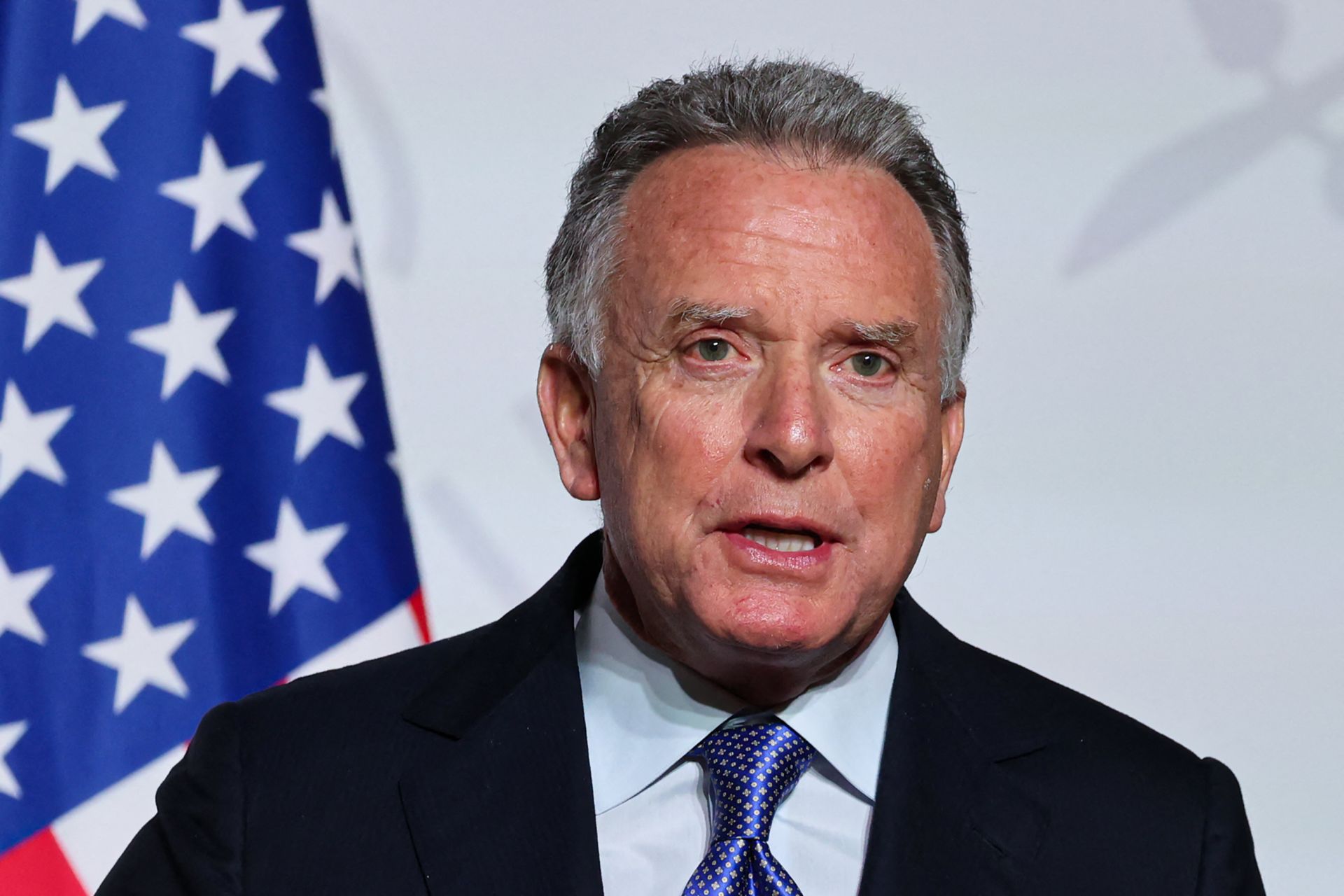
US Special Envoy Steve Witkoff delivers a press conference upon the signing of the declaration on deploying post-ceasefire force in Ukraine during the Coalition of the Willing summit on security guarantees for Ukraine, at the Elysee Palace in Paris on January 6, 2026. ©LUDOVIC MARIN / POOL / AFP
Speaking Thursday night at the Israeli-American Council conference in Florida, Steve Witkoff, the U.S. special envoy for Middle East diplomacy, was asked during an onstage interview whether he believes a U.S. military strike against Iran is likely.
He signaled a renewed preference for diplomacy with Iran while pointedly warning that failure to reach an agreement would carry serious consequences. “I hope there’s a diplomatic resolution. I really do,” Witkoff replied.
Four Core Conditions: Washington’s Diplomatic Framework
Witkoff outlined four issues he described as central to any diplomatic agreement with Iran.
First is nuclear enrichment. Iran currently enriches uranium at levels ranging from the 3.67 percent cap set under the 2015 nuclear deal to as high as 60 percent, far beyond civilian energy requirements and technically close to weapons-grade. According to international estimates, Tehran now possesses roughly 2,000 kilograms of enriched uranium, a stockpile that has grown sharply since the collapse of the nuclear agreement.
Second is Iran’s ballistic missile program. Long excluded from prior negotiations, Iran’s expanding missile inventory, capable of striking targets across the Middle East, has become a central concern for the United States and its regional allies, particularly Israel and Gulf states.
The third issue concerns the nuclear material itself: its quantity, enrichment levels, storage, and verification. International inspectors have repeatedly warned that reduced transparency and restricted access inside Iran complicate efforts to assess how close Tehran may be to a nuclear threshold.
The fourth pillar, and arguably the most politically sensitive, is Iran’s regional proxy network. Armed groups aligned with Tehran, including Hezbollah in Lebanon, militias in Iraq and Syria, and the Houthis in Yemen, have played a central role in escalating regional tensions over the past year, repeatedly drawing in U.S. and allied forces.
“If they want to come back to the League of Nations, we can solve those four problems diplomatically. Then that would be a great resolution.” Witkoff declared.
He added bluntly, “The alternative is a bad one.”
Diplomacy Under Pressure as Regional Tensions Escalate
Witkoff’s remarks come at a moment of mounting strain in U.S.-Iran relations, where formal diplomatic engagement has all but broken down and tensions over Iran’s internal crisis and regional behavior remain elevated. Sources indicate that direct communications between U.S. and Iranian officials have been largely suspended as the standoff intensified late last week.
President Donald Trump’s policy has oscillated between sharp public warnings of possible military force and cautious openness to negotiation. Trump has repeatedly vowed that “all options are on the table,” including robust military action if Iran continues to violently suppress internal protests, the largest in the country in years.
At the same time, Tehran has reportedly engaged back-channel outreach on the nuclear track, and U.S. aides have briefed Trump on the possibility of renewed talks after past rounds of indirect negotiations faltered.
Message to Iranians: “We Stand With You”
Asked whether he had a message for Iranians who oppose the ruling system and seek the fall of the Islamic Republic, Witkoff shifted from strategic language to moral support.
“They’re incredibly courageous people,” he said. “And we stand with you.”
The statement echoes longstanding U.S. efforts to separate its confrontation with Iran’s leadership from its stance toward the Iranian population—particularly after years of protests met with harsh crackdowns, arrests, and executions.
While largely symbolic, such messaging is closely watched inside Iran, where expressions of foreign support are both welcomed by activists and exploited by authorities as evidence of external interference.
Comments