- 15
- Jan.
- 2026
AnalysisLebanon’s Disarmament Gamble: Fragile Gains and Uncertain Path Forward
Read : 9 minute(s) A A A
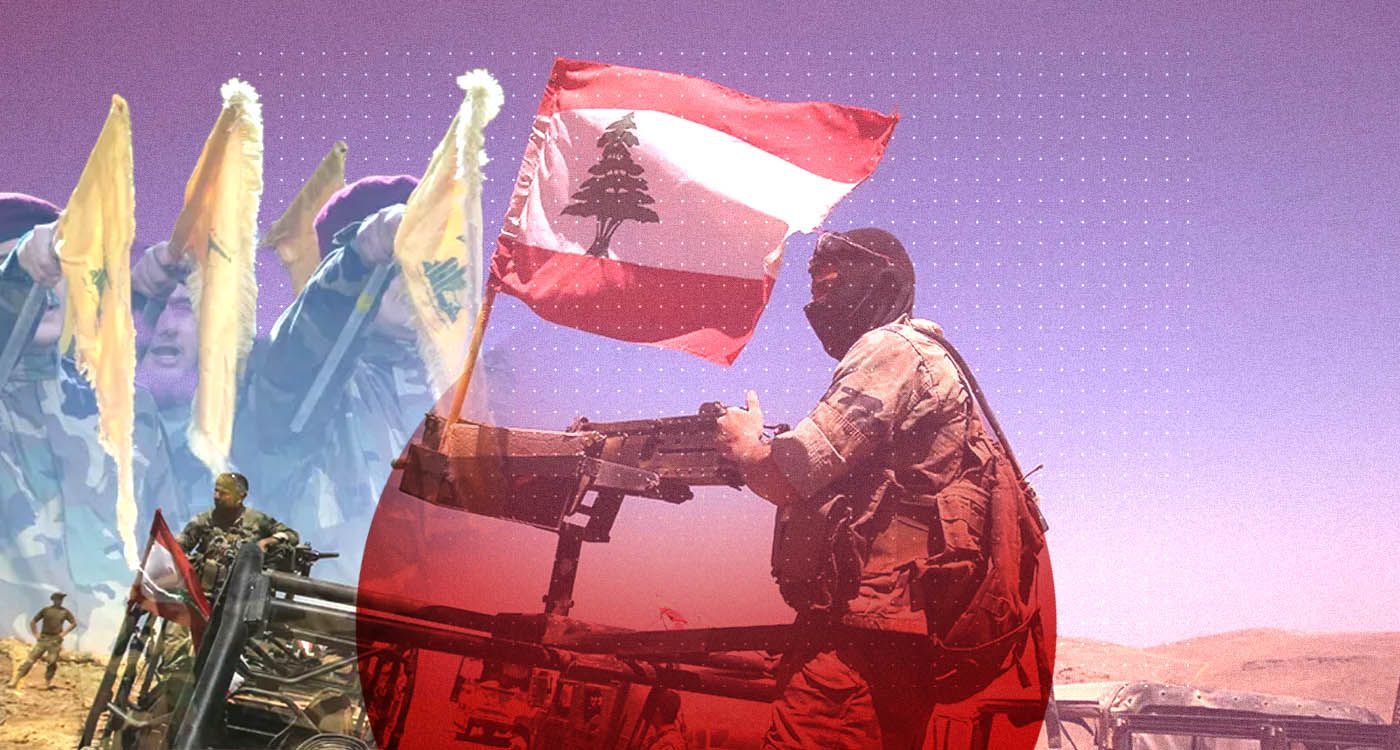
Lebanon is preparing to confiscate Hezbollah’s weapons north of the Litani River, a step that will test whether the state has the capacity to follow through on the government’s stated commitment to disarm the group.
On January 8, the Lebanese Armed Forces (LAF) announced that it had completed the disarmament of Hezbollah south of the Litani. The milestone—one Israel contends has not been fully implemented—marks the end of the first phase of a nationwide disarmament campaign greenlit by the cabinet last September.
Moving to the second phase, however, brings Lebanon’s political hurdles into focus. The country’s divided government must first approve an LAF plan, expected within a month, to disarm Hezbollah in areas between the Litani and Awwali rivers. While Hezbollah has conceded to disarmament south of the Litani, it has publicly balked at giving up its weapons elsewhere.
Meanwhile, Washington has pressed for swift progress. “We hope this phase begins quickly and is completed as soon as possible. Meeting the timeline is essential,” U.S. Ambassador to Lebanon Michel Issa said on January 12.
The outcome of the disarmament campaign will shape not only Lebanon’s future, but regional stability as well, as failure could trigger greater conflict, strain alliances, and prompt foreign intervention.
Skepticism over LAF’s efforts
Even as Lebanon looks to begin disarming Hezbollah north of the Litani, doubts persist over the effectiveness of its campaign south of the river. The Israeli Foreign Ministry said that despite the LAF announcing it had achieved its objectives, “the goal of disarming Hezbollah in southern Lebanon remains far from being achieved.”
“The facts remain that extensive Hezbollah military infrastructure still exists south of the Litani River,” the statement added.
Retired LAF Brigadier General Khalil Helou noted that Lebanon has made progress on disarmament, which has been acknowledged by Israel. “The [Lebanese] army is progressing, while Hezbollah avoids confrontations after its military defeat,” he added.
Israeli Prime Minister Benjamin Netanyahu said January 8 that the Lebanese government and LAF had made an “encouraging beginning” to its disarmament, but efforts were “far from sufficient.”
The LAF’s progress reports on its disarmament campaign, while specific in metrics, have been vague. Its statements offer specific numbers of rocket launchers seized and dismantled and tunnels uncovered, but do not explicitly identify them as belonging to Hezbollah. Instead, reflecting domestic political sensitivities, the statements refer to “armed groups.”
Israeli think tank Alma Research and Education Center called into question the LAF’s data, saying that it has not been backed up by documented evidence. “The gap between the scarcity of visual evidence and the published figures is stark,” it said on January 8.
“Given Lebanon’s statements about finishing disarmament south of the Litani, and with no timeline for work north of the river, the Israeli army is active daily both south and north. This shows Hezbollah still holds many weapons, both above ground and underground, and still has launch sites and other abilities,” it added.
Foundation for Defense of Democracies executive director Jonathan Schanzer told This is Beirut that Lebanon “has not produced a full report that has shown their control” over areas south of the Litani.
“What I think we’re missing is some sort of really orderly full report about where troops are deployed, areas that have yet to be fully brought under control, places that are partially under control,” he explained.
Washington Institute Executive Director Robert Satloff said Lebanon’s progress report on disarmament south of the Litani will be met with a mixed response internationally. “It will not receive an A or an F. It will receive a passing grade with lots of room for improvement,” he said.
Fundamental Contradiction
Without additional access to Hezbollah military sites and foreign support, the LAF cannot easily verify the group’s disarmament. Despite the LAF’s progress, the operational environment remains favorable for Hezbollah.
Helou said that there is a fundamental contradiction in Lebanon’s politics over disarmament. “In the government, the Hezbollah and Amal Movement ministers are against the disarmament of Hezbollah, and in the meantime the president, cabinet, and speaker of the parliament are saying that the process of disarming Hezbollah is going well,” he said.
“Things are not going well,” Helou added.
Schanzer also said there was a core tension complicating efforts to disarm Hezbollah. “Hezbollah doesn’t want to disarm, and the Lebanese government doesn’t want to fight Hezbollah. So this explains almost everything that you need to know,” he said.
The Foundation for Defense of Democracies executive director added that “the Lebanese government would like to see Hezbollah gone, but they want that to happen without having to do anything difficult.”
“I don’t think anybody’s waiting for Lebanon to do that because I don’t think anybody believes that Lebanon is going to do that,” he said.
Steeper Challenges Ahead
Looking ahead, the second phase of disarmament will test the state's resolve and resources even further. The foreseen zone of operations, stretching from the Litani northward to the Awwali River, is larger in size than the first phase and includes areas where Hezbollah’s integration with local society runs deep.
Lebanese officials, including President Joseph Aoun, have floated the proposal of a “gradual handover” of arms for this next phase. Yet analysts see little appetite within Hezbollah’s leadership for further concessions.
Israel has accused Hezbollah of rearming, including in the Bekaa and southern Beirut suburbs, and regularly conducts airstrikes against what it says are the group’s military facilities. On January 11, the Israeli Air Force conducted a large bombardment wave in southern Lebanon mountain valleys north of the Litani, saying it hit weapon depots and facilities used by Hezbollah to rebuild its military capacities.
Helou said that Hezbollah is compensating for its military losses to Israel with empty rhetoric that it was rearming and ready to confront Israel. “This is absolutely not credible because, even at full strength, they were not able to confront Israel [in 2024],” he said, in reference to the 2024 war when Israel dealt a heavy blow to the organization.
“When you lose the war, when you cannot protect your men and your supporters, the only thing that you can do is negotiate [on your arms]—yet they refuse to negotiate,” the retired general said. He contended that Iran is asking Hezbollah not to hand over its weapons.
Schanzer agreed that Iran was playing a critical role in Hezbollah’s obstinance over its arsenal. “Without Iranian support, Hezbollah may be less inclined to engage in aggressive action. It may force their hand,” he said.
Helou said that while Iran has been weakened, so far it is not enough to abandon its proxy Hezbollah. Since December 28, Iran’s theocratic regime has been rocked by a nationwide wave of protests, which it has repressed with violence and internet blackouts, prompting the U.S. to warn that it could take action in response to the mass killing of demonstrators.
Without Hezbollah’s cooperation, the chances of enforcing disarmament are slim. Lebanon’s army is under-resourced, the government’s divisions are acute, and parliamentary elections loom. Together, these vulnerabilities, combined with Hezbollah’s leverage, underscore that a true state monopoly on arms remains more an aspiration than a reality, and represents a key risk for Lebanon.
What Happens Next?
Lebanon’s ability to disarm Hezbollah will test the November 27, 2024 ceasefire between Beirut and Israel, which calls for the state monopoly of arms. Israel has warned that it could unleash more widescale bombardment of Lebanon if it perceives the country is dragging its feet on the issue of Hezbollah’s arms.
Helou said that if Hezbollah does not comply with the handover of its arms, he expects Israel to escalate its bombardment of Lebanon. “Not a total war, but an increase in military operations and the targeting of the southern suburbs of Beirut and northern Bekaa,” he said.
The retired Lebanese general said that while he believes Israel cannot afford to take actions contrary to the interests of U.S. President Donald Trump, “the targeting of Hezbollah certainly doesn’t affect these interests at all.”
For his part, Satloff said that Israel could engage in diplomacy while upping its military pressure. He noted that Israeli and Lebanese military officers “worked fairly well together under the [ceasefire monitoring] mechanism, and the LAF made real progress.”
At the same time, he said, Israel continues to target Hezbollah installations and operatives. “Both progress and conflict can happen together. This isn’t either-or. Everyone seems to accept this fact,” Satloff stressed.
Schanzer contended that “the government of Lebanon and the government of Israel are probably as close to normalization as they’ve ever been. But the problem is that Hezbollah is standing in the way of allowing that to happen because they’re still armed.”
“The Israelis are probably the greatest champion of Lebanese sovereignty in the Middle East. The Israelis want a sovereign Lebanon more than probably any other country in the region.”
The ceasefire monitoring mechanism remains fragile, underscoring that progress will require sustained engagement and compromise. While U.S. diplomacy has so far limited Israeli escalation, future U.S. military aid for the LAF is conditional on Lebanon making tangible gains on disarmament. Meanwhile, Iran, the Gulf states, and other regional actors are watching for signs that the Lebanese state can truly assert control, an essential measure of credible progress.
The coming months will test Lebanon’s resolve. Success in the second phase of the disarmament campaign hinges on credible monitoring, sustained international support, and whether Hezbollah can be compelled to cooperate. Verifiable progress could ease regional tensions, but failure risks renewed conflict.

Comments