- Home
- Middle East
- Trump Says Killings in Iran Subsiding
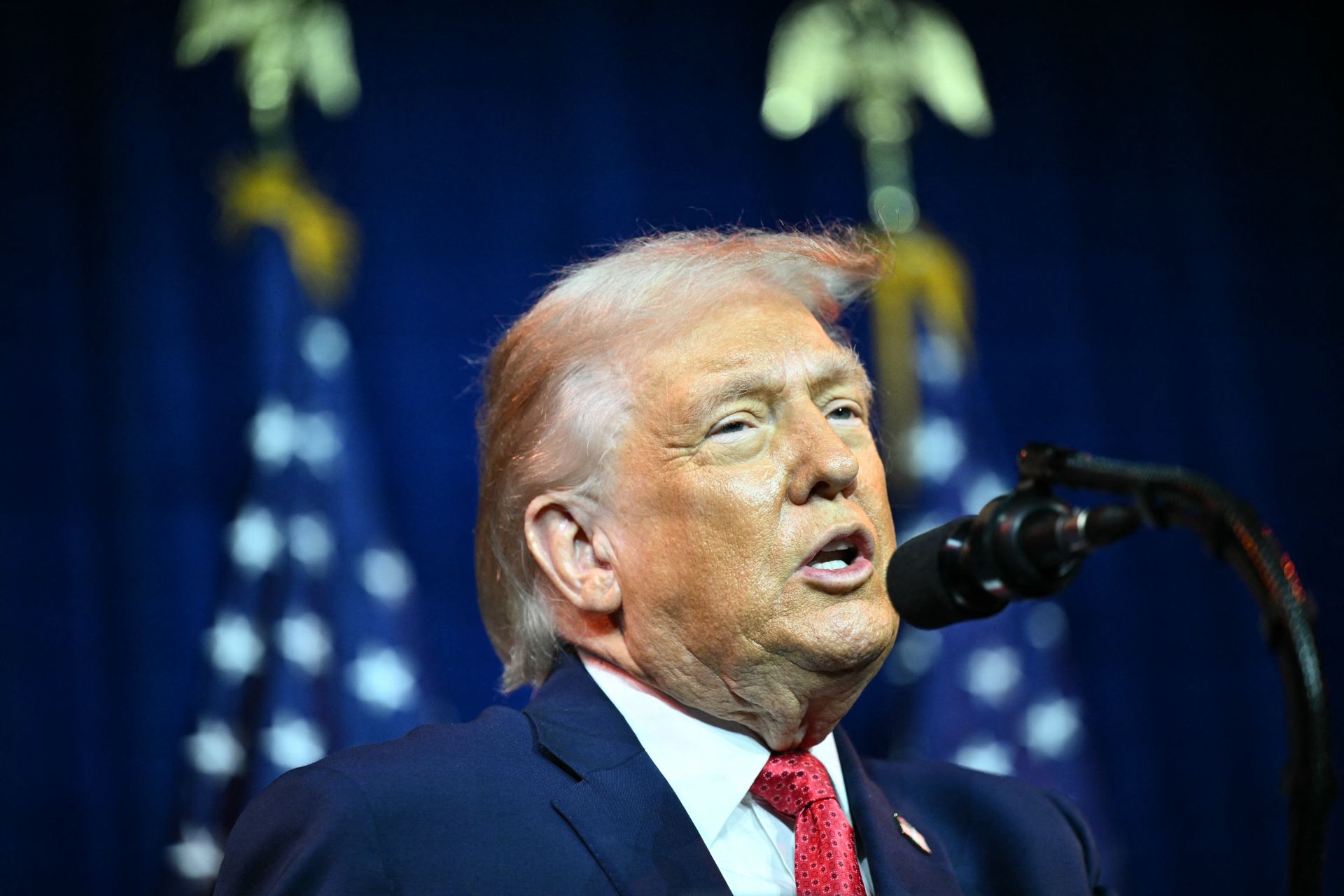
©Mandel Ngan / AFP
President Donald Trump said on Wednesday that he had received assurances that the deadly crackdown on protests in Iran had come to an end. The U.S. president nevertheless maintained ambiguity over a possible American military intervention, as the international community remains on high alert in the face of a major crisis in the Middle East.
Speaking at an event at the White House, Donald Trump stated that “the killings have stopped” in Iran, citing information from “very important sources on the other side.” According to those same sources, the announced executions of protesters “will not take place,” he said.
“There were supposed to be a lot of executions today, and they will not happen — and we are going to verify that,” he added, without providing further details.
Asked by an AFP journalist about the possibility of a U.S. military intervention, the president replied: “We’re going to watch it and see what happens next,” refusing to confirm that the military option was now off the table.
Experts warn of the costs of intervention
In a report by Reuters, Some experts and regional diplomats warned that military intervention could backfire by smothering protests, fueling an intensified crackdown on those who participated and triggering retaliatory Iranian missile attacks on U.S. bases in the Middle East.
In a more extreme scenario, several said, U.S. strikes might hasten the government’s collapse, possibly unleashing chaos across the nation of 90 million, encouraging insurgencies by minority Kurdish and Baluch separatists and leaving Iran’s nuclear and missile programs unsecured.
Still, several U.S. intelligence assessments earlier this week concluded that while the protests posed a serious challenge, the government did not appear close to collapsing, according to four knowledgeable sources.
“We have restive ethnic minorities. We have loose undeclared fissile materials. We have dispersed missile stocks with no command and control, and we have had for over a decade refugee flows ... and significant atrocities are happening,” said Behnam Ben Taleblu, an analyst with the Foundation for the Defense of Democracies. “All the fears that would come with regime change would be expedited.”
Trump casts doubt on Iranian Exile Reza Pahlavi’s support inside Iran
Trump on Wednesday voiced doubts about whether exiled Iranian opposition figure Reza Pahlavi could command enough support inside Iran to eventually lead the country, describing him as “very likeable” but politically untested at home.
“I don’t know how he would be perceived in his own country,” Trump said, adding that the U.S. was “not at that stage yet.” He said Washington would have no objection if Iranians accepted such leadership, but stopped short of endorsing Pahlavi.
Pahlavi, the son of the late shah overthrown in the 1979 Islamic Revolution, has lived in the U.S. since the revolution and has emerged as a prominent media voice during recent protests against Iran’s clerical rulers. However, Iran’s opposition remains fragmented and lacks a cohesive structure inside the country.
Trump said the collapse of Iran’s current government was possible amid ongoing unrest, noting that “any regime can fall,” while cautioning that the situation remained uncertain despite what he called an “interesting” moment for Iran.
Read more

Comments