- Home
- Middle East
- Khamenei Has a Plan to Flee Iran if Unrest Escalates
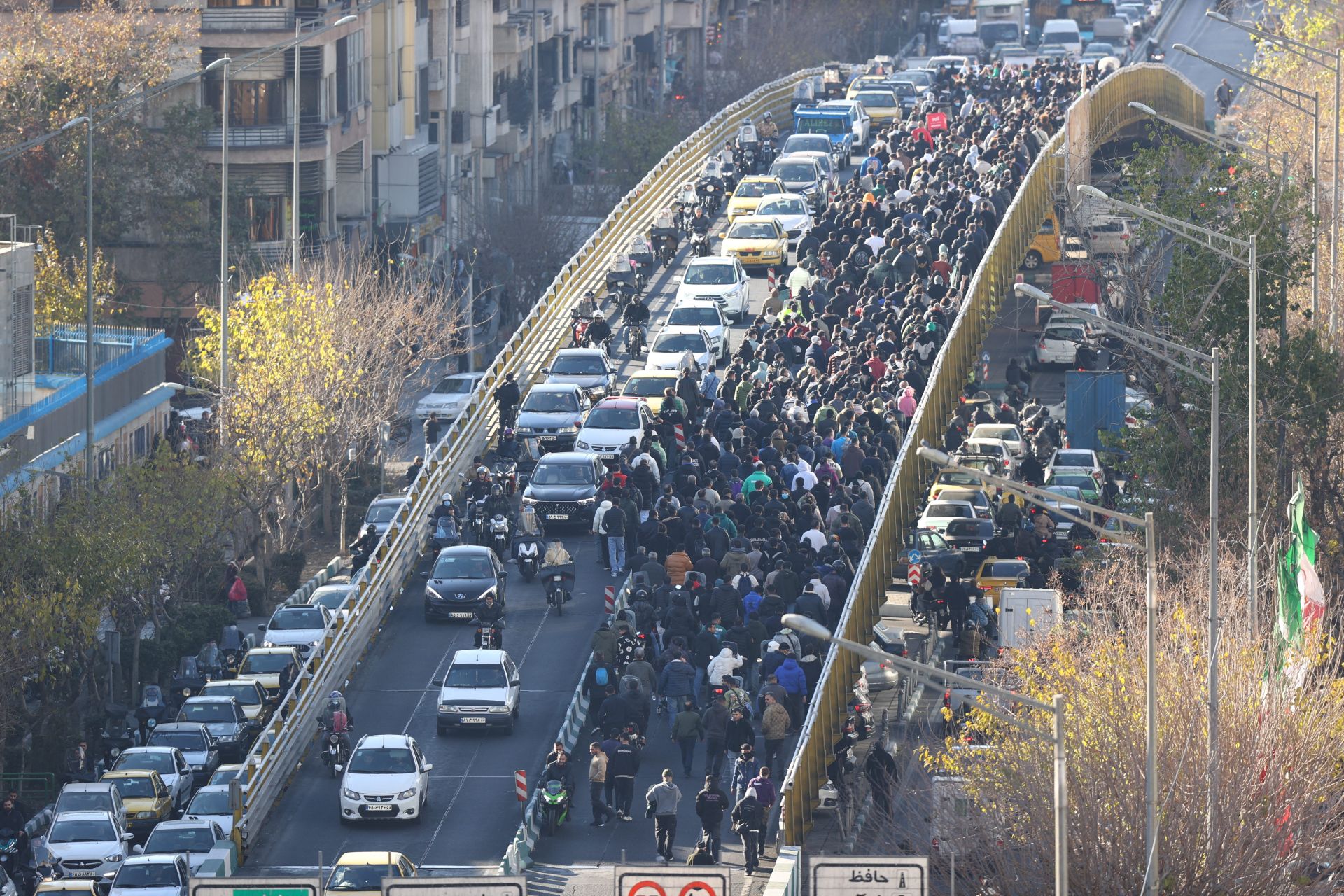
Shopkeepers protest in the street in Tehran on December 29, 2025. ©AFP
Iran’s Supreme Leader Ayatollah Ali Khamenei has prepared a contingency plan to leave the country if security forces fail to contain protests or begin to defect, according to an intelligence report shared with The Times.
The report says Khamenei, 86, would leave Tehran with a close circle of up to 20 aides and family members if he determined that the army and security services tasked with quelling unrest were deserting, defecting, or failing to carry out orders, citing intelligence sources.
“The ‘plan B’ is for Khamenei and his very close circle of associates and family, including his son and nominated heir apparent, Mojtaba,” according to the report.
Iran Announces Relief Measures
Iranian authorities on Sunday announced they will give a monthly allowance to every citizen in the country to alleviate economic pressure, after a week of protests, according to AFP.
"Individuals can receive an amount equivalent to one million Tomans (approximately $7) per person per month, which is credited to their accounts for four months," government spokeswoman Fatemeh Mohajerani told state TV.
She said the amount will be given to every Iranian for four months in the form of credit that can be used to purchase certain goods and is intended to "reduce the economic pressure on the people."
But despite these relief measures, Iran will offer no leniency to "rioters", though people have the right to demonstrate, the head of the judiciary said on Monday.
Economic Strains
In Iran, which has a population of more than 85 million people, the minimum wage is roughly $100 (85 euros) and average monthly salaries are around $200. Iranians mostly use mobile phones and debit cards for their daily purchases instead of cash.
Iran's economy has been grappling with biting U.S. and international sanctions over Tehran's nuclear programme for years, and December saw a 52 percent year-on-year inflation rate. The national currency has lost more than a third of its value against the US dollar over the past year, causing a sharp decrease in people's purchasing power and broad discontent in the country.
Sunday marked the eighth day of sporadic protests in the Islamic republic over economic uncertainty in the wake of the depreciation. The protests have touched, to varying degrees, at least 40 different cities, mostly medium-sized and in the country's west, according to an AFP tally based on official announcements and media reports.
At least 12 people have been killed, including members of the security forces, according to a toll based on official reports.
Read more



Comments