- Home
- Middle East
- Do Syria’s Former Regime Networks Really Command 168,000 Fighters?
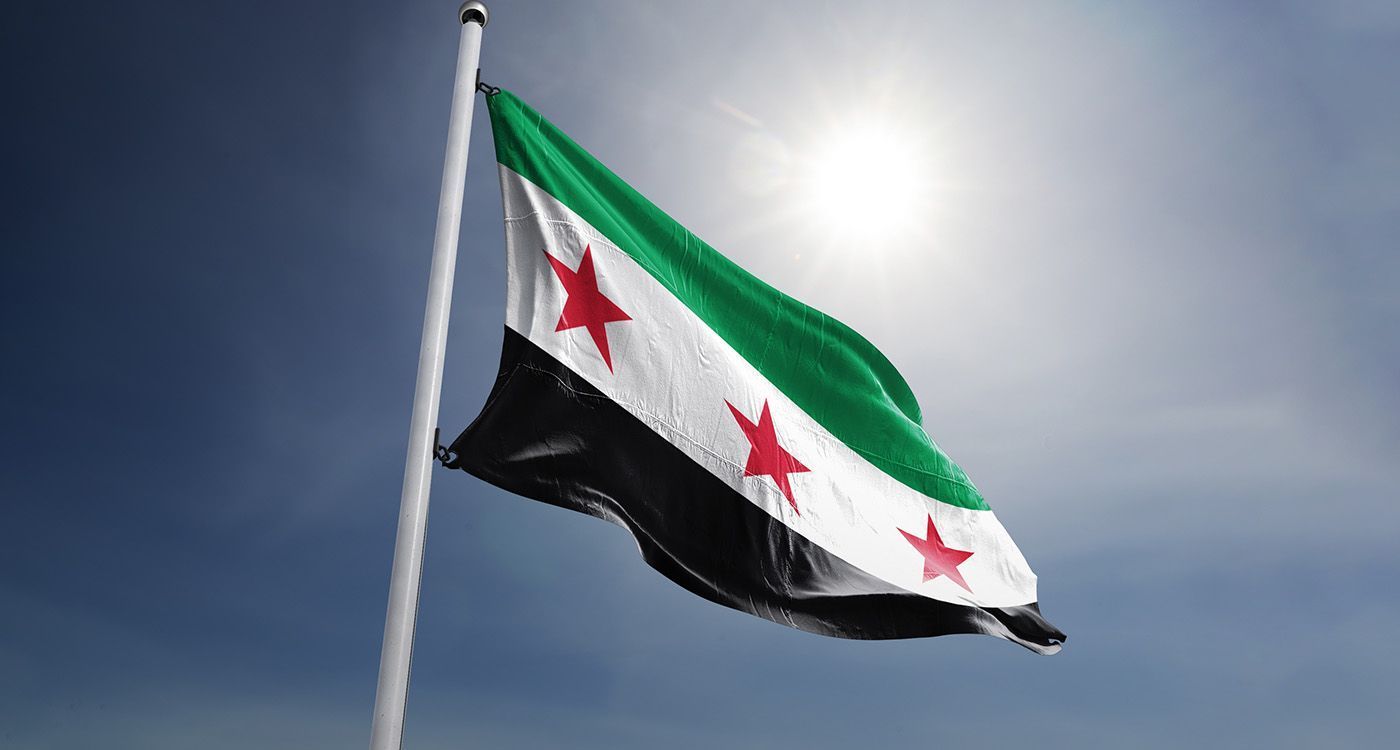
The Syrian flag ©Shutterstock
As Syria tries to stabilize after years of devastating war, a new and unsettling narrative has emerged: claims that remnants of Bashar al-Assad’s former regime command an armed force of up to 168,000 fighters, allegedly preparing for renewed confrontation.
The figure, revealed through leaked documents and intercepted communications obtained by Al Jazeera and corroborated in part by a New York Times investigation, raises urgent questions, not only about its credibility, but also about the intentions behind it. It is being deployed as a message to adversaries, to international actors, and to Syrians themselves that the old order remains capable of disruption.
A Shadow Network Re-emerges
The collapse of Bashar al-Assad’s rule did not dissolve the structures that sustained it. Instead, several senior figures appear to have reorganized beyond Syria’s borders, particularly in Russia and Lebanon, while maintaining operational links inside the country. These networks combine military coordination, financial support, and political messaging, forming a parallel architecture of influence.
Among the key figures identified are Suhail al-Hassan, the former elite forces commander known for his brutality; Rami Makhlouf, Assad’s cousin and longtime financial pillar of the regime; Kamal al-Hassan, former head of military intelligence; and Ghiyath Dalla, a senior officer from the Fourth Division. Together, they represent a constellation of power rooted not in formal authority, but in loyalty networks forged during years of conflict.
According to leaked documents, this structure spans Syria’s coastal regions, Homs, Hama, and parts of Damascus, supported by logistics, funding channels, and communication networks extending beyond the country’s borders.
The 168,000 Fighters Narrative: Power Through Perception
Central to this emerging strategy is the assertion in handwritten notes attributed to Suhail al-Hassan that as many as 168,000 fighters remain mobilizable, particularly in coastal areas historically aligned with the former regime. Al-Hassan’s documents provide unusually detailed breakdowns of manpower and weaponry, including individuals reportedly equipped with automatic weapons, anti-aircraft systems, and anti-tank capabilities.
Yet even within these circles, the credibility of these figures is contested.
Sources cited by Al Jazeera suggest growing internal tensions between Rami Makhlouf and Suhail al-Hassan, with accusations that the latter deliberately inflated troop numbers to secure greater financial backing. This internal mistrust raises doubts about whether the force truly exists at the scale claimed or whether the number serves a strategic purpose.
In conflict dynamics, numbers are power. Inflated strength can intimidate rivals, attract foreign interest, and justify funding flows. Whether real or exaggerated, the figure of 168,000 has become a political weapon in itself.
This is a strategic narrative of strength designed to intimidate rivals, reassure loyalists, and attract external backing. In this sense, the claim of 168,000 fighters functions less as a military reality and more as a psychological and political instrument.
Financing Influence and Rebuilding Loyalty
Financial leverage remains central to this effort. Investigative findings indicate that funds continue to flow toward maintaining loyalty networks, with payments reportedly ranging from two hundred to one thousand dollars per fighter each month. Additional resources are directed toward weapons procurement, communications infrastructure, and logistical preparation.
Rami Makhlouf’s role extends beyond financial sponsorship. He appears to be positioning himself as a protector of the Alawite community, cultivating an image of stability and continuity amid uncertainty. This strategy seeks to convert economic dependency into political allegiance, reinforcing his relevance at a time when formal authority has shifted elsewhere.
Regional Reach and Military Coordination
One of the most sensitive dimensions of these developments is the role attributed to Lebanon. According to investigative findings, a coordination hub was established on Lebanese territory near the Syrian border, serving as a logistical and operational center beyond the reach of Syrian authorities.
This development carries significant implications. Lebanon’s fragile political and security environment makes it particularly vulnerable to becoming an unintended platform for regional power struggles. Reports indicating the presence of non-Syrian fighters and logistical activity linked to former regime networks underscore the risk of spillover instability.
More concerning still are indications of Iranian facilitation. Communications cited in investigations suggest that Tehran assisted in relocating former Syrian air force officers, including individuals accused of involvement in war crimes, to secure locations in Lebanon. Among them is Mohammad al-Hassouri, linked to the 2017 Khan Sheikhoun chemical attack. Such movements signal a shift from passive support to operational preparedness.
Exploiting Instability and Sectarian Fault Lines
These efforts appear to be unfolding alongside attempts to exploit moments of internal unrest. Communications cited by The New York Times indicate deliberate efforts to capitalize on violence along Syria’s coast, where recent unrest has already claimed more than 1,600 lives.
At the same time, political lobbying abroad has reportedly accompanied military planning. In Washington, networks linked to former regime figures have sought to influence policy debates through lobbying firms and advocacy platforms, portraying themselves as a stabilizing alternative to what they describe as “chaos” in post-Assad Syria. Operating through entities such as the West Syria Development Foundation, these initiatives aim to reshape international perceptions and potentially legitimize alternative political arrangements, including notions of territorial autonomy.
A Strategy of Pressure, Not War
Operational coordination appears fragile. Ghiyath Dalla, reportedly involved in arms procurement and logistics, faced difficulties maintaining unified command, while regional and international surveillance continues to limit the network’s room for maneuver.
What emerges from these developments is not evidence of an imminent return to civil war, but rather a calculated strategy of pressure. By amplifying perceptions of strength, activating dormant networks, and leveraging regional instability, former regime figures appear to be testing the resilience of Syria’s post-conflict order.
A Fragile Moment for Syria and the Region
Syria today stands at a precarious crossroads. The legacy of war has not disappeared; it has merely adapted. While the country seeks stability, the reactivation of old networks, particularly through neighboring Lebanon, underscores how easily unresolved power structures can reassert themselves. If effective oversight and coordination are not ensured by Lebanese state institutions, this dynamic risks evolving into a broader security challenge, potentially forcing difficult discussions about border control and the limits of cross-border movement in the absence of firm governance.
Whether these efforts of Assad’s remnants collapse or evolve into something more destabilizing will depend on regional vigilance, political resolve, and the ability of Syria’s new leadership to address the very vulnerabilities these actors seek to exploit. What remains clear is that the shadows of the old fallen regime are not yet completely gone, and the cost of underestimating them could once again be devastating.
Read more


Comments