- Home
- Middle East
- From Gaza to Iran: Trump and Netanyahu Review Regional Flashpoints
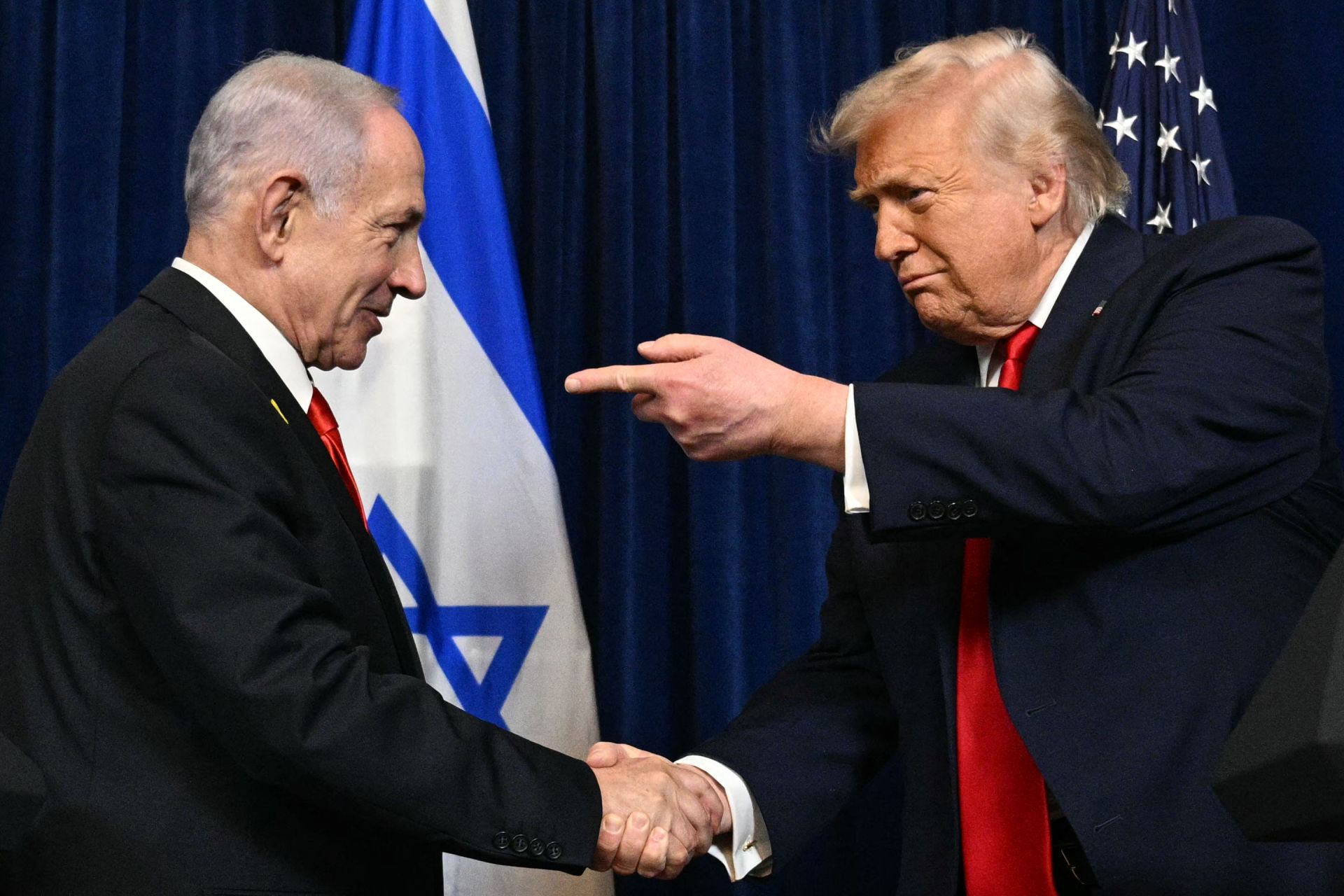
U.S. President Donald Trump and Israeli Prime Minister Benjamin Netanyahu shake hands upon arriving to address reporters during a joint press conference at Trump’s Mar-a-Lago residence in Palm Beach, Florida, on December 29, 2025. ©Jim Watson / AFP
U.S. President Donald Trump and Israeli Prime Minister Benjamin Netanyahu held wide-ranging talks in Florida on Monday, addressing key regional crises including Gaza, Iran, Syria, and broader Middle East stability, as both leaders signaled continued strategic alignment despite ongoing regional tensions.
The meeting, held at Trump’s Mar-a-Lago residence, came amid renewed diplomatic activity in the region and mounting pressure to advance the next phase of the Gaza ceasefire. President Trump indicated the discussions covered “many issues,” including security coordination, regional normalization, and efforts to prevent further escalation.
Gaza and Hamas
The U.S. head of state said the United States expects Hamas to disarm as part of any future political arrangement, warning the group it would “pay a heavy price” if it failed to comply. He stressed that Israel had upheld its commitments under the ceasefire framework, while responsibility now lay with Hamas to follow through.
“If they don’t disarm, and they agreed to, they will pay a heavy price,” Trump said, adding that the next phase of the Gaza agreement must be implemented swiftly.
The U.S. president also reaffirmed Washington’s commitment to securing the release of all remaining Israeli hostages, including the recovery of those believed to have died in captivity.
Iran and Regional Security
Iran’s nuclear program featured prominently in the talks, with Trump warning that Washington would not allow Tehran to rebuild its nuclear capabilities.
“I hear they are trying to rebuild,” Trump said. “If that happens, we will strike again.”
He added that the U.S. does not seek conflict but would not hesitate to act if Iran resumed activities deemed threatening. President Trump also said he hoped Tehran would choose diplomacy over confrontation.
Syria, Turkey, and Regional Dynamics
The U.S. president also addressed Syria, expressing hope that stability could be restored and that relations between Israel and Syria might eventually improve. He said he believed Syrian President Ahmad al-Sharaa could reach an understanding with Israel and that the U.S. would support such efforts.
On Turkey, Washington’s top official stressed that there would be “no problem” between Ankara and Tel Aviv, emphasizing his good relations with both Turkish President Recep Tayyip Erdoğan and Netanyahu.
Lebanon in the Spotlight
Lebanon featured prominently in the talks, with U.S. President Donald Trump signaling growing concern over Hezbollah’s actions and their impact on regional stability. Trump said Washington was discussing the issue with Lebanese authorities and warned that the group was “acting badly,” as efforts continue to push for its disarmament.
Israeli Prime Minister Benjamin Netanyahu, for his part, insisted for firmer measures to prevent Hezbollah from rebuilding its military capabilities, amid rising tensions along Israel’s northern border. The discussions come as fears mount that Lebanon could become the next flashpoint in an already volatile region.
Abraham Accords and Regional Normalization
Moreover, the U.S. leader reaffirmed his commitment to expanding the Abraham Accords, calling them “a great achievement” and predicting that more countries would join in the future. He reiterated his belief that Saudi Arabia would ultimately normalize relations with Israel.
Wider diplomatic context
The meeting marked the fifth encounter between President Trump and Prime Minister Netanyahu since Trump’s return to office and followed a period of intense diplomatic activity in Florida.
As regional tensions remain high, from Gaza and Lebanon to Iran and Syria, the talks underscored Washington’s effort to recalibrate its Middle East strategy while maintaining close coordination with Israel.
Read more


Comments