- Home
- Middle East
- UN Visit to Sudan's El-Fasher Finds Traumatised Civilians in 'Unsafe Conditions'
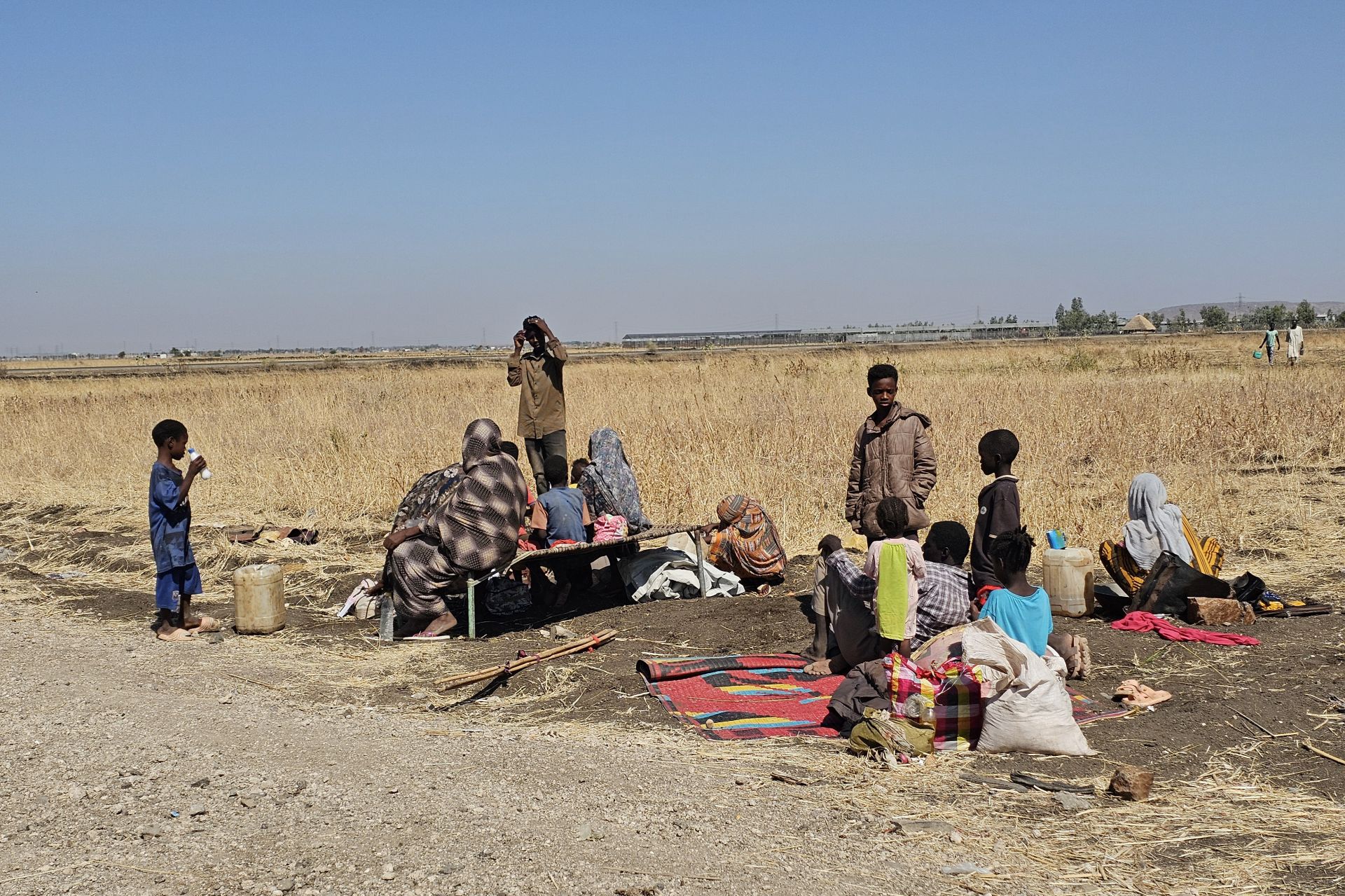
After months of siege and the capture of El-Facher by paramilitaries, a UN mission discovered a destroyed city, deprived of humanitarian aid, where survivors live under tarpaulins, without water or sanitation, in what the organization describes as one of the worst humanitarian tragedies of the Sudanese conflict. ©AFP
Traumatised civilians left in Sudan's El-Fasher after its capture by paramilitary forces are living without water or sanitation in a city haunted by famine, UN aid coordinator Denise Brown told AFP on Monday.
El-Fasher fell to the paramilitary Rapid Support Forces (RSF) in October after more than 500 days of siege, and last Friday a small UN humanitarian team was able to make its first short visit in almost two years.
The capture of the city was reportedly accompanied by mass atrocities, including massacres, torture and sexual violence. Satellite pictures reviewed by AFP show what appear to be mass graves.
Brown described the city as a "crime scene", but said investigations would be carried out by human rights experts while her office focuses on restoring aid to the survivors.
"We weren't able to see any of the detainees, and we believe there are detainees," she said.
From a humanitarian point of view, she said, El-Fasher remains Sudan's "epicentre of human suffering" and the city -- which once held more than a million people -- is still facing a famine.
"El-Fasher is a ghost of its former self," Brown said in an interview.
"We don't have enough information yet to conclude how many people remain there, but we know large parts of the city are destroyed. The people who remain, their homes have been destroyed."
"These people are living in very precarious situations," warned Brown, a Canadian diplomat and the United Nations' humanitarian coordinator in Sudan.
"Some of them in abandoned buildings. Some of them... in very rudimentary conditions, plastic sheeting, no sanitation, no water. So these are very undignified, unsafe conditions for people."
'Nothing good'
Since April 2023, Sudan has been gripped by a conflict between the regular army and its former allies the RSF that has triggered a humanitarian catastrophe.
Brown said that the team "negotiated hard with the RSF" to obtain access, and managed to look around and visit a hard-pressed hospital and some abandoned UN premises -- but only for a few hours.
Their movements were also limited by fears of unexploded ordnance and mines left behind from nearly two years of fighting.
The Saudi hospital was still standing, with some medical staff present, but has run out of supplies.
"There was one small market operating, mostly with produce that comes from surrounding areas, so tomatoes, onions, potatoes," she said.
"Very small quantities, very small bags, which tells you that people can't afford to buy more."
"There is a declared famine in El-Fasher. We've been blocked from going in. So there's nothing good about what's happened in El-Fasher.
"It was a mission to test could we get our people safely in and out, to have a look at what remains of the town, who remains there, what their situation is," she said.
The war in Sudan has killed tens of thousands of people, driven 11 million from their homes and has caused what the UN has declared "the world's worst humanitarian disaster".
By Nada ABOU EL-AMAIM/AFP
Read more

Comments