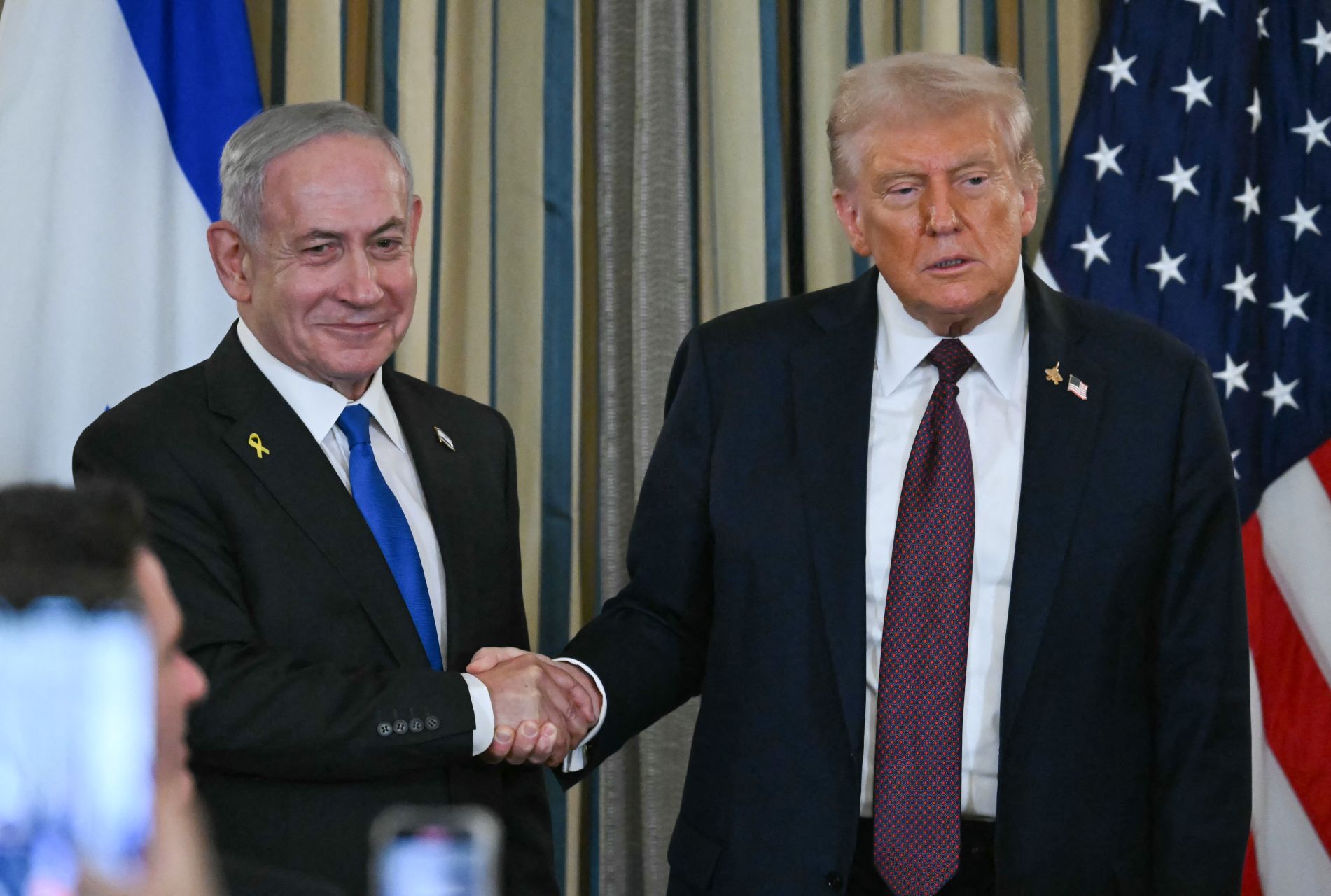
Israeli Prime Minister Benjamin Netanyahu is set to make Lebanon a top priority in talks with U.S. President Donald Trump on Monday in Florida, with reports indicating he will seek Washington’s approval to escalate Israeli military strikes there.
According to Israeli media reports, Netanyahu will seek U.S. approval to intensify military operations in Lebanon, arguing that Hezbollah must be fully disarmed and prevented from rebuilding its military capabilities south and north of the Litani River. Israeli officials say Netanyahu will demand that the Lebanese government clearly commit to preventing any armed presence outside the Lebanese army.
Sources cited by Yedioth Ahronoth say Netanyahu will present five key principles, including the dismantling of Hezbollah’s military infrastructure, preventing the restoration of its capabilities, and granting Israel freedom of action in Lebanon without prior coordination. He is also expected to push for continued Israeli operational freedom, warning that Israel may escalate military pressure to force Beirut to act.
Israeli analysts say Netanyahu views Trump as a key leverage point, particularly because of Washington’s influence over Lebanon’s reconstruction funding. “Trump controls the levers of financial support, which gives him decisive influence over Lebanon and its allies,” military analyst Ron Ben-Yishai said.
Channel 13 also reported that Netanyahu will formally request a green light to intensify strikes in Lebanon, as Israel seeks to reshape the security landscape on its northern border.
Hezbollah rejects disarmament demands
Hezbollah Secretary-General Sheikh Naim Qassem rejected Israeli and U.S. calls for disarmament, saying such demands are part of a broader project aimed at weakening Lebanon and reshaping the region.
Speaking on Sunday, Qassem said disarmament cannot be discussed while Israel continues to occupy Lebanese territory and violate the country’s sovereignty by land, sea, and air. He accused Israel and the United States of seeking to eliminate the resistance, annex parts of Lebanon, and turn what remains of the country into a tool under their control.
Qassem stressed that the resistance has respected the ceasefire and coordinated closely with the Lebanese army to preserve national sovereignty. He dismissed claims that the army had failed to carry out its duties, saying such accusations were meant to sow division.
“The cooperation between the army and the resistance has been ideal,” he said, adding that it has facilitated the army’s deployment along the border.
He also reiterated that Israel must fully withdraw from Lebanese territory, stressing that the resistance would not retreat or surrender. Discussions on a national defense strategy, he said, could only take place after Israel’s withdrawal, warning that Lebanon’s fate is unified.
Broader Context
The renewed focus on Lebanon comes amid heightened regional tensions following months of war in Gaza and growing instability along Israel’s northern border. While a fragile ceasefire remains in place, repeated cross-border exchanges have raised fears of a wider confrontation involving Hezbollah and Iran.
For Washington, the challenge lies in preserving the Gaza truce while preventing a broader regional escalation that could further destabilize Lebanon, already grappling with deep economic and political crises. U.S. officials have increasingly linked reconstruction aid to security guarantees, placing Lebanon at the center of regional calculations.
The meeting, scheduled for 1:00 pm (1800 GMT) at Trump’s Mar-a-Lago residence, comes as Washington pushes Israel to advance the next phase of the Gaza truce, a move strongly opposed by the Israeli government.
As diplomatic efforts intensify, the coming days may prove decisive in determining whether the region moves toward de-escalation or slides further into confrontation.


Comments