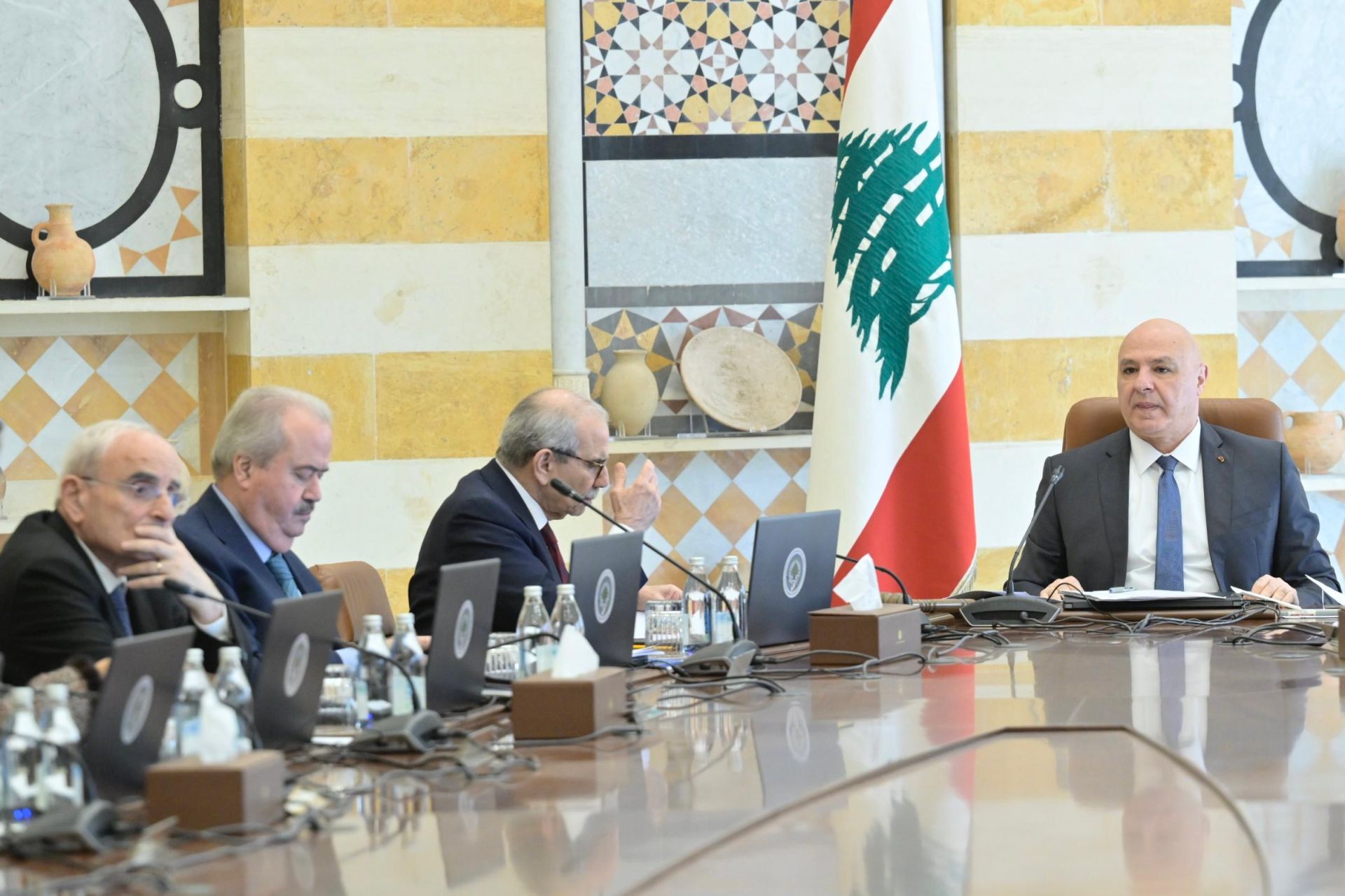
The controversial financial Gap Law presented as key to resolving Lebanon’s enduring banking crisis that deprived depositors of their savings, topped discussions at Monday’s cabinet meeting, exposing differences among ministers.
The session, attended by Central Bank Governor Karim Souaid, was adjourned and will resume Tuesday to complete the debate which critics describe as one of the most dangerous laws in Lebanon’s modern history, Information Minister Paul Morcos said following the meeting at the Presidential Palace.
Prime Minister Nawaf Salam, a champion of the law in its current terms, was quoted by Morcos as telling the ministers “It is a realistic and applicable bill aimed at doing justice to depositors and restore the banking sector.”
Telecommunications Minister Charles Hajj said that the proposed bill is one of the most important and dangerous laws since the establishment of Greater Lebanon, stressing the need to discuss its details with great precision.
For their part, Public Works and Transport Minister Fayez Rasamny and Agriculture Minister Nizar Hani were expected to propose amendments to the draft law, stressing that they will not vote on the proposed version.
The bill sparked the outrage of the Bank’s Association and the Depositors Outcry Association. The latter held a protest on the road to the Palace ahead of the Monday session, demanding the full repayment of their deposits.
“We are getting closer to a formula that satisfies the banks and depositors, and the state also bears its responsibility,” Morcos told journalists, adding that "confidence in the banking sector must be restored.”
On Friday, December 19, PM Salam unveiled the Gap Law saying, “it is the first comprehensive draft aimed at recovering bank deposits and addressing the country’s massive financial gap.”
The proposed fiscal gap law outlines how losses from Lebanon’s financial collapse, estimated at over $70 billion, will be distributed among the state, the central bank, commercial banks and depositors.
Salam said the draft, set to be presented to the cabinet on Monday, is a key step toward restoring confidence with Arab nations and the International Monetary Fund.
The bill proposes the full repayment of deposits worth less than $100,000—making up approximately 85 percent of account holders—within four years, while “medium” and “large deposits” would be compensated with tradeable securities backed by Lebanon’s Central Bank (BDL) assets.
Critics have assailed the plan, drafted after lengthy talks with the IMF, saying it unfairly distributes losses. They argue the state does not bear its fair share, leaving commercial banks and depositors to shoulder most of the burden.
If approved by the cabinet, the plan would be referred to Lebanon’s 128-strong Parliament for voting and adoption as legislation.
Lebanon’s financial system has been in crisis since 2019, following years of corruption, waste and unsustainable policies, leaving millions of depositors locked out of their savings. The cabinet’s decision is expected to determine who bears the cost of Lebanon’s financial collapse.



Comments