What the government presented as the ‘Financial Gap Law’ is not merely a piece of financial legislation; it is a text that lays the foundations for the post-adoption economic order. It does not conceal its objective but states it calmly: ending a crisis that has lasted for years instead of resolving it, writing off deposits instead of restoring them, and absolving the state and the central bank at the expense of both the banking sector and depositors. Thus, the Lebanese depositor is transformed into an instrument of “discipline” within a model meant to be replicated, rather than a rights-holder who should be protected.
A clause-by-clause reading of the law quickly reveals that the government has not drafted a rescue plan but rather a legal framework that legitimizes the most dangerous financial trajectory in Lebanon’s history. It strikes at the heart of property rights, legalizes the collective bankruptcy of banks, and eliminates any possibility of rebuilding a sound financial system, thus pushing the country toward a fragmented cash-based economy devoid of trust and without a banking sector. All of this is carried out under the banner of “reform” and in compliance with external dictates that have nothing to do with safeguarding Lebanese rights.
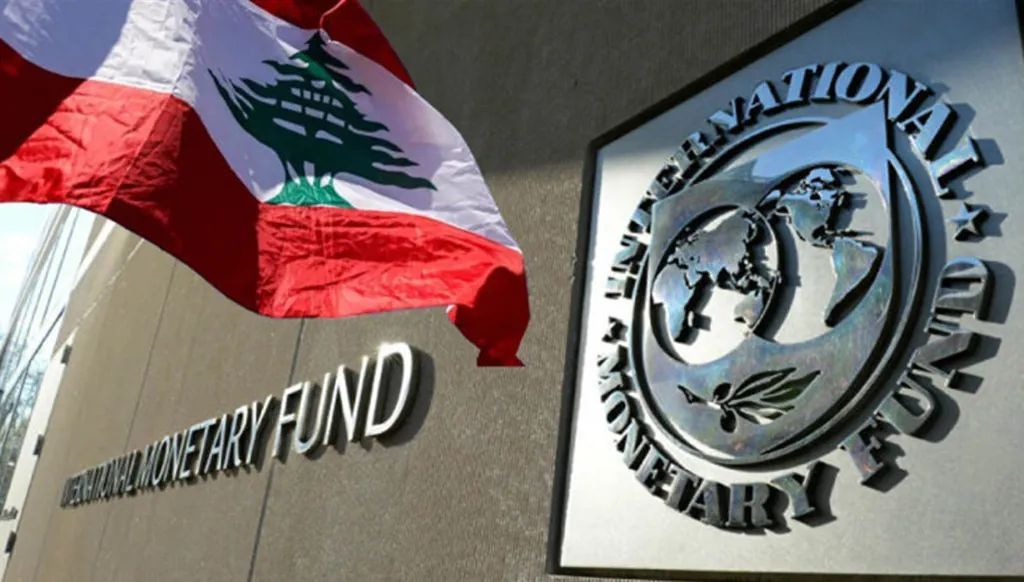
At its core, the draft reflects a clear political choice: full alignment with the International Monetary Fund’s (IMF) approach and the abandonment of any sovereign alternative. The state that accumulated debt, financed deficits, fixed the exchange rate, squandered public funds, and then defaulted on its obligations removes itself from accountability. There is no mandatory contribution from the state budget and no direct assumption of the collapse’s cost. Instead, as stated in Chapter Five, the state merely acknowledges “in principle” the existence of a debt to Banque du Liban, leaving its size and terms to be determined later. This aligns with what it calls “public debt sustainability,” prioritizing the state’s interests over justice.
This alone is enough to invalidate any government rhetoric about assuming responsibility. Under this law, the state is not a binding party but a negotiator of its own liability, based on political and financial convenience rather than on the scale of the damage it has inflicted on the economy and society.
As for Banque du Liban, it emerges from the law with near-total immunity. Despite the explanatory memorandum acknowledging that the central bank’s monetary policies contributed to the deterioration of its asset quality and its inability to meet obligations toward commercial banks, the draft deliberately avoids applying Article 113 of the Monetary and Credit Law, which obliges the Treasury to cover central bank losses. Instead, this explicit legal obligation is turned into a mere “option” for the government, an outright violation of clear and binding law.
Once the state is exempted and the central bank shielded, only banks and depositors remain.
The law, particularly Chapter Six (Articles 11 to 14), draws this path clearly: Deposits exceeding $100,000 will not be repaid in cash but converted into “asset-backed certificates” issued by Banque du Liban, maturing in 10, 15, or 20 years, with low interest rates and no real guarantees beyond uncertain future revenues of the central bank.
In practice, this is not a recovery of deposits but a replacement of property rights with a financial instrument of unknown value. There is no clear projection of asset revenues, no explanation of how legally protected gold reserves would be used, and no clarity on how these obligations would be covered amid severe liquidity shortages. Worse still, mandatory reserves, which are depositors’ rights, are treated as if they were a ‘contribution’ from the central bank, a complete inversion of reality.
Even more alarming, the law goes beyond a disguised write-off of deposits and goes so far as to criminalize depositors themselves. In Chapter Three, particularly Article Five, transfers made after October 17, 2019, are reopened and treated as suspicious, despite having been legal and approved by Banque du Liban. The draft also criminalizes the receipt of legitimate banking interest earned since 2016 and demands its reimbursement, explicitly violating the principle of non-retroactivity of laws and of acquired rights. What kind of law punishes citizens for complying with contracts, laws, and official circulars?
Alongside the assault on depositors, the law strikes the banking sector at its roots. It starts by wiping out capital entirely, then demands recapitalization, while simultaneously burdening banks with 20 percent of the cost of long-term certificates. What bank can withstand such decades-long obligations? And what investor would inject capital into a sector that the law itself has already condemned to bankruptcy?
The fatal paradox is that the explanatory memorandum openly acknowledges the systemic nature of the crisis and the shared responsibility of the state and Banque du Liban. Yet, this admission is used to justify shifting losses onto depositors and banks, while exonerating the true decision-makers.
In the background, the IMF has chosen to send a harsh message to banks heavily exposed to sovereign lending, not in the name of reform, but of deterrence. The IMF does not view Lebanon as an isolated case but as part of a broader global landscape in which banks have become the primary financiers of states through massive purchases of sovereign debt.
Hence the punitive approach: banks must “think twice” when lending to states, because the cost of default may not fall on the state itself but on banks and their depositors. In this context, Lebanon is not treated as an exception but as a model quietly intended for replication. It is a model of how to punish banks and depositors without explicitly acknowledging that the bankrupt state is the primary cause of collapse and without openly declaring that what is happening in Lebanon is a precedent to be implemented gradually elsewhere.
If this law is passed in its current form, the outcome is predetermined: collective bankruptcy of the banking sector and an organized loss of depositors’ funds. Capital write-offs, long-term burdens, and the obstruction of genuine recapitalization will inevitably lead to the collapse of banks one after another, all under a legislative cover that brands this collapse as “reform.”
In such a landscape, deposits cease to be rights and become mere accounting figures without value. Talk of social protection becomes an illusion. The state stands by as a spectator after granting itself legal immunity, while Banque du Liban emerges with “clean” balance sheets achieved by transferring losses onto the public.
In conclusion, what the government has prepared is not a rescue law but rather a liquidation law: liquidation of the banking sector, people’s deposits, and the principle of the state as a guarantor of rights. The objective is clear: presenting a “tidy” balance sheet to the IMF at any cost.
Any government that adopts this law is not making a technical mistake; it is taking a historic political decision to legalize the largest confiscation of deposits in Lebanon’s history.
This is the final picture drawn by the law, and it bears no resemblance whatsoever to rescue.



Comments