
- 18:00

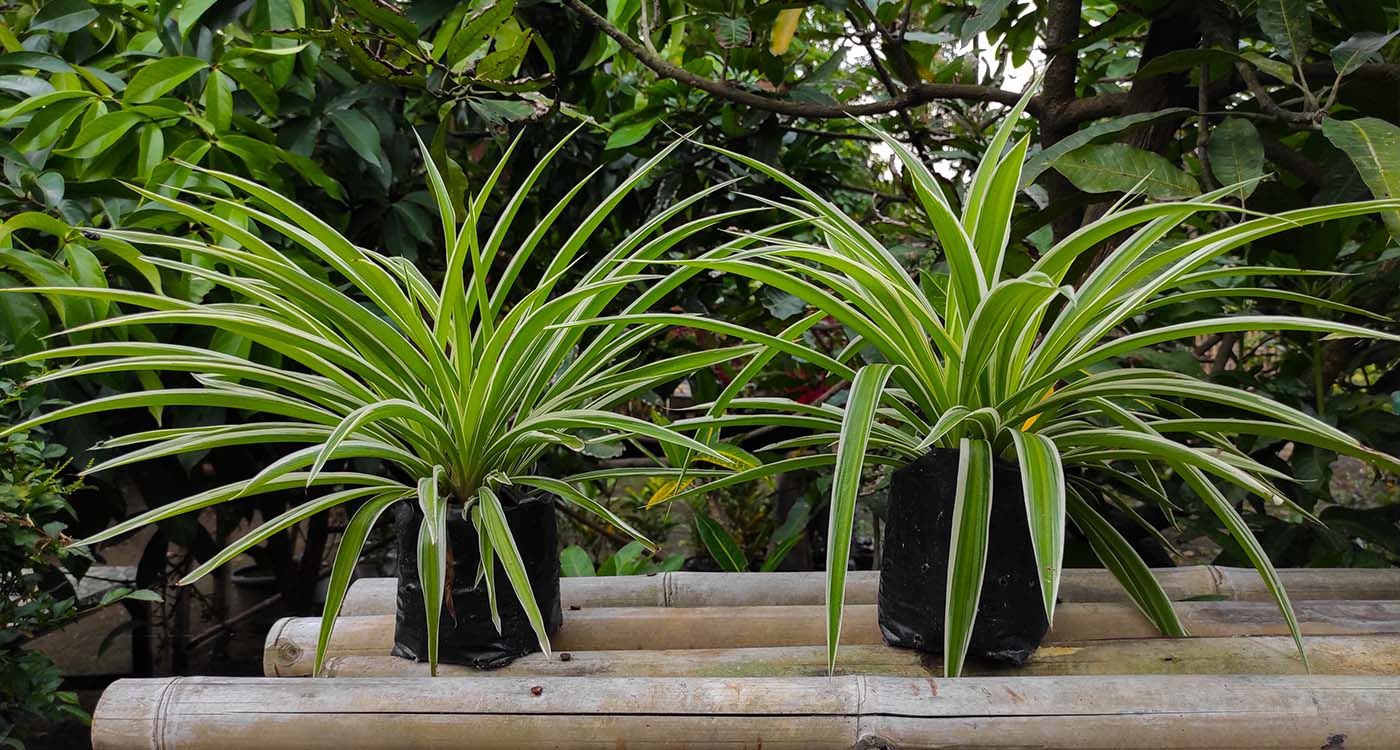
A star of interiors and social media, the spider plant is often presented as a natural air purifier capable of eliminating up to 95 percent of toxins. Behind this seductive promise, science offers a more nuanced picture, one that is nonetheless rich in insight.
The spider plant, or Chlorophytum comosum, has everything going for it. It is graphic, hardy, undemanding, and multiplies with disarming ease. Yet its fame does not rest solely on its long, cascading leaves. For several decades, it has carried an almost miraculous reputation, that of cleaning the air inside our homes. This belief traces back to a very real scientific program conducted in the late 1980s by NASA.
At the time, the American space agency was grappling with a very concrete problem: how to maintain breathable air in enclosed environments such as space stations, where chemical pollutants accumulate rapidly. Glues, paints, insulating foams, and synthetic materials continuously release volatile organic compounds, some of which are irritating or potentially toxic. In this extreme context, researchers tested several houseplants to assess their ability to absorb these substances. The spider plant ranked among the most effective.
Placed in a small, sealed test chamber, it demonstrated a genuine capacity to reduce concentrations of formaldehyde, benzene, and xylene. These striking results captured public attention and gave rise to a persistent idea, that of a plant capable of cleaning the air naturally, without filters or motors. Over time, a figure took hold, up to 95 percent of pollutants eliminated within 24 hours. Accurate in a laboratory setting, this figure becomes misleading once removed from experimental conditions.
An apartment, however, is not a space station. Air circulates, windows are opened, and pollutants are emitted continuously by furniture, textiles, household products, and everyday activities. The volumes involved bear little resemblance to those of NASA’s test chambers. Directly transposing laboratory results to a typical home therefore amounts to an interpretive leap.
More recent research has made this clear. In 2019, a scientific review led by researchers Michael Waring and Byron Cummings analyzed several decades of studies on so called air purifying houseplants. Their conclusion was unequivocal. Under real living conditions, the impact of plants on indoor air quality is extremely limited. To achieve an effect comparable to that of simple ventilation, one would need an unrealistic number of plants, sometimes several dozen per square meter.
This, however, does not render the spider plant useless. It does absorb a small fraction of certain pollutants, partly thanks to the combined action of its leaves and the microorganisms present in its soil. Yet this contribution remains marginal when set against the constant flow of indoor pollution. Natural or mechanical ventilation remains by far the most effective strategy for renewing indoor air.
Why, then, does this idea persist with such force? Because it answers a deep seated need, the desire for simple, visible, and natural solutions to problems that are often invisible. The spider plant embodies a reassuring, accessible, almost domesticated form of ecology. It offers a tangible response to a diffuse anxiety, the fear of breathing contaminated air at home.
From a scientific standpoint, its value lies elsewhere. Several studies in environmental psychology show that the presence of plants improves the perceived quality of the air, reduces stress, and enhances concentration. The benefit is therefore as much sensory as it is physiological. The brain interprets greenery as a signal of safety and freshness, even when the chemical effect itself is modest.
It is also worth noting that the spider plant has other advantages. It is non toxic to pets, tolerates a wide range of light conditions, and contributes slightly to ambient humidity. These qualities improve indoor comfort without claiming to replace proven technical solutions.
Ultimately, the spider plant is neither a fraud nor a miracle purifier. It illustrates the limits of a science that is sometimes oversimplified in public discourse. NASA never claimed that a plant alone could sustainably purify the air of a home. It was shortcuts, followed by green marketing, that transformed a scientific observation into an absolute promise.
Breathing cleaner air relies on a combined approach. Airing rooms regularly, limiting sources of pollution, choosing low emission materials, and, when necessary, using appropriate filtration systems all play a role. Within this framework, the spider plant finds its place not as a standalone solution, but as a living, soothing, and symbolically breathable presence. A discreet ally, reminding us that science is best understood when its complexity is left intact.
Comments