- 17
- Dec.
- 2025
AnalysisFrom Rockets to Reels: Iran and Hezbollah’s Fight for Survival through Propaganda
Read : 4 minute(s) A A A
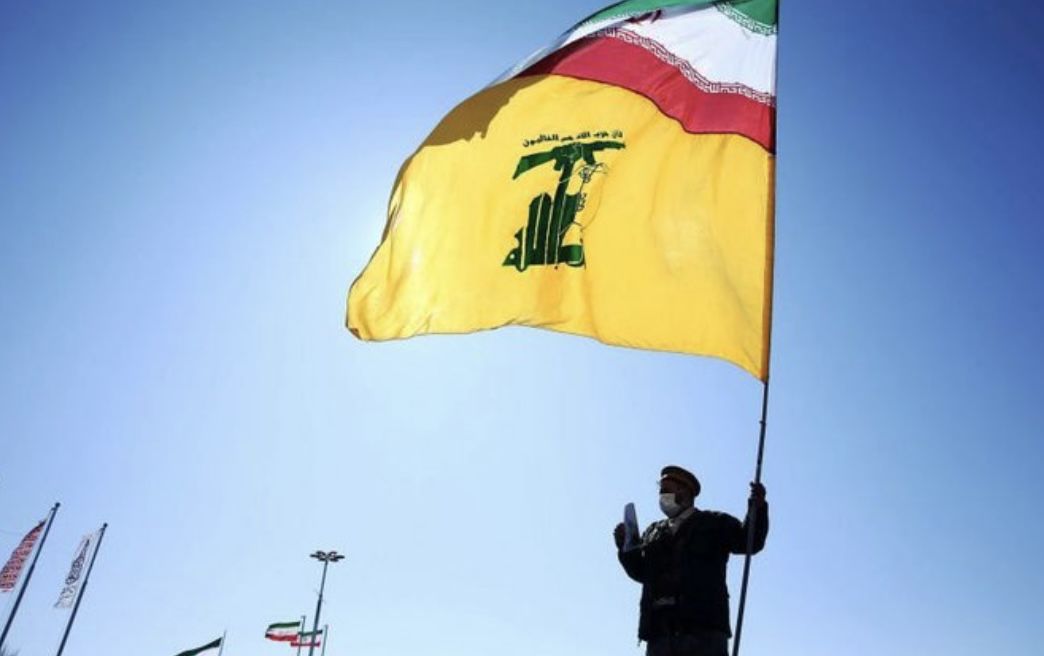
By elevating narrative over firepower, Iran preserves Hezbollah as a political and psychological asset while buying time for reconstitution.
After the 2024 Israel–Hezbollah war, Iran and its main regional proxy faced a grim reality. Hezbollah survived the war, but its top leadership had been assassinated, much of its arsenal destroyed, thousands of its fighters killed, and it was forced to retreat from south of the Litani. In response, Iran and Hezbollah have shifted from kinetic confrontation with Israel to propaganda-centric warfare, using digital platforms, symbolic imagery, and emotionally engineered content to compensate for degraded battlefield capacity.
Iran and Hezbollah are turning resistance into performance, carefully staged, digitally optimized, and psychologically defensive. This is not a replacement for armed resistance, but a strategic downgrade aimed at outlasting military weakness by prioritizing survival and legitimacy over escalation.
The transformation began with Israel’s assassination of Hezbollah leader Hassan Nasrallah on September 27, 2024. Politically and psychologically, Iran refused to let his killing define the war’s outcome. Within days of his death, Tehran was covered with massive billboards portraying Nasrallah as a timeless figure of resistance.
One year later, in September 2025, a monumental mural was unveiled in Valiasr Square—Tehran’s most prominent propaganda site—branding him the eternal “Commander of Resistance.” Additional murals in the Iranian capital’s Palestine Square went further, issuing direct threats against Israeli cities such as Nahariya, invoking Hezbollah’s future vengeance rather than its present capacity.
In Lebanon, Hezbollah adopted the same performative strategy. Large commemorative ceremonies marked the anniversary of Nasrallah’s death. Thousands carried his portrait, while images of him and his slain successor, Hashem Safieddine, were projected onto Beirut’s Raouche Rock in open defiance of government orders. Hezbollah sent a clear message that its leadership was no longer operational but symbolic. In short, command has been replaced by canonization.
The most revealing example of this shift emerged not from a rally or a speech, but from a classroom. A widely circulated video recently shows a teacher informing schoolchildren that a “message has arrived” from Hassan Nasrallah. She tells them he loves them and asks how they would respond. The children answer in unison: “We love you, Sayyed.” This was carefully staged propaganda designed for digital circulation.
The video transforms death into presence, turning a slain leader into a living emotional authority. It transfers loyalty from the battlefield to the classroom, embedding political allegiance before critical thought can form. And it reframes Hezbollah not as a militia responsible for devastation, but as a paternal force deserving affection.
This is propaganda adapted for the algorithmic age: short, intimate, emotionally incontestable, and infinitely shareable. In this form of narrative control, missiles are unnecessary and escalation risks are avoided.
Hezbollah’s pivot to propaganda warfare comes precisely when its military capabilities are at their most constrained. Israeli strikes against Hezbollah’s operatives and its efforts to reconstitute militarily have continued unabated. Hezbollah has responded through rhetoric rather than force, threatening rather than dictating escalation.
Naim Qassem, Hezbollah’s current leader, embodies this shift from the military to media arenas by rejecting his organization’s disarmament publicly while avoiding actions that could invite catastrophic Israeli retaliation. Iran amplifies every statement, every funeral, every symbolic act, reframing restraint as resolve and paralysis as patience.
For Tehran, propaganda warfare solves multiple problems at once. Iran itself is constrained, economically pressured, diplomatically isolated, and wary after its conflict with Israel in June 2025. A renewed Israel-Hezbollah war risks Iran’s entire regional architecture.
By elevating narrative over firepower, Iran preserves Hezbollah as a political and psychological asset while buying time for reconstitution. The Houthis, geographically distant and more expendable, can still be activated when needed. Hezbollah, by contrast, must be preserved at all costs, even if that means the temporary abandonment of its military role.
This is why claims that Iran is sacrificing Hezbollah fall apart under scrutiny. States do not invest billions, flood digital space with iconography, and embed rituals of loyalty in schools for assets they intend to abandon. Tehran is not discarding Hezbollah; it is freezing it.
Murals in Tehran, projections in Beirut, anniversary rituals, and classroom videos form a single ecosystem designed to outlast Iran and Hezbollah’s weaknesses. But propaganda inevitably decays, as even the most emotionally powerful narratives cannot conceal the absence of power indefinitely. For now, Iran and Hezbollah are fighting not to win the next war, but to survive the previous one.


Comments