- 17
- Dec.
- 2025
SpotlightArtificial Womb: Is Japan Really on the Brink of Birth Outside the Human Body?
Read : 4 minute(s) A A A
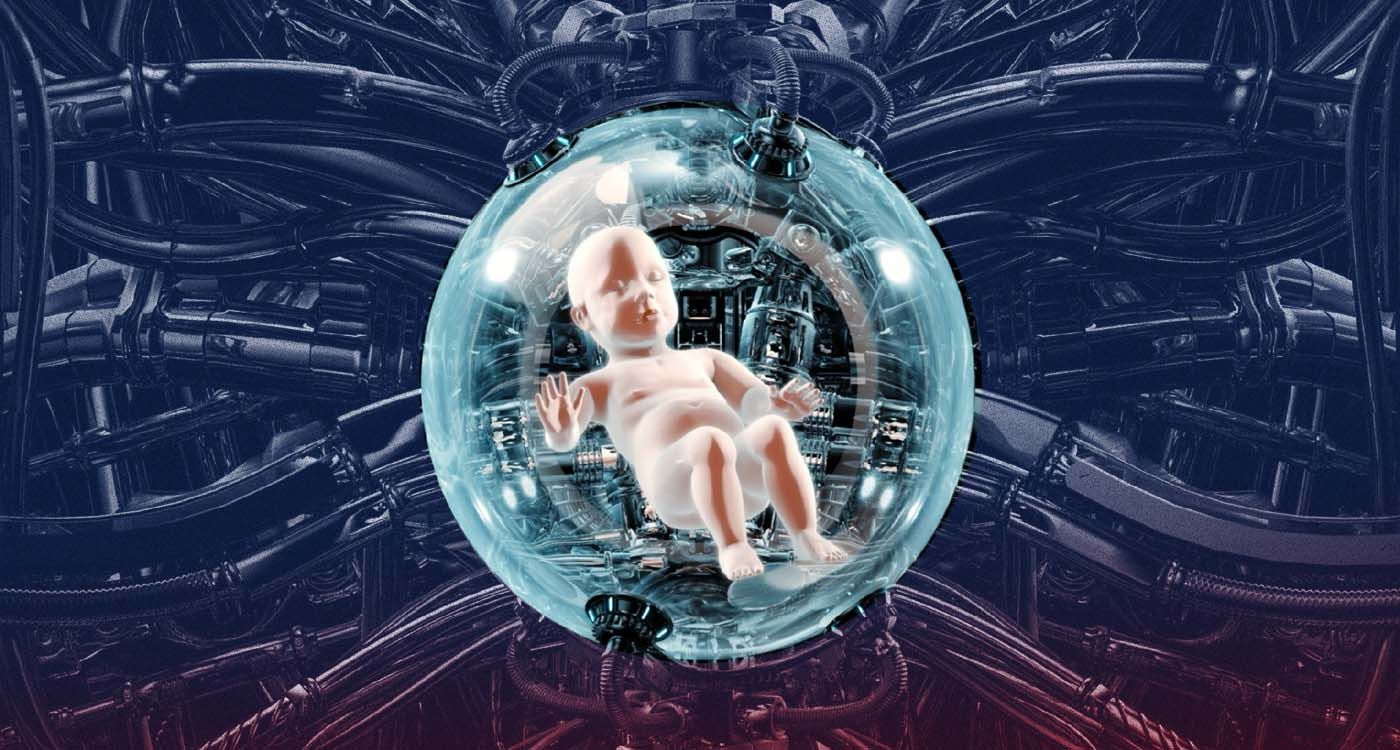
Artificial wombs, gestation outside the body, birth without maternal womb. For several months now, Japan has been portrayed as the stage for a major biomedical revolution. Between genuine scientific advances, medical promises, and media hype, where does the science of ectogenesis really stand today?
Since the summer of 2025, a series of announcements from Japan have set the global media landscape alight. Researchers are said to have developed an artificial womb capable of faithfully recreating the conditions of human gestation. Some headlines already evoke embryos carried to term outside the body, a redefinition of motherhood, or even the end of pregnancy as we know it. A closer reading, however, reveals a far more nuanced, and above all slower, reality than the spectacular narratives currently circulating.
The artificial womb, also known as ectogenesis, is not a sudden invention. As early as the 1990s, Japanese teams succeeded in sustaining mammalian fetuses in extra-uterine environments for several weeks. More recently, in the United States and Europe, experimental devices have made it possible to prolong the gestation of extremely premature animal fetuses in fluid-filled sacs mimicking amniotic fluid, connected to oxygenation systems via the umbilical cord. These developments represent a major breakthrough in neonatology.
Current prototypes rely on a combination of sophisticated biotechnologies: a sterile liquid environment maintained at a constant temperature, extracorporeal circulation ensuring gas exchange, and sensors capable of continuously monitoring heart rate, blood flow, and certain growth markers. From a technical standpoint, the achievement is real. It opens up concrete prospects for addressing a major medical challenge: the survival of extremely premature infants.
Saving Premature Babies: A Very Real Revolution
Every year, thousands of babies are born before twenty-six weeks of gestation. Despite advances in neonatal intensive care, these infants remain exposed to severe complications, particularly respiratory and neurological ones. The artificial womb could offer an intermediate solution between the maternal womb and the conventional incubator, by allowing gestation to continue in an environment closer to natural physiological conditions.
In this specific context, results obtained from animal models are regarded as promising by the scientific community. They suggest the potential for a significant reduction in the long-term consequences of extreme prematurity. This is where researchers’ current priority lies, far from the scenarios of fully externalized gestation often highlighted in the media.
One point, however, must be emphasized clearly: to date, no device has enabled the complete development of a human embryo from the earliest stages of gestation through to birth. The experiments reported involve animal fetuses or already advanced stages of gestation. Presenting this work as a full replacement for the human uterus reflects projection more than the current state of scientific knowledge.
Between Promises and Fantasies
Much of the media frenzy surrounding artificial wombs is based on an oversimplified vision of gestation: temperature, oxygen, nutrients, algorithmic monitoring; as if human reproduction could be reduced to a set of adjustable parameters. In reality, pregnancy is an extraordinarily complex process, involving hormonal, immunological, and sensory interactions that remain only partially understood.
This simplification feeds narratives about a supposed redefinition of motherhood. Artificial wombs are sometimes presented as an alternative to surrogacy, a solution for women without a uterus, or a way to fully dissociate reproduction from the female body. While these possibilities exist in theory, they face formidable scientific, legal, and ethical barriers.
What rights would be attributed to a fetus developed outside the human body? Who would decide whether an artificial gestation should continue or be terminated? What role would remain for the biological mother, and what implications would this have for the child’s psychological development? These questions are far from secondary. They strike at the core of our understanding of birth, filiation, and parental responsibility.
Aware of these challenges, Japanese authorities stress that no implantation of a human embryo in an artificial womb is currently authorized. Any potential clinical trials remain contingent on strict ethical frameworks, the development of which will take considerable time.
The artificial womb is therefore neither a chimera nor a completed revolution. It represents a scientific frontier under construction, where tangible advances coexist with sometimes inflated expectations. Between medical hope and technological fascination, it calls for a crucial form of vigilance: the ability to distinguish between what science already makes possible, what it is cautiously exploring, and what we project onto it.
Comments