- 14
- Dec.
- 2025



Ten days before Christmas, the word Advent returns to the heart of December conversations and traditions. Behind this ancient term lie familiar rituals – windowed calendars, candle-lit wreaths – quiet markers of a time that unfolds differently.
Just ten days to go before Christmas! December seems to accelerate: candles are lit, calendars are opened, and houses fill with quiet rituals marking the slow march toward the holiday. This stretch of days, with its familiar traditions and its particular rhythm, bears a name rooted in centuries of language and custom: Advent. A word that carries the idea of arrival, expectation, and anticipation, offering another way of waiting for the season to unfold.
Advent, a Season of Preparation
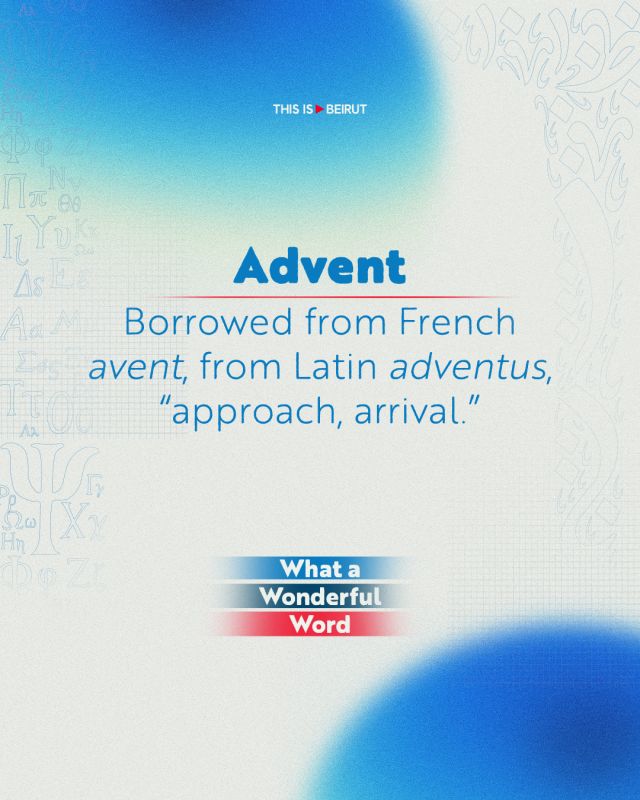
The English word advent is borrowed from French avent, itself derived from Latin adventus, meaning “arrival, approach, or coming.”
In its earliest English uses – attested in Old English and established by the 12th century – advent referred specifically to the Christian season preceding Christmas.
But over time, it also took on a broader, secular meaning: “an important arrival.” This extended sense appears around 1742 and becomes widespread in dictionaries by the mid-19th century.
Traditionally, Advent marks the four weeks leading up to Christmas. In many Christian denominations, it is a time of reflection, prayer, anticipation, and preparation.
The Advent Calendar: From German Origins to Global Tradition
Advent is a four-week season of preparation in the Christian liturgical calendar, which starts on the fourth Sunday before Christmas. But the modern Advent calendar follows its own rhythm: most begin on December 1 and count down to Christmas Eve, transforming the waiting for Christmas into a daily ritual of small discoveries – from chocolate to candies or inspiring quotes.
The tradition began in 19th-century Germany, where Lutheran families marked the days of Advent by drawing chalk lines on doors or lighting candles each evening. Early examples appear as soon as 1851 in children’s books. The printed calendar emerged in 1908, when German printer Gerhard Lang created the first commercial version with 24 small doors opening onto pictures or candies, an idea inspired by his mother’s homemade version.
After World War II, the tradition spread widely. German publisher Richard Sellmer revived the printed Advent calendar and began exporting it, especially to American servicemen stationed in Germany. The trend reached a turning point in 1953, when U.S. President Dwight D. Eisenhower was photographed with a Sellmer calendar, helping the practice take root in homes across the United States.
The Advent Wreath: A Weekly Ritual
The Advent wreath is one of the most recognizable traditions in churches and households across Europe and North America. Typically made of evergreen branches shaped into a circle, the wreath symbolizes continuity and enduring life through the winter season. Resting on this green base are four candles – usually three purple and one pink – each tied to one of Advent’s traditional themes: hope, peace, joy, and love.
The ritual unfolds gradually over the four Sundays before Christmas. Each Sunday, participants light a single candle, creating a growing ring of light that mirrors the steady approach of Christmas. In many traditions, a fifth candle – often white and placed at the center – is lit on Christmas Eve or Christmas Day. Sometimes called the “Christ candle,” it marks the culmination of the season’s waiting.
Ultimately, Advent is a language of anticipation that slowly turns into welcome and joy. Whether it takes the form of a calendar, a wreath, or simply a moment of inner pause, Advent invites us to wait differently – not hurriedly, but with awareness and meaning.



Comments